

Is Mill Good in Commander? A Honest Look
Is Mill Good in Commander? The Short Answer
Mill can work in EDH, and it works very well, probably better in Commander than any other format. However, mill's main problem in EDH is that you have more opponents, usually three instead of one, and they have more cards in their decks. Most cards that mill only target a single opponent, like Tome Scour. The design of mill cards is scaled for 60-card deck formats. So while mill is theoretically viable, you'll face significant practical challenges that make it far more difficult than racing opponents to zero life.
What Does Mill Mean in Magic: The Gathering?
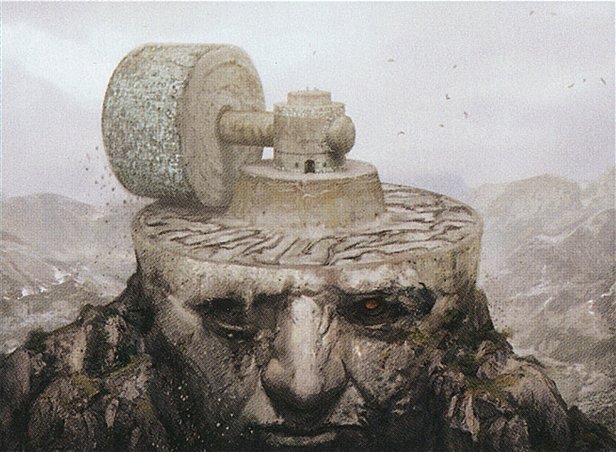
To mill a card, put the top card of your library into the graveyard. Mill is a Magic deck archetype that seeks to defeat opponents by eliminating the cards in their libraries, rather than by reducing life totals to 0. It does this by 'milling' cards (putting the top cards of a library into its owner's graveyard). Then, when opponents attempt to draw a card from an empty library, that player loses the game. The archetype derives its name from the first card to feature this ability, Millstone. The keyword "Mill" was fully codified with the release of Core Set 2021.
The Math Problem: Why Mill Struggles in Multiplayer
In games of Commander, with 100-card decks and multiple opponents, a mill player must eliminate upwards of 300 cards from enemy libraries before their strategy will allow them to win the game. Compare this to combat: you have to do 92 "damage" to each opponent to win, but their card draw helps you some, it's not like combat damage, where your opponents are also contributing to one another's damage.
The reality is stark. It's hard to win in EDH with a dedicated mill deck since you'll need to mill around 240-250 cards between three opponents, and sometimes one opponent at a time. There are few mill cards that affect everyone, and they're quite expensive to acquire and put into your decks.
Mill Combos: The Competitive Path to Victory
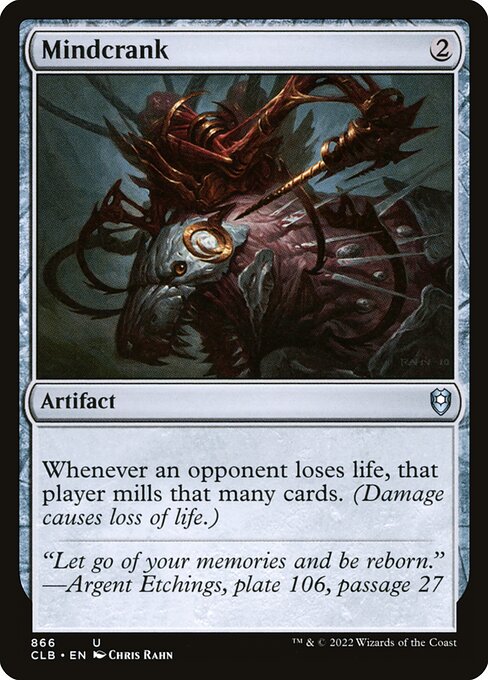
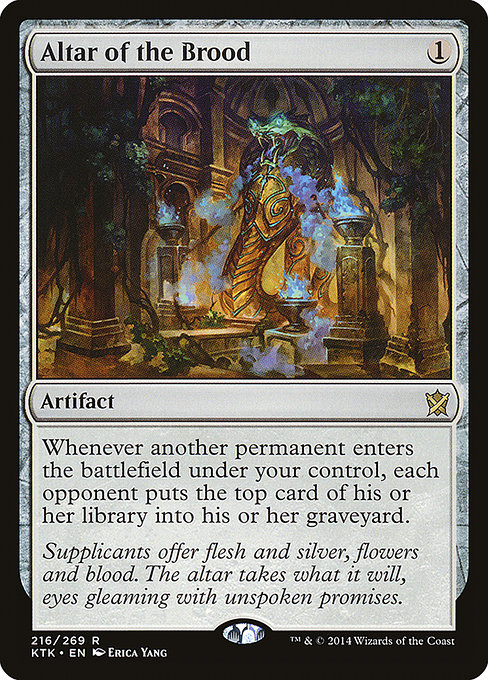
The trick is that you need infinite mill combos to mill 100 cards. Most viable mill decks contain 6 of them. A typical mill win is with infinite combos. For example, one combo uses Altar of the Brood and interaction that produces infinite ETB/LTB effects. You look for mill-related cards like Mesmeric Orb or Mindcrank which can affect everyone.
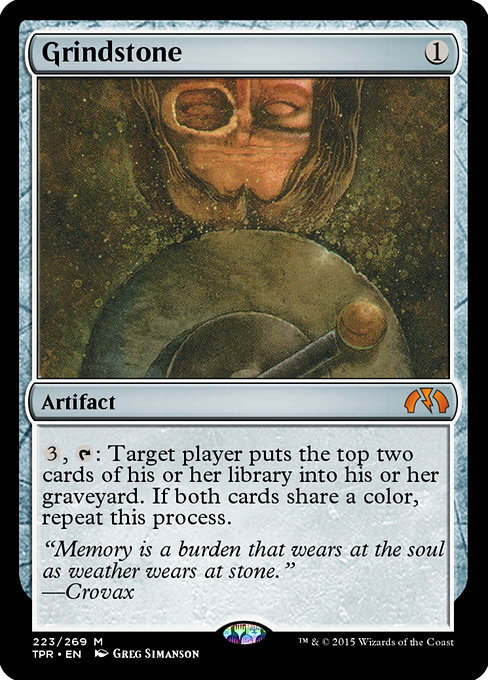
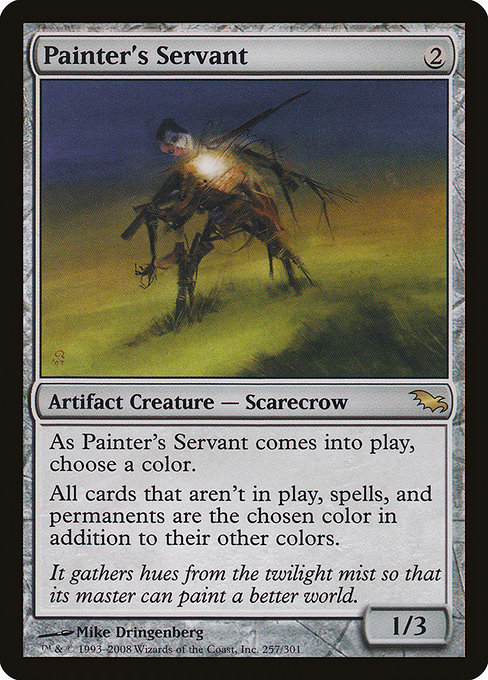
The famous Grindstone and Painter's Servant combo can come out on turn 1 and 2 respectively, allowing you to activate Grindstone and kill a target player on turn 3 with mill. But these extreme combos come with a social cost—they often make you "public enemy number one" at the table.
The Cards You Want in a Mill Deck
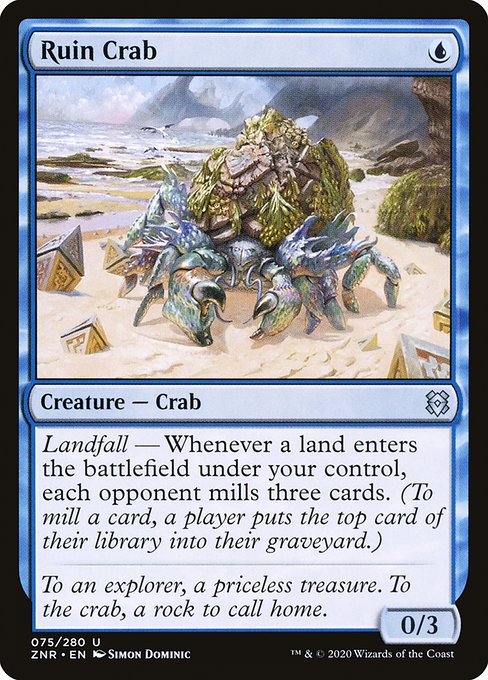
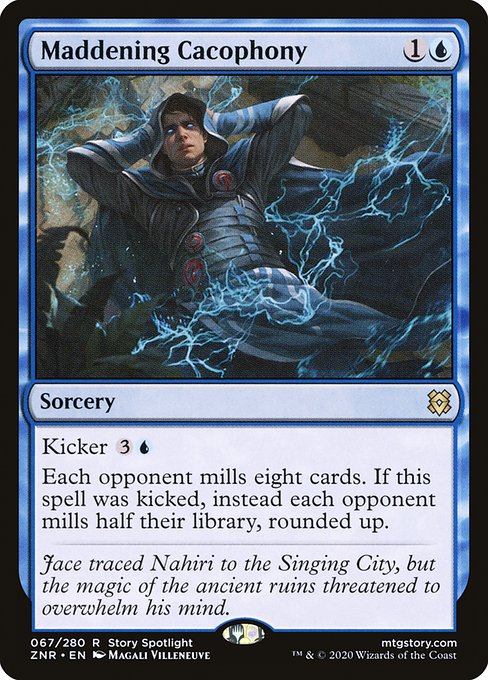
When mill works best, it's because of efficient mill engines. Ruin Crab is a powerhouse in Commander mill strategies, since it mills each opponent, not just one. Maddening Cacophony doesn't target, getting around opponents that have hexproof, and if you have four extra mana, it'll mill each opponent for half their library, rounded up. This is a useful tool for any mill deck's toolbox.
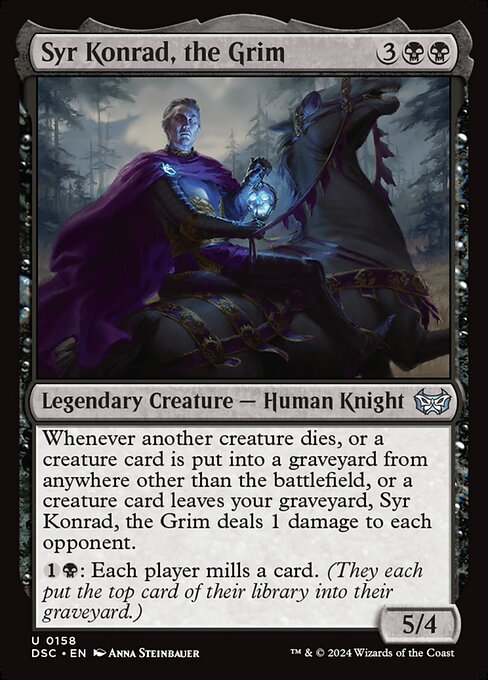
Payoff cards matter too. Syr Konrad, the Grim will hit each opponent for each creature card milled into their graveyard, turning your regular 99-card mill into a two-pronged attack. Incremental mill, especially if your opponents are hitting each other, is extremely useful. And Consuming Aberration is usually huge, regardless of what turn you play it on. Since it counts cards in graveyards regardless of type, it's not uncommon to see this be a massive body on the board.

The Graveyard Deck Problem
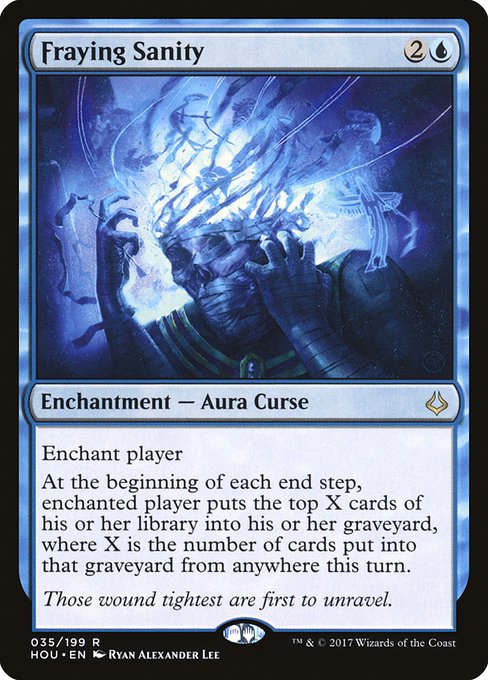
One of mill's biggest obstacles is that many powerful Commander strategies actually want their graveyards filled. Many other deck archetypes make use of their own graveyard and will be happy to have their cards milled. Reanimator decks, for example, will see a mill player as an asset, rather than a threat, because the mill player will help them fill their graveyard. Mill decks must be extremely careful against these players, lest they accidentally assist their opponents' strategies.
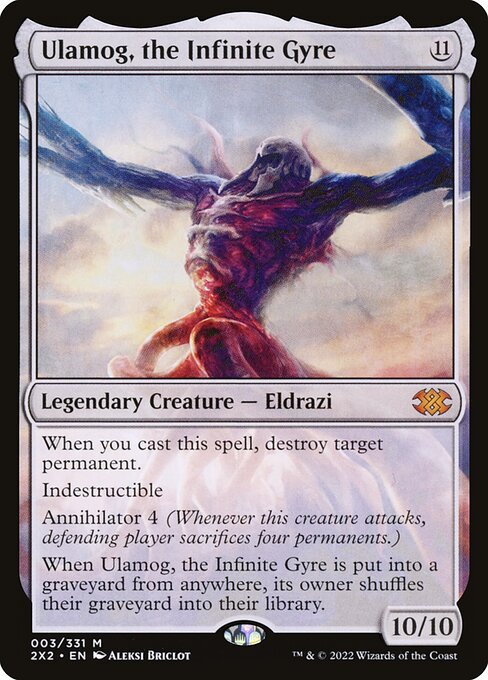
Additionally, Eldrazi creatures like Ulamog, the Infinite Gyre undo all your hard work if they're milled. Mill can also be a risky strategy because there are lots of good commanders that benefit from having their graveyards filled, so by milling them you actively help them in their own strategy.
The Social Reality: Why Playgroups Hate Mill
Some Magic players aren't fans of playing against mill decks. They don't like to see all their favorite cards sent away never to be used, and they find the play patterns of mill decks unfun for their Commander tables. A lot of people don't like mill because they feel that it breaks the status quo of the table.
You don't have to choose never to play mill for those players, but do be courteous during your Rule 0 conversation and let the table know that you're playing a mill strategy before the game begins in case there are any concerns. Many players did not enjoy being milled. It painted a target on my head, every time I sat down. And playing 3v1 is generally not what they set out to do.
When Mill Makes Sense as a Secondary Win Condition
Mill works well in EDH when used not as a mill deck but as a side strategy that compliments your deck like a reanimation strategy. WotC is always finding new ways to make mill more viable in EDH. It's easier to build a deck that mills everyone to use resources in their graveyards, and aside from infinite combos that's usually how mill decks operate, especially if we're talking about low-level EDH decks.
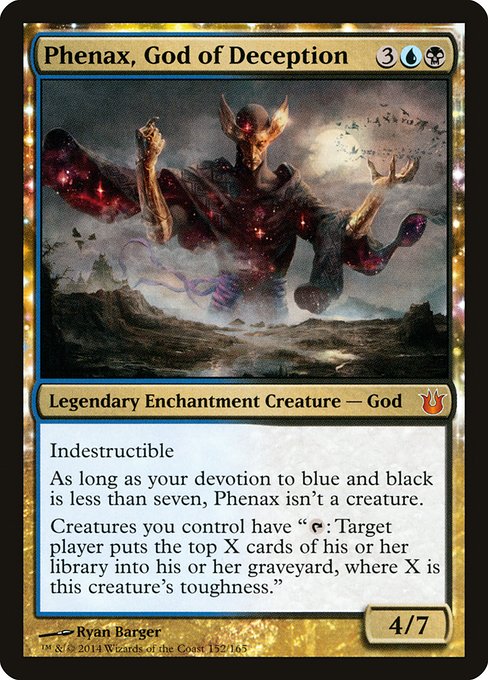
For instance, a deck built around Phenax, God of Deception can mill incrementally while protecting itself and creating backup win conditions through creatures that grow large with filled graveyards. Some players may elect to add reanimator effects to the mill strategies. Cards such as Rise of the Dark Realms or Memory Plunder can allow a mill player to make use of their opponents' graveyards to have a powerful impact on the battlefield. Along these lines, mill players may also employ cards such as Consuming Aberration, which grows much larger as enemy graveyards fill up, which allows the mill player to change their tactics and deal lethal damage if the need arises.
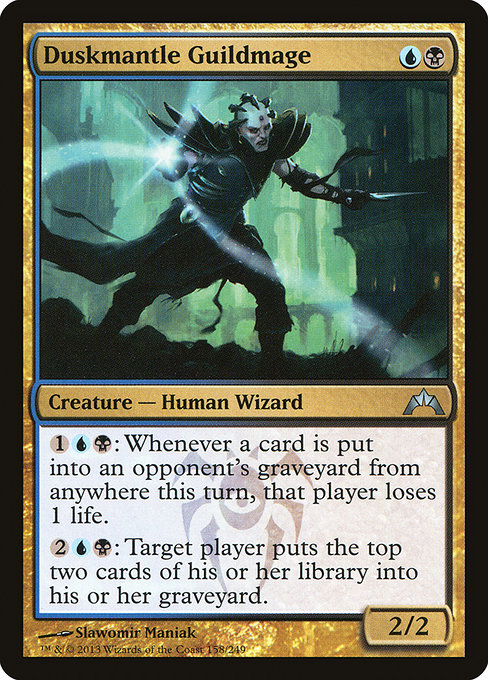
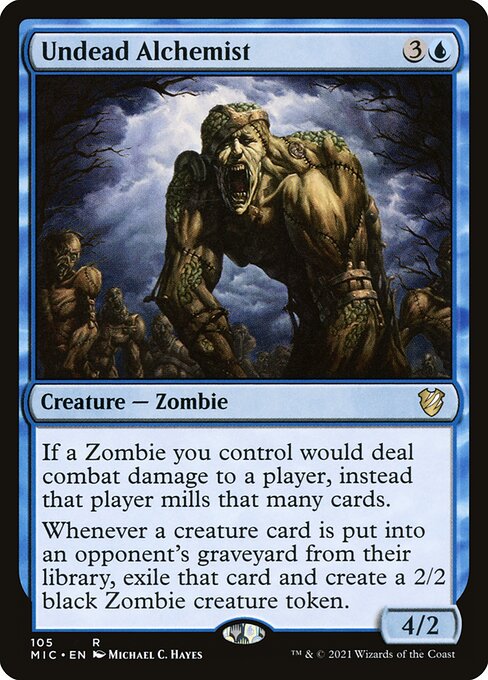
The 2025-2026 Mill Outlook
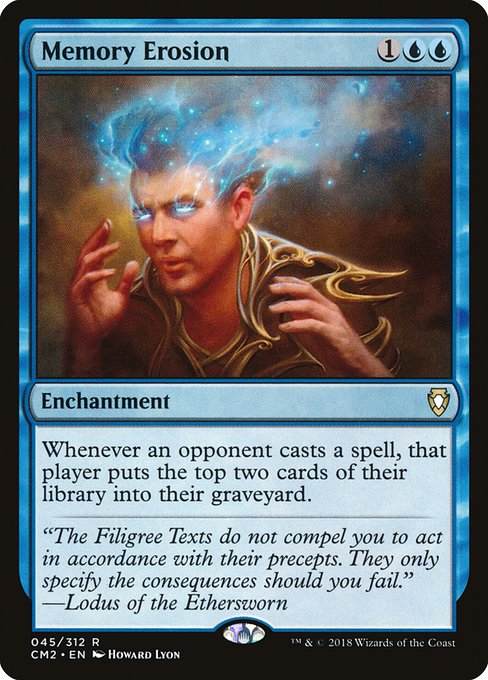
Mill is receiving new toys, as it means Mill decks won't be quite so "nearly there", and therefore more fun to play against. While Wizards of the Coast continues to print mill support, the fundamental challenge remains: you need roughly four times as much mill damage as combat damage to win the game in multiplayer.
Is Mill Worth a Deck Slot?
If you decide to take mill for a spin, you're going to be playing Magic on hard mode. It's not a strategy for the faint of heart, and because it requires so much resource investment, it's usually not a good plan to split the difference with another mechanic.
That said, mill is a perfectly legitimate strategy, just like infect, stax, MLD (when actually done properly), infinite combo, etc. It's not the most effective strategy (as mentioned by others) but there's nothing that makes it not ok. If your playgroup embraces diverse strategies and you build mill thoughtfully—either as a focused combo deck or as a secondary synergy—it can absolutely see play and create memorable games.
The key is knowing your table, being honest during Rule 0 discussions, and understanding that mill in Commander requires more precision, more resources, and more luck than most other win conditions. But for those who enjoy the flavor of slowly grinding away an opponent's options, it remains a valid—if challenging—path to victory.


Comments
Join the conversation.