

How to Build a Winning Voltron EDH Deck

What Is Voltron EDH and How Does It Win?
Voltron is a deck archetype dedicated to gathering a large number of power-enhancing cards (usually Auras and Equipment) onto a single creature, usually a player's commander, and if enhanced enough, the creature becomes impossible for opponents to stop, and quickly deals lethal damage in a small number of attack steps, often winning the game by dealing 21 commander damage to each opponent.
Voltron decks generally win by taking opponents out with commander damage. In EDH, any player who takes 21 or more damage from a commander automatically loses the game. This is the critical mechanic—you're not grinding out a 40-life total; you're stacking one creature high enough to close one opponent per turn cycle.
The Three Core Components of Every Voltron Deck
There are three main components to a Voltron deck: Power, Evasion, and Protection. Voltron decks often acquire these components by using either Auras or Equipment.
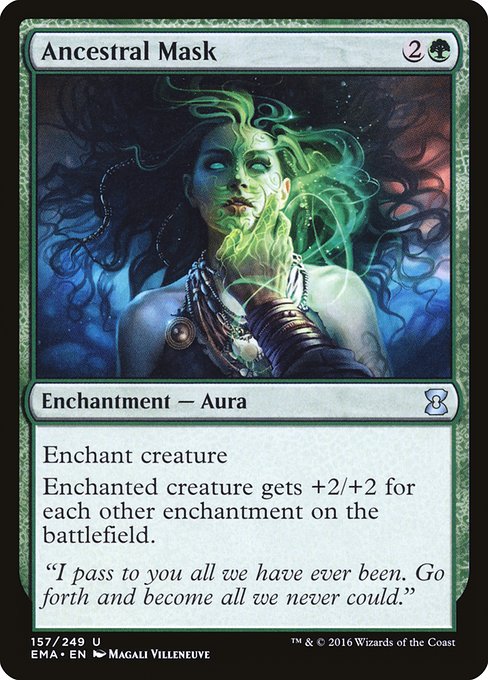
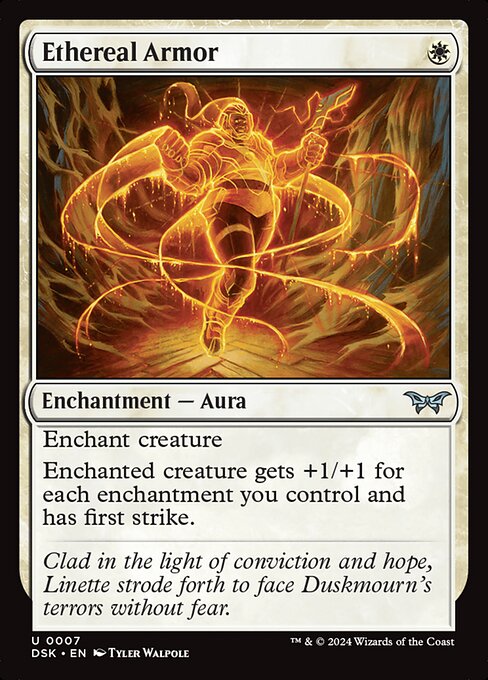
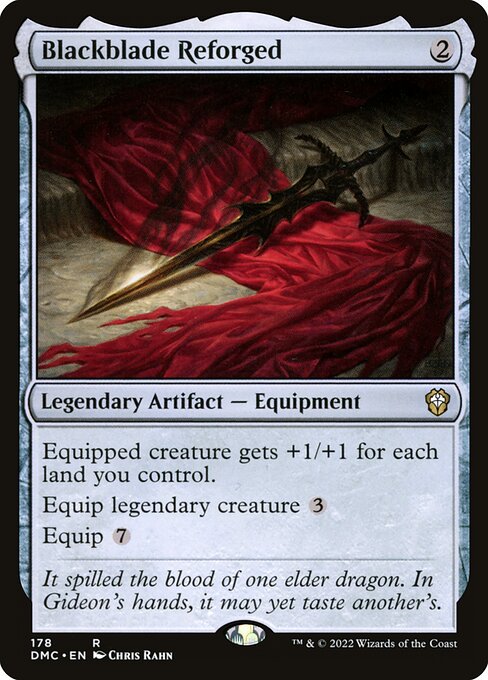
Power is straightforward—you need raw stat boosts. Aura-based Voltrons may use cards like Ethereal Armor or Ancestral Mask to acquire this power. Equipment-based Voltrons may use cards like Loxodon Warhammer or Blackblade Reforged. The most sought-after combat keyword for a Voltron is double strike, as it scales with other power-boosting effects.
Evasion keeps your creature from getting chumped. Since this archetype focuses entirely upon a single creature, effects that provide protection (such as hexproof and indestructible) and evasion (such as unblockability) are extremely common. Unblockable creatures bypass all defensive efforts in multiplayer.
Protection is your insurance policy. Flawless Maneuver, Silkguard, Tyvar's Stand, Boros Charm, Swiftfoot Boots, Winged Boots, and the new Flare of Fortitude are some of the best ways to ensure our Commander does not depart from the battlefield.


Should You Pick Auras or Equipment? The Strategic Split
It is uncommon for a Voltron commander to utilize both Auras and Equipment at once, as these strategies tend to offer additional benefits to players who dedicate to just one of these types. This is a real deckbuilding constraint—you're forced to commit.
Equipment and auras are super common; you should pick one and stick with it so you can properly build around it. An equipment-based commander wants support pieces like Puresteel Paladin and Stoneforge Mystic that don't interact with enchantments; on the same note, an aura commander can play out like a typical enchantress strategy with cards like Sythis, Harvest's Hand and Jukai Naturalist.
Equipment-based Voltrons are generally more resilient—your pieces stay on the battlefield if the creature dies. Aura-based Voltrons demand more protection but offer better stat-per-mana efficiency. In multiplayer, equipment is the safer choice because Most Auras don't stick around if a creature gets removed, and since those are an important tool in Voltron, losing them can be devastating.
Selecting Your Commander: Power Thresholds Matter
Voltron commanders that defeat opponents using commander damage have three favorite numbers: 7, 11, and 21. For instance, a commander with 7 power will be able to eliminate an opponent in three attack steps. A commander with 11 power can defeat an opponent in two attack steps. A commander with 21 power can defeat an opponent in just one attack step.
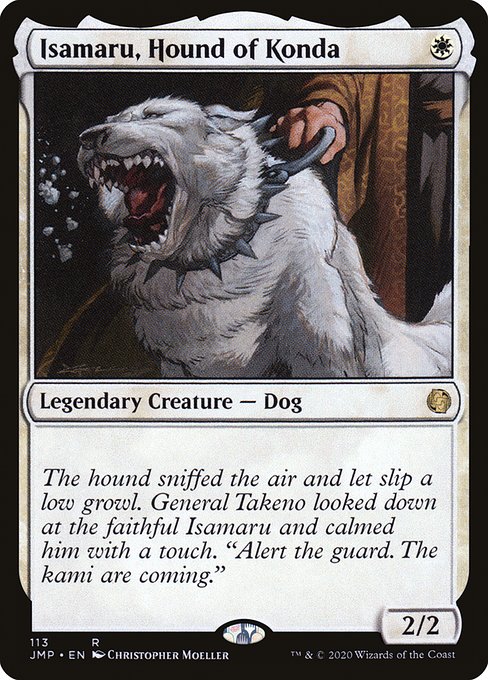
Your commander choice sets the floor for your deck's speed. Costing a single white mana, Isamaru will almost always be cast on the very first turn, kicking off your Voltron strategy from the word go. The quickness and efficient nature of a commander like Isamaru will make nearly every game feel like an uphill battle for your opponents, as you will have immediate access to your commander. Early deployment trades consistency for raw threat level.
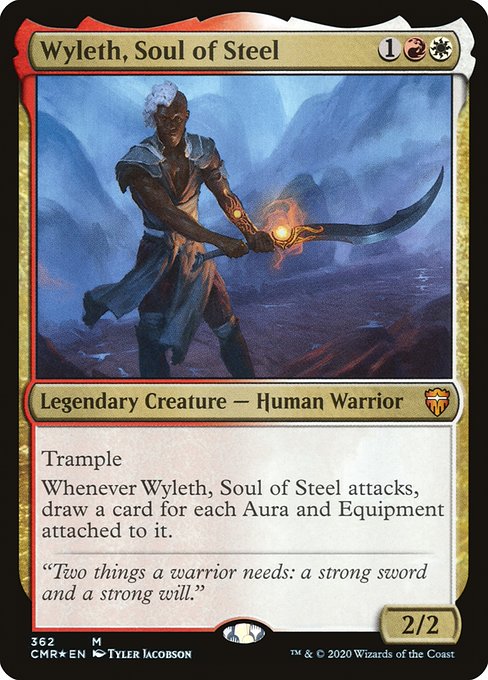
Boros has historically been one of the premier color combinations for Equipment and Aura strategies, and Wyleth remains one of its strongest Voltron options. Voltron decks often struggle with card draw, but Wyleth solves that problem by rewarding you every time he attacks. He draws a card for each Aura and Equipment he's wearing so the card advantage can be quite explosive. Strong Voltron commanders solve the archetype's core weakness: card draw.

How to Play Voltron in Multiplayer Without Getting Hated Out
Multiplayer Voltron is a political game as much as it is a tactical one. Voltron decks create an intentionally large threat on the battlefield, which can have the unintended consequence of turning that creature's controller into the 'archenemy', or Public Enemy Number 1. Other players, even those that the Voltron does not intend to attack, may strongly fear the Voltron player and decide to eliminate the threat before it becomes impossible to deal with. The general lack of hidden information, combined with the large threat they put onto the battlefield, can invite removal from all other players at the table, and removal from multiple players is particularly tough for a Voltron to overcome.
Voltron is different in multiplayer; you want to hold back til your guy is safe to cast and protect. If you go balls to the wall, people are gonna gun for you first. It's about politics, til you can protect your general and beat face.
The winning play pattern: Because Voltron decks usually involve commander damage, which can sometimes take a few turns to accumulate, Voltron players are usually advised to select one specific opponent at a time, and dedicate themselves to attacking that player until they are eliminated, rather than attacking different opponents and spreading damage around more equitably. Voltron decks are particularly susceptible to removal spells, so fewer opponents represents a smaller window of opportunity for an opponent to find a spell that can remove the enhanced creature. This makes the act of choosing the first opponent to attack one of the most important game decisions for the Voltron player.
The Multiplayer Damage Problem: How to Take Out Multiple Opponents
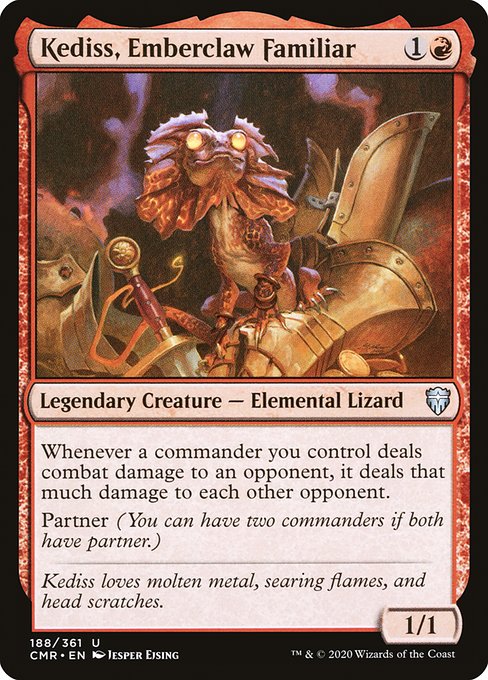
Here's the raw math: if you're taking out one opponent per turn, but there are three others, you will lose. It does take a bit of time to take everyone out of the game, so you'll quickly get a target on your back. Permanents that let you deal damage to all opponents are a great way to counteract this, letting you take everyone out at once.
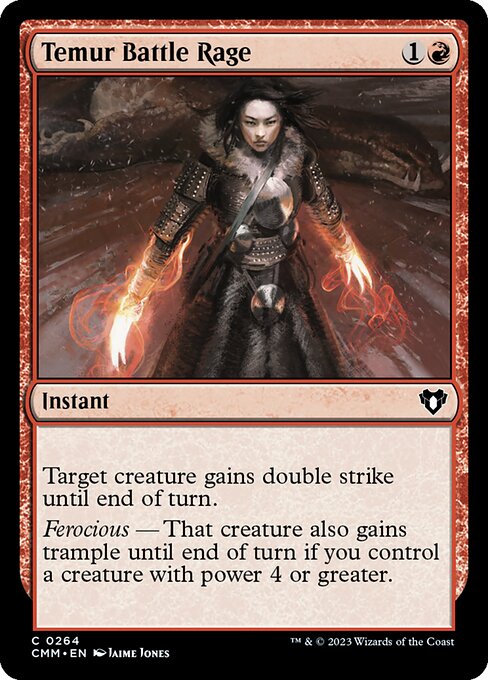
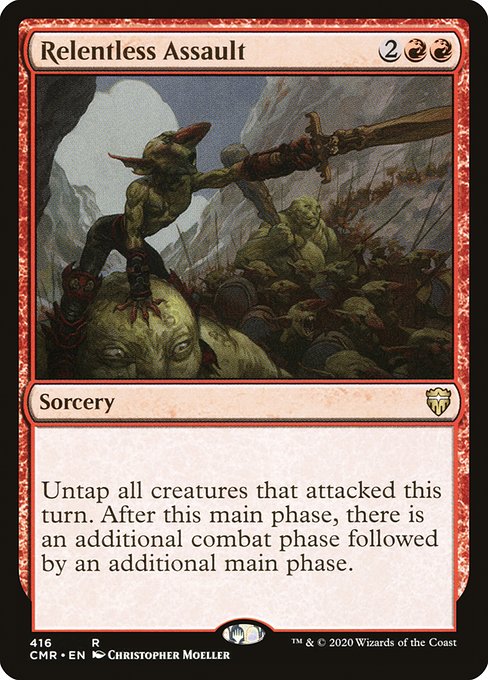
A Finisher's role is to deal an extreme amount of damage in order to take out an opponent or win the game. Jeska, Thrice Reborn, Kediss, Emberclaw Familiar, and classic Temur Battle Rage are all perfect examples of cards that will help you take down an opponent. A Finisher could also be something as simple as an extra combat spell such as: Grim Reaper's Sprint, Karlach, Fury of Avernus, Relentless Assault, and Seize the Day.
Extra combat steps let you stack commander damage on multiple opponents in a single turn. In multiplayer, these aren't luxury includes—they're necessary to close before the table coordinates your removal.

Build the Shell: Mana Curve and Synergy
Voltron decks often don't play many creatures and are instead focused on stacking up your commander with boosts. Generally, you want to wait to cast your commander until you can start loading it up with Auras and Equipment. If you jump the gun, it will simply get removed before you get a chance to start boosting it up. Wait to cast your commander until you have protection for it. This allows you to ensure your commander sticks to the battlefield, and you can push for your win condition safely.
Your mana curve should be weighted toward low-cost equipment and protection spells. Run 8–12 mana rocks to hit land drops and enable turn-three commander deployment. Bulk the deck with your best equipment, auras, and evasion effects. Reserve tutor slots for protection—if your commander survives turn three equipped, you're favored to win.
The Weaknesses You Must Respect
More than many other strategies, Voltrons are particularly vulnerable to removal spells. Since they tend to put all of their eggs into one basket, such as putting four or five enchantments onto a single creature, a single pinpoint removal spell doesn't just remove the creature, but also removes the attached enchantments, resulting in a net loss of card advantage. Rebuilding from that point is far more difficult for a Voltron than for other deck archetypes.
Voltron decks are also almost always restricted to focusing on one player at a time, and are not able to eliminate multiple enemies at once. Reliance upon combat can also make it difficult to circumvent hyper-defensive decks such as Pillowfort strategies, especially those that use Fog effects.
Voltron has real enemies: board wipes, sacrifice effects, Fog variants, and creature-based stax. You cannot out-race blue-based control in multiplayer. Your only answer is redundancy—build a second threat line in the 99, or pivot to combo as a backup plan.
Core Staples Every Voltron Deck Needs
Protection and Evasion: Swiftfoot Boots, Lightning Greaves, Snake Umbra, Darksteel Plate, Spirit Mantle
Power Auras: Ethereal Armor, Ancestral Mask, All That Glitters, Bear Umbra
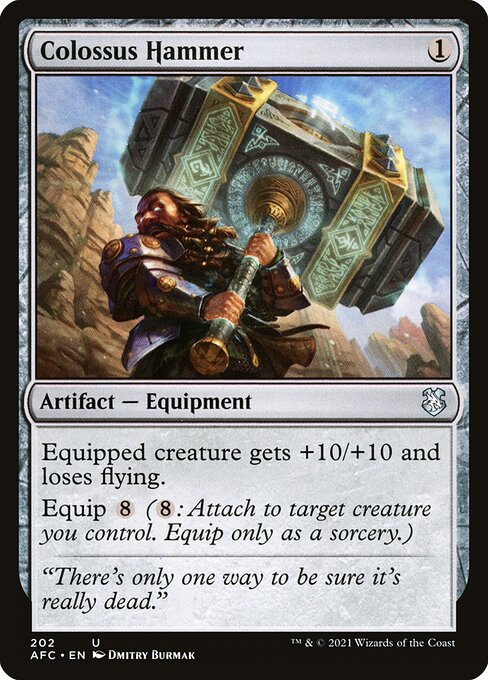
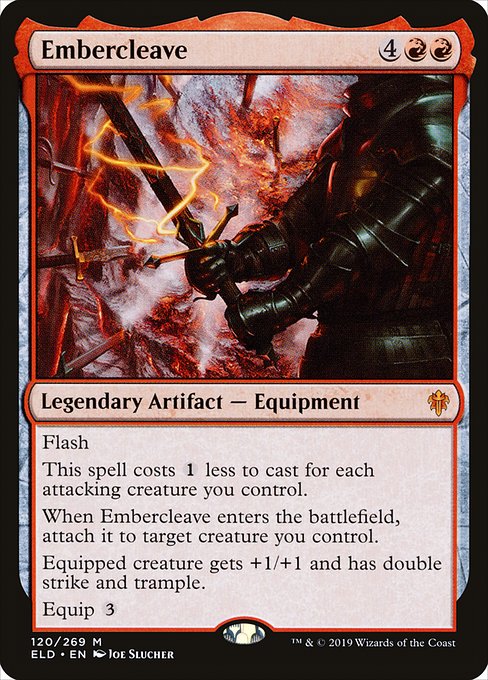
Utility Equipment: Basilisk Collar, Colossus Hammer, Blackblade Reforged, Embercleave
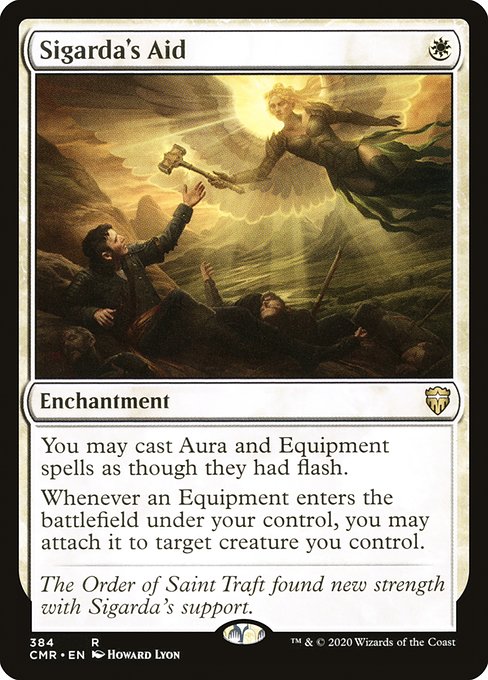
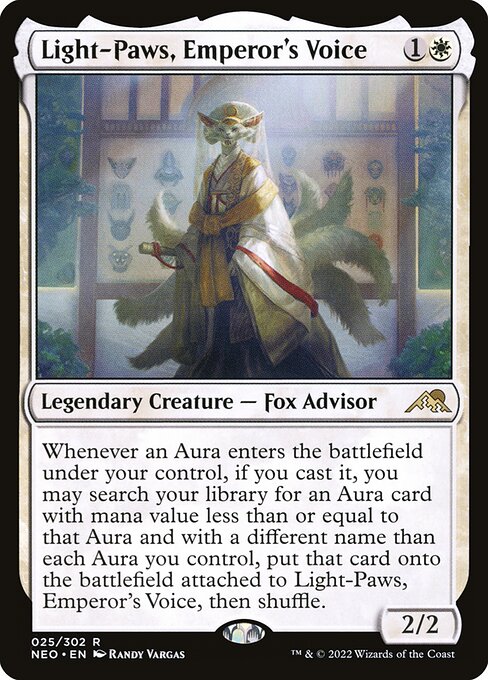
Card Draw or Synergy: Sigarda's Aid, Sram, Senior Edificer, Light-Paws, Emperor's Voice
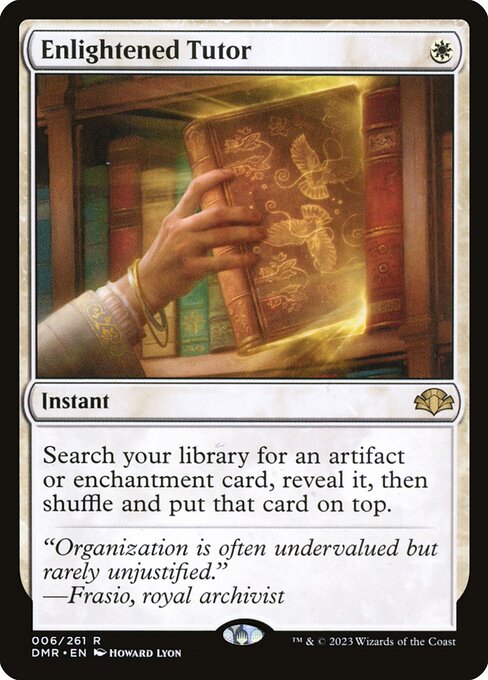
Tutors and Consistency: Enlightened Tutor, Imperial Recruiter, Idyllic Tutor
Final Verdict: Is Voltron Right for Your Meta?
Voltron is fast, focused, and satisfying when it works. But the strategy has its drawbacks. Voltron decks excel at taking out one opponent at a time, which can leave them vulnerable against the remaining players. Board wipes, sacrifice effects, and well-timed removal can also undo several turns of setup.
Build Voltron if your meta is creature-light, lacks efficient mass removal, and respects early threats. Build it if you enjoy the politics of threat assessment and careful sequencing. Don't build it if blue control and sweepers are everywhere—you'll spend more time rebuilding than attacking.
When Voltron fires, few Commander decks close games faster. The question is: will your table let you get there?



Comments
Join the conversation.