

Rhystic Study Commander Staple: Why It Dominates Every Table

What Is Rhystic Study and Why Is It a Staple?
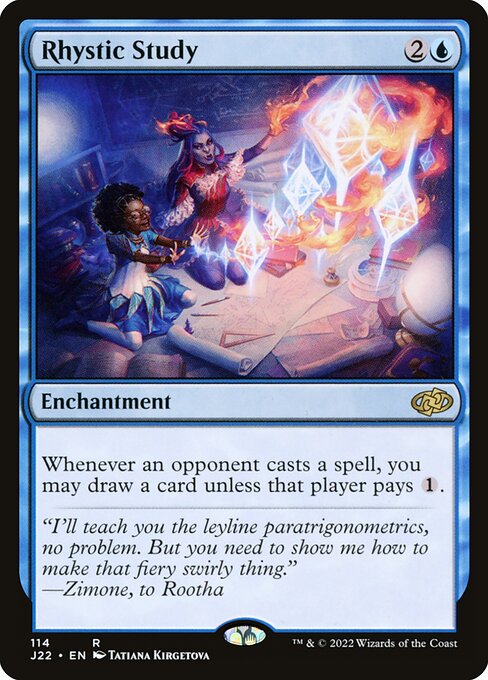
Rhystic Study is a 
 enchantment with a simple but devastating effect: whenever an opponent casts a spell, you may draw a card unless that player pays
  . First printed in Prophecy on June 5, 2000, this card has become synonymous with competitive Magic: The Gathering Commander play. For two decades, it has been the gold standard of blue card advantage.
At approximately 24% inclusion across eligible decks, Rhystic Study sits at the top of the format's blue staples list, and for good reason. It is the most notorious card-advantage engine in Commander, quietly burying the table in cards while everyone argues about whether to pay the tax. It reads simply enough—whenever an opponent casts a spell, you draw a card unless they pay one extra mana—but in a four-player game that innocent line of text generates an absurd amount of value. The flip side of hoarding that grip is that it makes you the best target in the pod for a scaling red ritual, which is a large part of why Jeska's Will earns its slot.
The Math Behind the Card Advantage Engine
The raw power of Rhystic Study lies in multiplayer math. In a 1v1 format, you're pressuring one opponent's resources. In Commander, you're applying pressure to three simultaneously. The strength of the card comes from how multiplayer Magic works. In a one-on-one game, the tax only triggers off a single opponent's spells. In Commander, three opponents are casting spells every turn cycle, and each one of those spells is a decision point that either costs them mana or hands you a card. Over a full game, that adds up to a mountain of extra cards—often a dozen or more—for a single three-mana investment.
This is not hypothetical. Turn 3 Rhystic Study in a typical casual pod generates 2-3 draws per opponent's turn cycle simply because paying is a real cost. Early in the game, that mana matters. Later, opponents have to choose: continue their game plan or pay the tax. Either way, you gain advantage.
How the Rhystic Study Tax Actually Works at the Table
Rhystic Study's triggered ability resolves before the spell that caused it to trigger. It resolves even if that spell is countered or otherwise leaves the stack without resolving. The player gets the option to pay when this triggered ability resolves. You don't have to decide whether or not to draw a card until after the player decides whether or not to pay.
What this means practically: the moment your opponent announces a spell, Rhystic Study's ability goes on the stack. They can pay to stop the draw, or they let you draw. The decision repeats every single turn. A lot of Commander hands are built around "curve out and establish," and Rhystic turns that plan into "curve out… but one mana worse." Over 10-15 turns, that mana tax adds up to missed plays, fewer resources, and a table that gets progressively buried.
Where Rhystic Study Shines Most
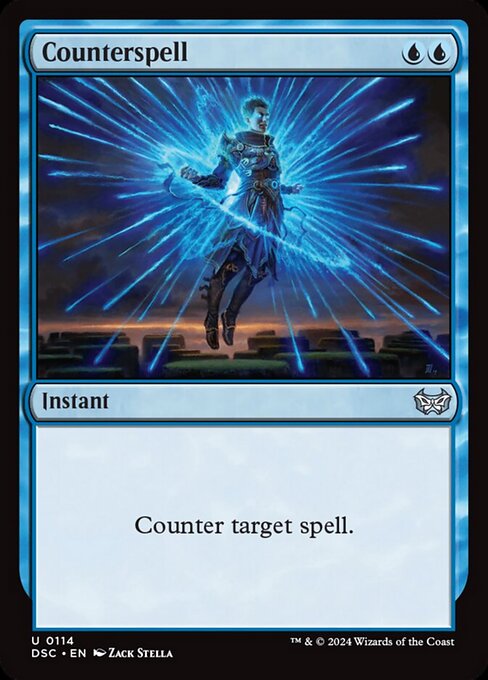
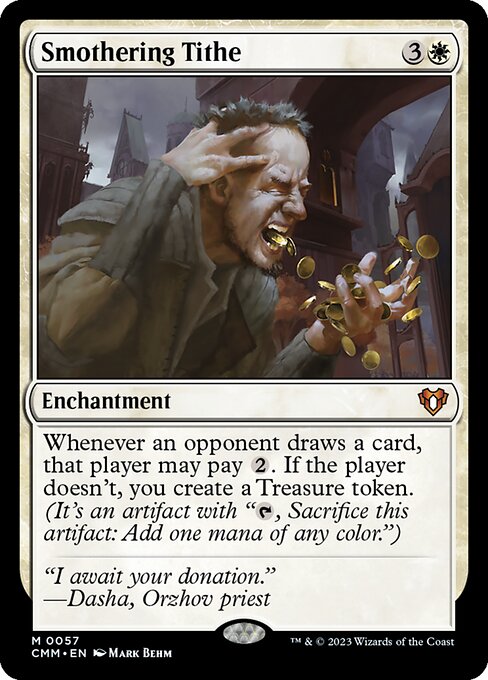
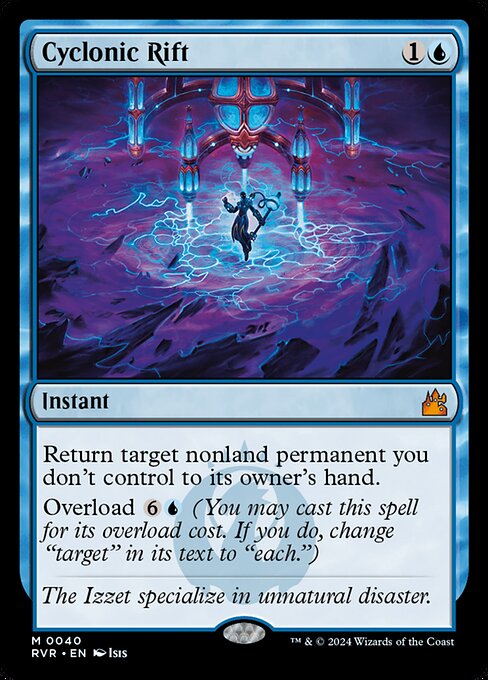
The decks that get the most out of Rhystic Study protect it and convert its cards into a win. Because it draws a target the moment it resolves, pairing it with countermagic like Counterspell keeps it on the battlefield long enough to take over. It also stacks beautifully with other passive engines—Smothering Tithe turns the same opponent spells into treasure, so you are gaining cards and mana off every cast at once. All those extra resources need a payoff, and a one-sided reset like Cyclonic Rift turns your card lead directly into a win. The common thread is that the enchantment is an engine, not a finisher. It gives you the fuel; your deck needs the threats and protection to spend that fuel before an opponent finds an answer.
In control and tempo shells, Rhystic Study is borderline oppressive. In midrange or casual goodstuff decks without clear synergy, it simply draws extra cards. Both outcomes favor you, but the former is why competitive playgroups either respect it or ban it outright.
Is Rhystic Study Worth the Price and the Salt?
It's also a high "salt" card—meaning players often report it as annoying or unfun to face repeatedly. EDHREC's salt list places it among the saltiest cards with a salt score around ~2.7. Many tables have house-ruled it away or moved it to a higher power bracket precisely because of the table talk and frustration it generates.
From a pure Spike perspective: yes, it is worth it. As a staple of nearly every blue deck, the real card commands a steady price, and if you run multiple blue commanders you would want a copy in each. But you need to build around it. If your deck is mediocre without it, you're using it as a crutch, not as an engine. If your deck wins with it and can protect it, it's a legitimate card that generates the advantage swing you paid for.
Best Budget Alternatives to Rhystic Study
Not every table welcomes Rhystic Study, and not every budget accommodates the $30–$60 price tag. Here are the closest functional alternatives:
Mystic Remora: The Early-Game Powerhouse
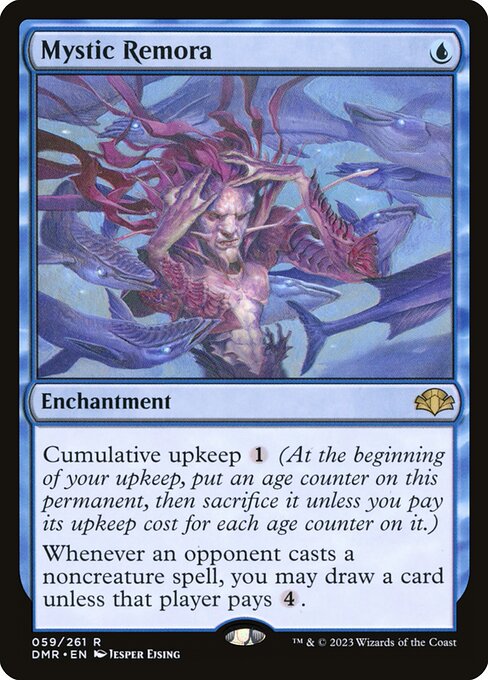
Mystic Remora is often regarded as the closest budget-friendly and functional alternative to Rhystic Study, especially in fast-paced Commander games. For just a single blue mana, this enchantment lets you draw a card whenever an opponent casts a noncreature spell, unless they pay an exorbitant  . That tax is often too much to pay in early turns, meaning you'll likely draw plenty of cards right away. The trade-off: While Study sits on the board and remains threatening for longer, Remora shines brightest in the early game, offering a mana-efficient way to disrupt tempo and gain card advantage. Perfect for aggressive or control decks that want value early without paying full price—just be ready to wave goodbye to it after a few turns.
Psychic Possession: The Free Draw Engine
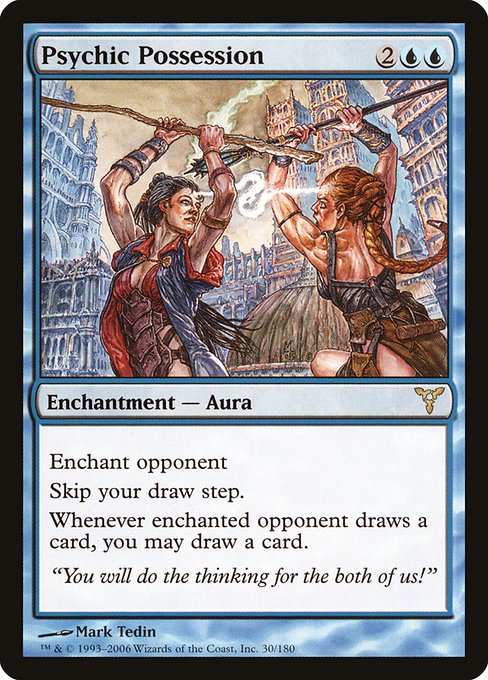
Among the best generic replacements for Rhystic Study is Psychic Possession, which was endorsed by Murph of the Command Zone podcast. Like Rhystic Study, this card fits in just about any deck, and while it may not synergize with your deck any more than the alternatives, it's still a fun card to run alongside or in place of them.
Esper Sentinel: The Versatile Disruptive Engine
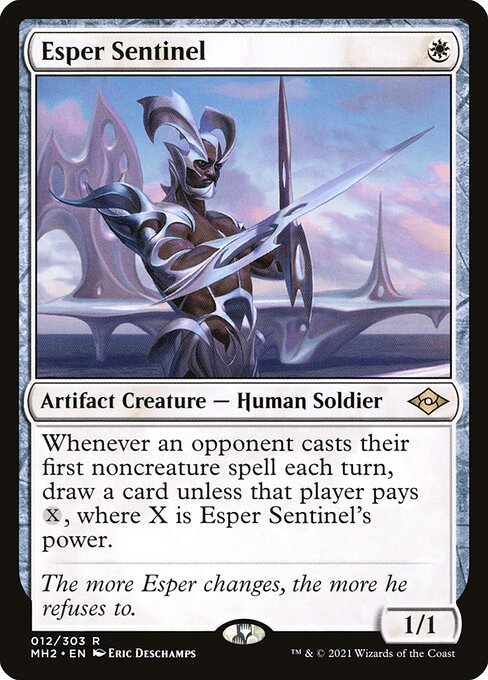
For white decks, Esper Sentinel offers a creature-based alternative that draws a card when opponents cast their first noncreature spell each turn. It's efficient, works in many decks, and dodges some of the political tension of Rhystic Study.
Building a Rhystic Study Deck That Actually Wins
If you're going to play Rhystic Study, commit to the strategy. Draw cards, then convert those cards into board wipes, threats, and counterspells. Protect the enchantment. Play tutors to find your wincons faster. Build redundancy into your draw package so you aren't dead without it. Build with that in mind and the card carries entire games. As a staple of nearly every blue deck, the real card commands a steady price, and if you run multiple blue commanders you would want a copy in each.
If you're just jamming it into a pile of good cards and hoping for a free win, you're playing it wrong—and you'll deserve the hate you get at the table.
The Verdict: Is Rhystic Study Right for Your Table?
Rhystic Study is unambiguously powerful. It is one of the most played cards in the format. Its card draw is unmatched, and so trying to find something just as good is going to prove impossible. It belongs in competitive blue shells and decks built around card advantage engines.
But it's not mandatory. If your playgroup prefers lower-salt games, play Mystic Remora or Esper Sentinel instead. If you want to challenge yourself as a deckbuilder, skip it and build better synergies. The enchantment is an engine, not a finisher. It gives you the fuel; your deck needs the threats and protection to spend that fuel before an opponent finds an answer.
The card is what you make of it: a powerful tool or a crutch. Use it wisely.




Comments
Join the conversation.