

The History of Board Wipes in Magic: The Gathering
What Are Board Wipes and Why Do They Matter?
A board wipe, also known as a board sweep or wrath, is an instant or sorcery spell that destroys or exiles all permanents of a certain type. They generate a powerful card and mana advantage that makes them staples in control lists for many competitive, 60-card formats and auto-includes in many Commander deck lists. For Spikes, board wipes represent the ultimate tempo swing—reset the game state and establish a dominant position before opponents can rebuild.
The Origins: Alpha's Revolutionary Removal
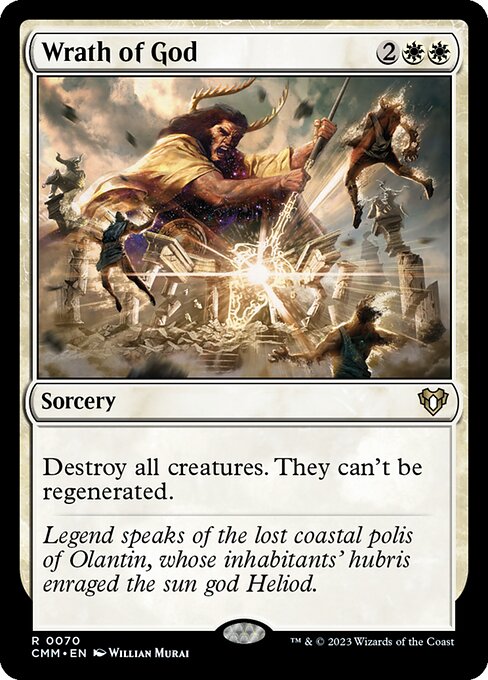
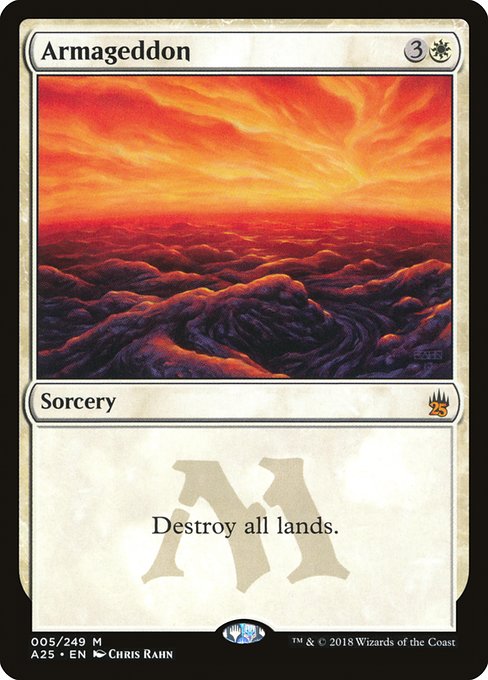
Board wipes have existed since Alpha with Wrath of God and Armageddon. This came in the form of Wrath of God, a sorcery for 2WW that read "All creatures in play are destroyed and cannot be regenerated." This, along with Armageddon, are the original mass removal cards and their strong association with White until more recent years. Wrath of God became so iconic that the entire effect class is named after it—players still call them "wraths" decades later.
Wrath of God is the name giver of the Wrath and appeared in every core set until Tenth Edition. This ubiquity speaks to the card's fundamental importance to Magic's removal suite. From the earliest competitive matches in 1993 onward, wiping the board cleanly has been the gold standard answer to aggressive creature strategies.
Evolution Across Color Pie and Design Space
Board wipes are most often found in white, but exist in other colors as well. As Magic's design philosophy matured, Wizards expanded the color pie to give every color unique variations on the effect. Colors such as white and blue have variations on the Wrath effect. One such is non-destructive removal from play, by exiling or moving creature cards to another zone, such as the hand or the library. Black, interestingly and exclusively, has a variation upon the Wrath-like effect whereby it gives all, or a subset of all, creatures -m/-n (where m and n are constants or variables that are defined by the card). An equivalent exclusive to red is dealing damage to each creature, such as Blasphemous Act.
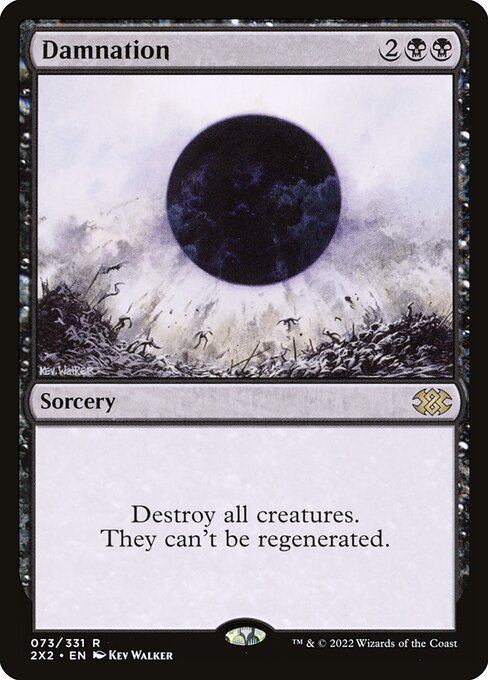
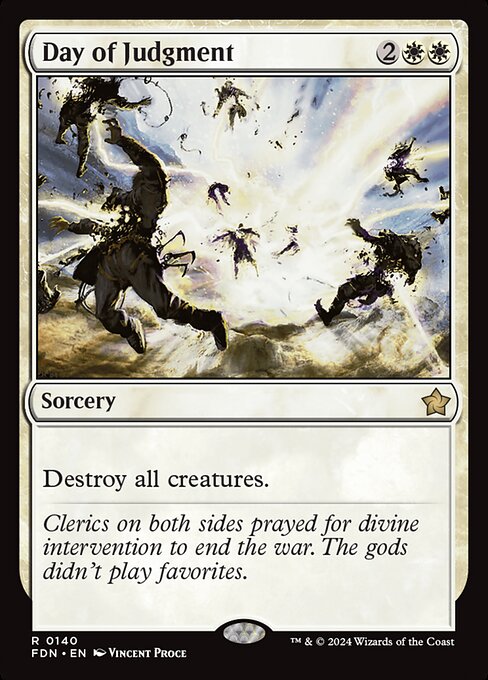
Damnation is its colorshifted cousin and Day of Judgment is the relative that is resistant to Standard rotation. Damnation and Day of Judgment proved that the four-mana unconditional creature wipe was a repeatable design benchmark. Four mana to destroy everything is the absolute going rate.

Hard and Soft Board Wipes: Two Fundamental Categories
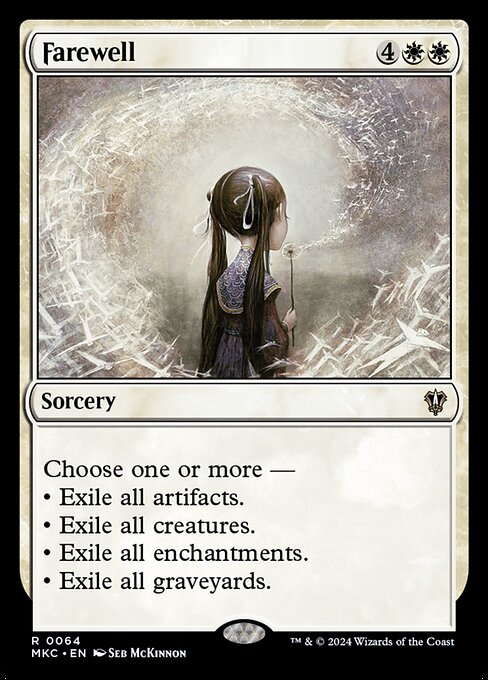
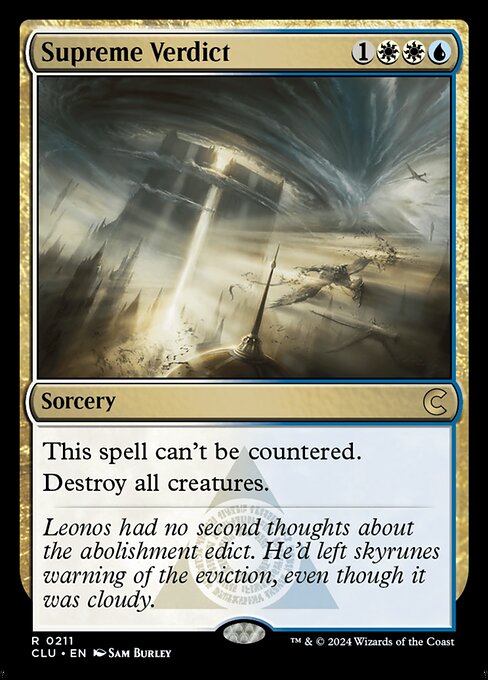
Hard board wipes do what you expect. They destroy or exile everything without regard for who controls it or what it is. Wrath of God, Damnation, and Farewell are all examples of hard board wipes. These are the raw power plays—mana efficient, symmetrical, punishing for opponents who overextended.
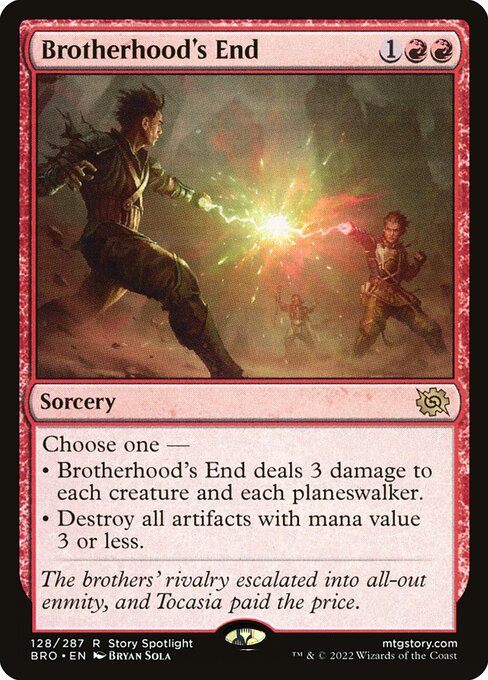
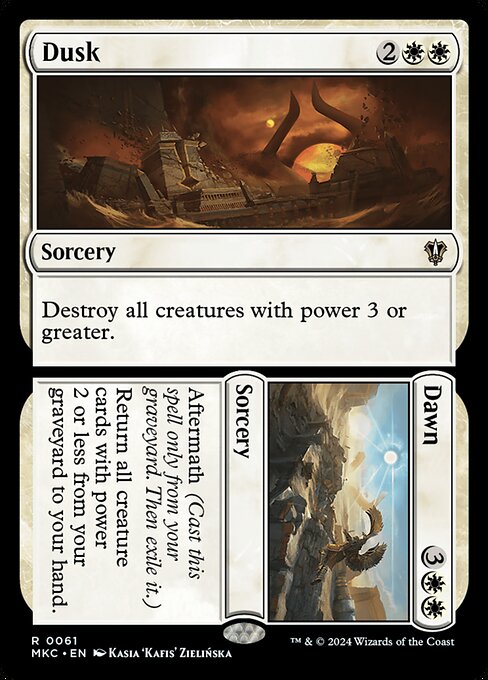
Soft board wipes are more situational, usually because they impose a limit on the creatures they remove. This could be related to size, like how Brotherhood's End can't kill most large creatures, and Dusk // Dawn ignores smaller creatures. There could be other factors, like creature type (Kindred Dominance) or the creature's state on the board (Don't Move). Soft wipes reward deckbuilding—they're weaker universally but devastating when you build around them.


The Rise of Flexibility: Modal and Asymmetrical Design
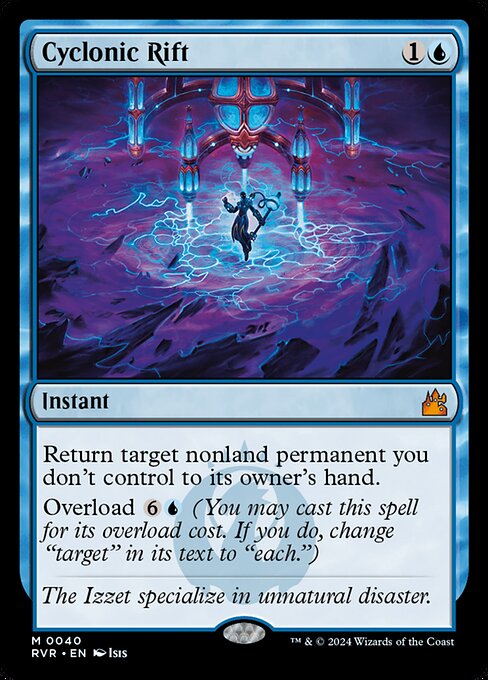
Modern board wipe design has embraced flexibility as a core value. Modal: choose two of destroy all artifacts, destroy all enchantments, destroy creatures of mana value 3 or less, destroy creatures of mana value 4 or greater. The fourth factor is the one casual players skip: flexibility on a dead board. A pure creature wipe is a brick when nobody has creatures out. That is why modal wipes (Farewell, Austere Command) and the overload bounce (Cyclonic Rift) are so prized — they still do something useful when the creature count is low.
Austere Command exemplifies this principle. The modality offered by this spell is incredible. There's almost always going to be a way for you to come out ahead of your opponents. You can even cast it without destroying any creatures at all if you're the one who's dominating that side of the battlefield to take out pesky things like pillowfort effects and stax pieces.

Exile-Based Wipes: The Modern Powerhouse
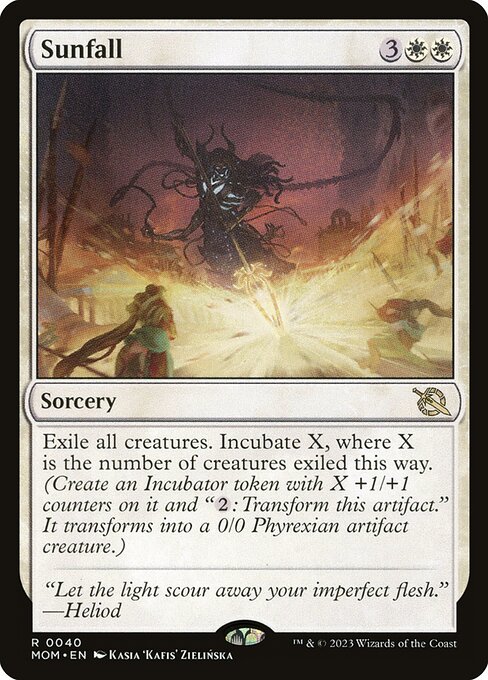
Exile-based board wipes have the most raw power because exiling is very hard to stop. Unless your opponents have a handful of protection spells like Teferi's Protection and Clever Concealment that phase out their creatures (and are largely restricted to white), they can't stop Sunfall and Farewell and their ilk from depriving them of their board. Additionally, cards that are exiled are gone in 99% of cases. Some cards like Riftsweeper can technically retrieve them, but exiled cards are much, much harder to recur than something that goes to the graveyard. If you just destroyed all permanents, you opponents could Regrowth them, Reanimate them, and so on. This combination of skirting standard protection spells and preventing graveyard recursion make these some of the strongest board wipes. Farewell represents the apex of this design: exile flexibility with modality that doesn't force you to choose all modes if you don't need them.
Impact on Format Strategy and Metagame Shifts
In the early days, board wipes were a novelty, used by savvy players to gain a edge in competitive play. However, as the game progressed, the meta shifted, and board wipes became a staple of competitive decks. The rise of board wipes led to a shift in player strategy, with an emphasis on building decks around removal and card draw.
Board wipes have forced deckbuilders to answer a fundamental question: over-extend or hold back? For a typical 100-card Commander deck, run two to four mass removal pieces. Three is the sweet spot for most midrange and control decks. Token, aristocrats, and other go-wide strategies can run fewer (and want the asymmetric ones), while a dedicated control deck happily runs five or six.
Winning Through Board Wipes: Advanced Play Patterns
Competitive players don't cast board wipes reactively—they weaponize them. The goal is to apply maximum pressure with minimal threats to force your opponent to crack their wrath for minimal value. Sandbag creatures. Bait out wipes inefficiently. Then rebuild while opponents flounder.
Until more recently, the online Commander zeitgeist had been putting down mass removal in favor of moving the game forward to a conclusion and instead using single or multitarget removal to help achieve that end. This thought process highlights letting people play the game and still have it go somewhere, even if you lose said game. Even in casual play, timing matters—a poorly-timed wipe loses more games than it wins.

The History Lesson: Why This Matters
Board wipes have come a long way since their introduction, and their impact on the game is undeniable. In conclusion, mastering the use of board wipes is essential for any Magic: The Gathering player looking to improve their skills and climb the ranks. From Wrath of God in 1993 to modern designs that exile, damage, and bounce, board wipes remain the ultimate tempo tool—the reset button that can win games single-handedly.
Understand when to cast them. Understand when to hold them. Understand how your opponents are building around them. That's the edge competitive players exploit, and it's been true for thirty years.



Comments
Join the conversation.