

Magic: The Gathering Turn Phases Explained for Beginners
Understanding Magic: The Gathering Turn Phases for New Players
Welcome back! If you've read Part 1 of our beginner series—where we covered how to read cards and understand game zones—you're ready for the next big concept: how turns work in Magic. Many new players find turn structure intimidating because it seems complicated. But here's the good news: there are five phases that proceed in order each turn, whether you have actions to make in them or not. Once you learn the pattern, turns move much faster, and the game becomes far less overwhelming.
Think of a Magic turn like a recipe. Every turn follows the same sequence. Your opponent knows what's coming. You know what's coming. Everything is predictable and fair. That's the beauty of it.
The Five Phases of a Magic: The Gathering Turn
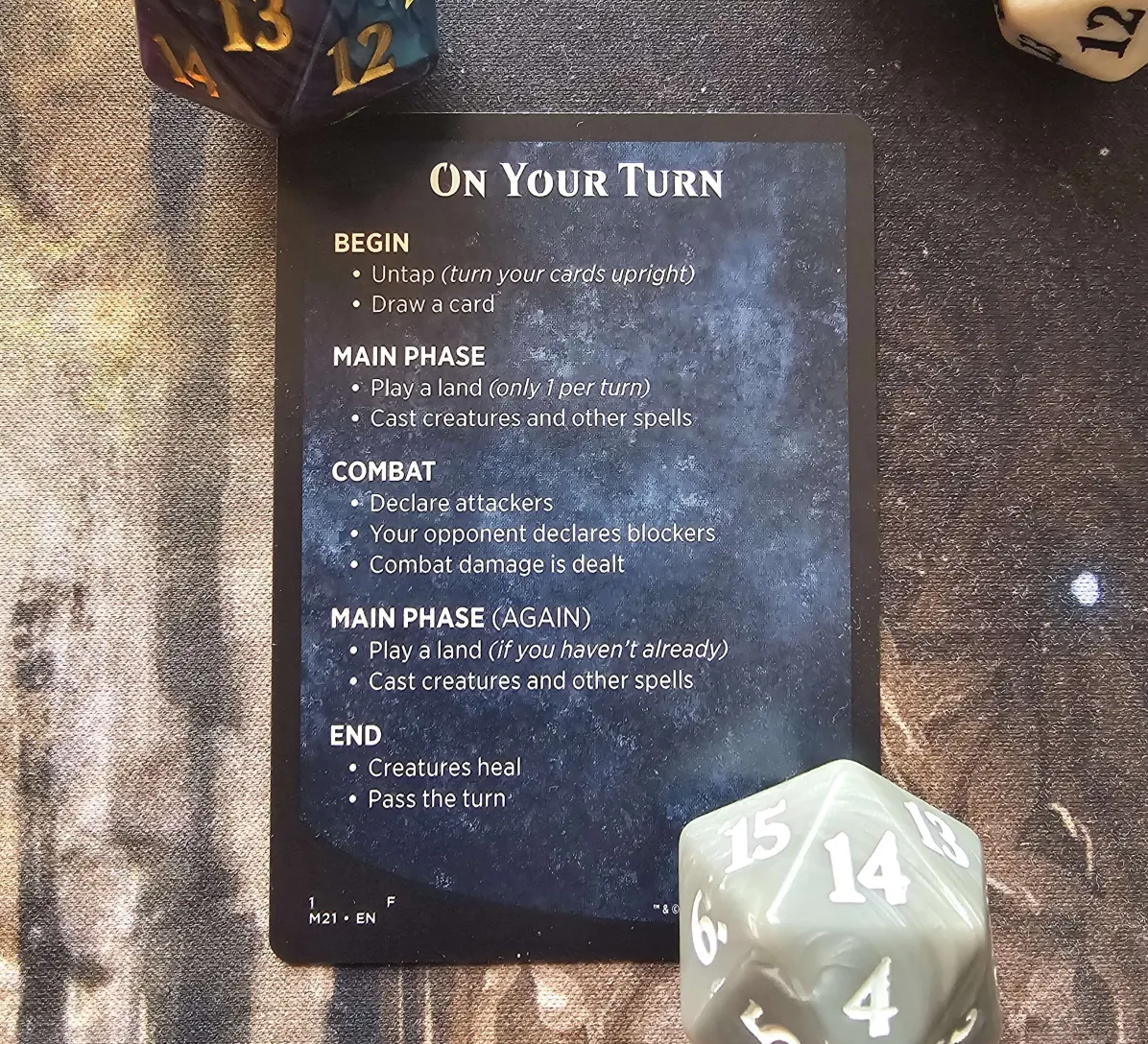
A turn in Magic consists of 5 phases, executed in strict order: Beginning, Precombat Main, Combat, Postcombat Main, and Ending. Let's look at what happens in each one.
The Beginning Phase: Untap, Upkeep, and Draw
The beginning phase consists of three steps, in this order: untap, upkeep, and draw. This phase sets up your turn.
Untap Step: The active player determines which permanents controlled by that player untap, then untaps all those permanents simultaneously. (The player will untap all permanents they control unless a card effect prevents this - Claustrophobia, Vedalken Shackles, and White Dragon) All your lands, creatures, and other permanents come back ready to use. No player receives priority during this step so spells or abilities cannot be played—it's automatic.
Upkeep Step: At the beginning of the upkeep step, any abilities that trigger either during the untap step or at the beginning of upkeep go on the stack. Then the active player gains priority the first time during their turn. This is where triggered abilities (like "at the beginning of your upkeep, draw a card") happen - Phyrexian Arena, The One Ring, and Court of Ardenvale. You get your first chance to cast instants or activate abilities here.
Draw Step: The active player draws a card from their library. Any abilities that trigger at the beginning of the draw step go on the stack. The active player gains priority. You draw one card (unless something says otherwise).
The First Main Phase (Pre-Combat Main Phase)
This is usually the busiest and most important part of your turn. This is where you actually start playing cards and building your board.
During your first main phase, you can do the following (in any order):
- Play one land for the turn (if you haven’t played one yet)
- Cast creatures, artifacts, enchantments, planeswalkers, and sorceries
- Activate abilities on cards you control
You can do these actions in any order you like. For example, you could play a land, then cast a creature, then activate an ability.
Once you’re ready to move on, simply say “Go to combat” or pass priority. Your opponent then gets a chance to respond by casting instants or activating abilities before combat begins. Once everyone passes, the game moves to the Combat Phase.
Note: There is also a second main phase after combat. You can do the same things in that phase too (cast spells and activate abilities), but you can only play one land per turn total — whether you play it in the first or second main phase.
The Combat Phase: Your Creatures Attack
This is the phase where your creatures can attack your opponent (or their planeswalkers) and deal damage.
The combat phase is broken into five steps, but here’s the simple flow:
- Beginning of Combat You decide whether you want to attack this turn.
- Declare Attackers You choose which of your creatures will attack and tap them. These creatures are now “attacking.”
- Declare Blockers Your opponent chooses which of their creatures (if any) will block your attacking creatures.
- Combat Damage Attacking creatures and blocking creatures deal damage at the same time. Creatures with lethal damage are destroyed.
- End of Combat Combat ends and any “end of combat” abilities trigger.
The core idea is simple: You choose who attacks → They choose who blocks → Creatures deal damage.
You don’t need to memorize every detail right away. Just remember the basic order: Attackers → Blockers → Damage.
The Second Main Phase (Post-Combat Main Phase)
Postcombat Main Phase — Functionally identical to the precombat main phase. Sorcery-speed spells are available again. Strategically, this phase matters because combat has already resolved — you know what creatures survived before committing to playing lands or tapping out for spells.
Important: You get two main phases, but can still only play one land per turn. This means if you already played a land in your first main phase, you cannot play another land in your second main phase. The rule is one land per turn total, not one per main phase. This catches a lot of beginners!
The Ending Phase: End Step and Cleanup
The ending phase of the turn is the last phase and breaks down into two steps, the end step and the cleanup step.
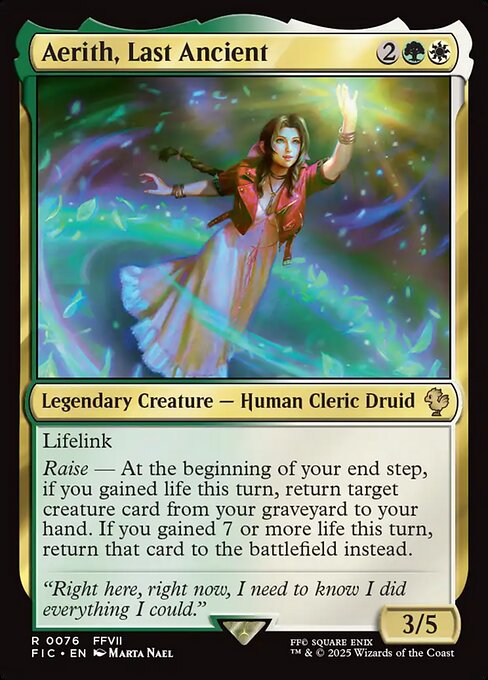
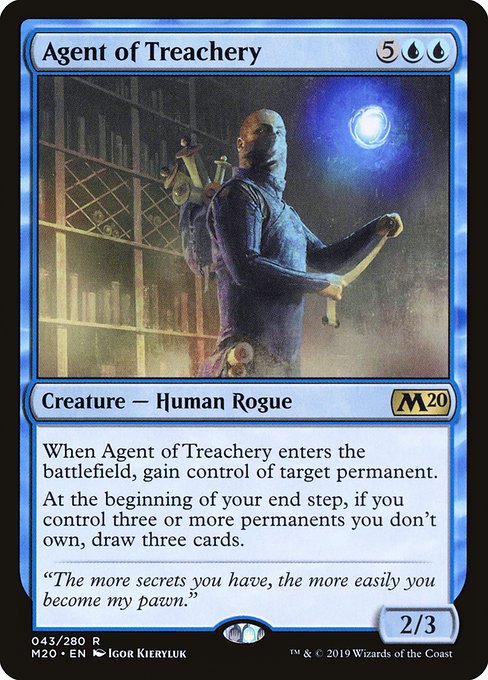
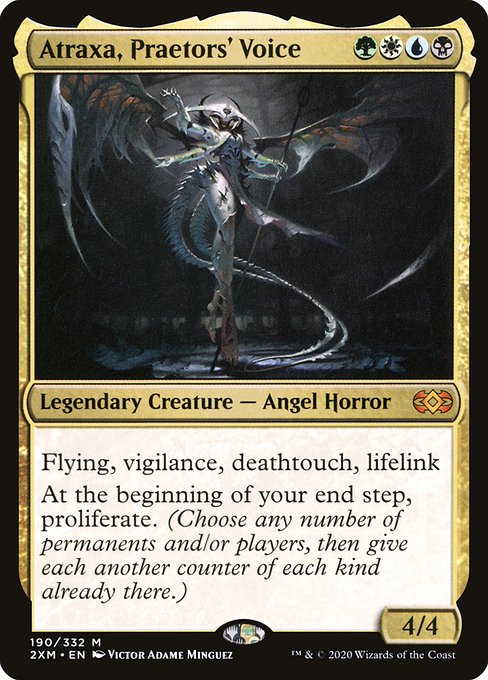
End Step: The end step is similar to the upkeep step, as it is a part of the turn that is specifically mentioned on cards. Many cards have abilities that read, "At the beginning of your end step, do [BLANK]." This is the last step of the turn where players can cast instants and activate abilities.
Cleanup Step: The cleanup step is the final step to a turn. If you have more than seven cards in your hand during your cleanup step, you must choose and discard cards until you reach seven cards. After that, all damage is removed from creatures and all "until end of turn" effects end.
Putting It All Together: An Example Turn
Let's walk through one complete turn so you can see how this flows in a real game. Meet Sarah. It's her fourth turn, and she has three lands on the battlefield, a creature from last turn, and a handful of cards.
Beginning Phase: Sarah untaps all her lands and her creature. Nothing triggers during her upkeep, so it passes quickly. She draws a card — a Grizzly Bears. Nice.
First Main Phase: Sarah plays her land for the turn (her fourth), then taps two lands to cast Grizzly Bears. It enters the battlefield, but remember — it has summoning sickness, so it can't attack this turn. She says "go to combat."
Combat Phase: Sarah attacks with her creature from last turn, tapping it. Her opponent has no creatures to block with, so the attack goes through and deals damage. Combat ends.
Second Main Phase: Sarah has two untapped lands left. She uses them to cast a small artifact from her hand. She already played her land this turn, so she can't play another one — one land per turn, total.
Ending Phase: Sarah says "go" — her end step begins, giving her opponent one last chance to cast an instant. They don't. Sarah has five cards in hand, so she doesn't need to discard during cleanup. Damage is removed from creatures, and the turn passes to her opponent.
That's it. Untap, draw, play stuff, attack, play more stuff, pass the turn. After a few games, this rhythm becomes second nature — you'll stop thinking about phases and just play.
Three Key Rules Every Beginner Should Know
Summoning Sickness: Why Your Creatures Can't Attack Right Away
Summoning sickness is a term for the rule that a creature cannot attack or use activated abilities that require a tap or untap if it has not been continuously controlled by a player since the beginning of that player's last turn. In plain English: creatures can't attack the turn they enter the battlefield.
This rule exists to balance the game. If you could play a creature and attack with it immediately, going second would be incredibly unfair.
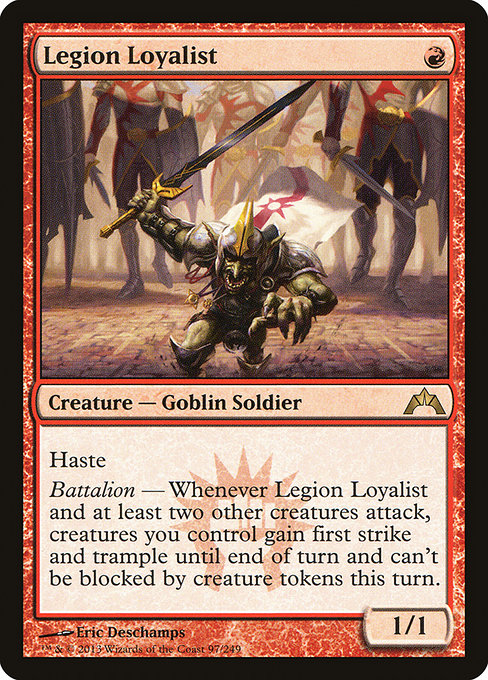
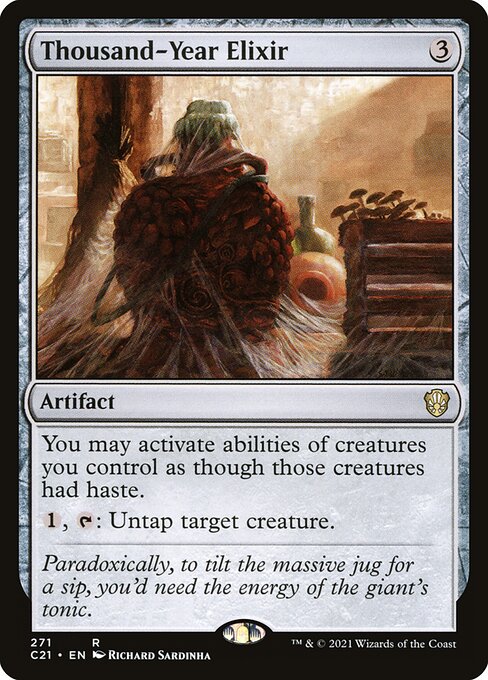
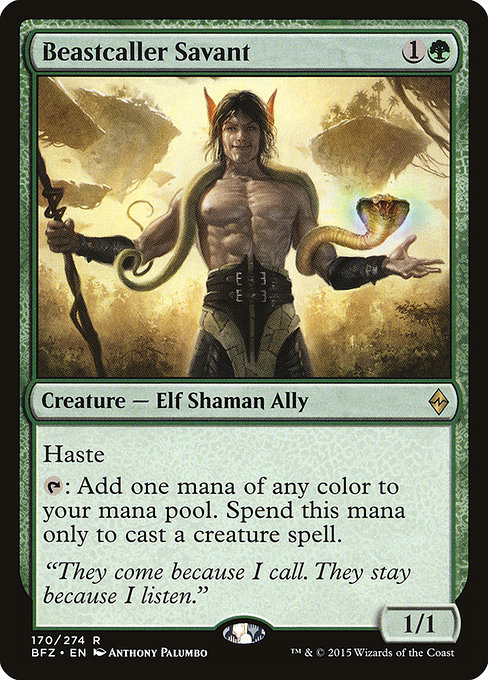
But there's an exception: Creatures that have Haste do not suffer from the effects of summoning sickness and can attack as soon as they enter the battlefield. Cards with haste are worth remembering—they're almost always stronger because they bypass this restriction.
You Get Priority to Cast Spells
At most steps and phases, you get a chance to do something before the turn moves forward. You can cast instant spells or activate abilities. If you pass (do nothing), your opponent gets a chance. Once both of you pass without doing anything, the phase or step ends automatically.
This is why instants are so valuable—you can use them at almost any time, even on your opponent's turn. But sorceries? Those only work during your main phases.
Mana Empties at the End of Each Phase and Step
Mana empties at the end of every step and phase, and not just at the end of each phase. This means that you can't generate mana in the upkeep step and then spend it in your draw step. When a step or phase ends, any unused mana left in a player's mana pool empties.
In practice, this means: only tap lands or create mana when you're ready to spend it immediately. You can't bank mana for later in your turn, unless you have a card that says otherwise - like Kruphix, God of Horizons and Horizon Stone.
What's Next?
You now understand the backbone of Magic: how a turn flows from start to finish. Every game runs on this same structure, every single time. That predictability is what makes Magic fair and strategic.
In Part 3 of this series, we'll dive into evergreen keywords—words that show up on cards again and again, especially combat-related abilities like Flying, First Strike, Trample, and more. Once you know what those words do, you'll be able to read almost any Magic card with confidence.
Until then, play a few games and focus on calling out the phases as you go. Use the Nerd Leagues Life Tracker app (iOS, Android coming soon!) to keep life totals organized, and remember: you've got this. Every player started exactly where you are now.
-
1
Magic: The Gathering Board Layout & Game Zones Explained
- 2 Magic: The Gathering Turn Phases Explained for Beginners You are here 3 All Evergreen MTG Keywords Explained 4 MTG Stack and Priority Explained: When Can You Respond? 5 The Combat Phase in Magic: The Gathering, Step by Step

Comments
Join the conversation.