

MTG Stack and Priority Explained: When Can You Respond?

Quick answer: In Magic: The Gathering, spells and abilities don't resolve the moment they're cast — they go on the stack, and you can respond as long as you have priority. A spell only resolves once every player declines to act.
TL;DR: Spells go on a pile. Last one on = first one to happen. That’s the stack.
If you've ever cast a spell and watched your opponent do something that seemed to happen "before" yours, you've already seen the MTG stack in action. It's one of those moments that makes new players blink and say, "Wait — what just happened?" This guide is part of our beginner series — if you're brand new, our guides on [reading cards and game zones] and [how turn phases work] are great places to start. Ready? It's time for the concept that separates players who take turns from players who play Magic.


How the MTG Stack Works
Imagine the stack is a pile of cafeteria trays or a stack of homework you have to do.
When you cast a spell (or activate an ability), it doesn’t happen right away. It goes on the stack — like sliding a tray onto the pile.
Your opponent can respond by putting their own spell or ability on top of yours.
When everyone stops adding things, the game starts at the top of the pile and works downward.
The last thing added to the stack is the first thing that actually happens.
The big rule: Last In, First Out
The last thing added to the stack is the first thing that actually happens.
What is Priority in MTG?
Priority is the right to act. Whoever has priority can cast an instant, activate an ability, or pass. You can only respond to a spell when you actually have priority — not just any time you feel like it.
Who Gets Priority and When in Magic: The Gathering?
At the start of each step and phase, the active player (the player whose turn it is) receives priority first. When that player casts a spell, they get priority back immediately after — giving them the chance to chain multiple spells or abilities before passing to their opponent.
Once the active player passes priority, their opponent receives it. If the non-active player also passes without doing anything, the top item on the stack resolves. Then the cycle starts again. This continues until the stack is empty and both players pass — at which point the game moves to the next step or phase.
That last rule is the engine of the whole game: nothing resolves and nothing moves forward until everyone has had their chance to act. This is what makes Magic fair — you always get your window.
Step-by-Step Stack Example: Lightning Bolt vs. Giant Growth
This is the classic teaching scenario — and it's the clearest way to see how responding to a spell actually works.


Here's the situation: You control a 2/2 creature. Your opponent casts Lightning Bolt targeting it. Here's how it plays out:
- Your opponent casts Lightning Bolt targeting your 2/2. It goes on the stack. They pass priority.
- You respond with Giant Growth targeting the same creature. It goes on the stack — on top of Lightning Bolt. You pass priority.
- Your opponent has no response. Both players have now passed, so the top of the stack resolves first.
- Giant Growth resolves (last in, first out!). Your creature becomes a 5/5 until end of turn.
- Priority passes again, both players pass, and Lightning Bolt resolves. It deals 3 damage to what is now a 5/5. Your creature survives with power to spare.
Now flip the order. If Giant Growth were already on the stack and your opponent cast Lightning Bolt on top of it, the Bolt would resolve first, dealing 3 damage to your 2/2 and killing it. Then Giant Growth would try to resolve — but its target is gone. It does nothing and goes to the graveyard.
Same two spells. Completely different outcome. Order matters enormously: the last spell cast is the first to resolve.
What Happens If a Spell Loses Its Target?
You just saw it in the flipped example: if your creature dies or becomes an illegal target before a spell resolves, that spell simply fails to resolve — informally called "fizzling." A spell whose targets are all illegal when it would resolve is removed from the stack without effect. It's not officially called fizzling in the rules, but every player uses the term.
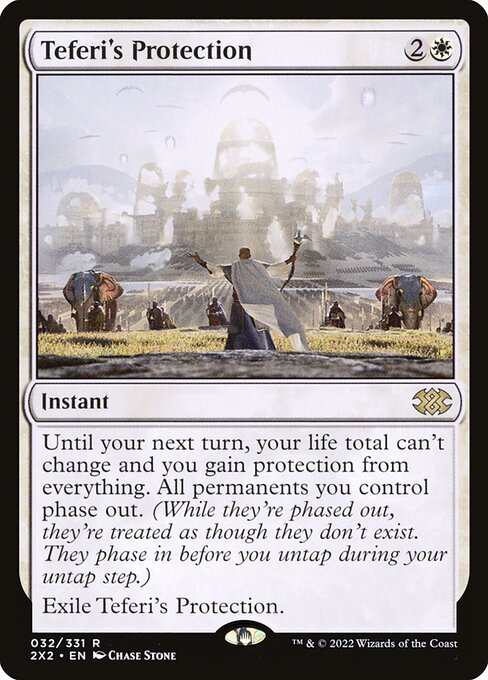
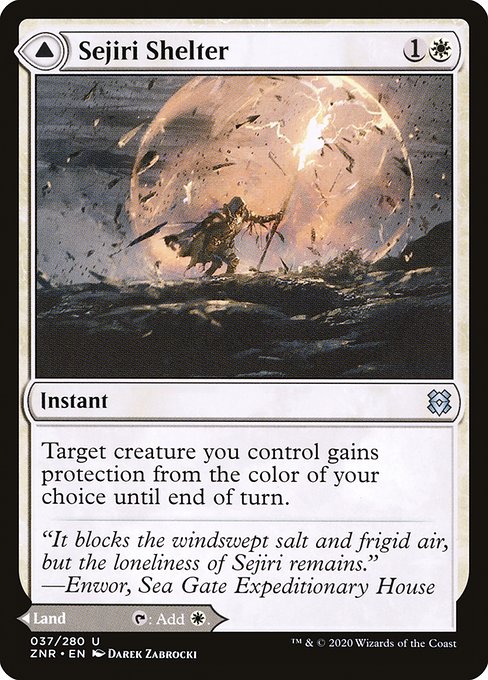
This works in your favor too. Cards like Sejiri Shelter or Teferi's Protection — which grant protection — can strand a Lightning Bolt on the stack with nothing legal to hit.
Triggered Abilities Use the Stack Too
The stack isn't just for spells. When a card says "When this creature enters the battlefield, draw a card" or "At the beginning of your upkeep, do [BLANK]," those triggered abilities go on the stack just like spells do — which means you can respond to them.
Don't worry about mastering every interaction yet. Just remember: if it triggers, it uses the stack, and you get a chance to respond.
One Big Exception: Mana Abilities
Here's a relief: tapping a land for mana does not use the stack. Mana abilities resolve instantly and can't be responded to. Nobody can counter your Forest. The same goes for playing a land — lands just enter the battlefield, no stack involved, no window to respond.
The Two Rules That Will Change How You Play Magic
After all the theory, here's what actually matters at the table:
Rule 1: You Can Only Respond When You Have Priority
You can't respond to a spell the moment you feel like it — you have to wait until priority is passed to you. In practice, this means paying attention to whether your opponent has explicitly passed (said "go ahead," "your priority," or similar). On MTG Arena, the game handles this automatically with stop points. In paper Magic, communicate clearly.
Rule 2: Once Everyone Passes, the Window Is Closed
The moment all players pass priority in sequence without anyone acting, the top spell resolves. If you wanted to respond, you needed to do it before that point. Once a spell has resolved, it's too late — there's no rewinding.
This is why experienced players say things like "resolving?" or "does that resolve?" — they're explicitly checking whether their opponent wants to respond before they let the top of the stack happen. Steal that habit early. It makes you a clearer, better player immediately.
Quick Recap: MTG Stack and Priority at a Glance
- Spells and abilities go on the stack before they resolve — they don't happen instantly
- The stack resolves last in, first out, like plates in a sink
- Priority is the right to act; you can only respond when you have it
- When all players pass priority in a row, the top of the stack resolves
- A spell whose targets are all gone fizzles — it does nothing
- Triggered abilities use the stack too, so you can respond to them
- Mana abilities and land plays skip the stack — they can't be responded to
That's the stack and priority system — one of the most powerful strategic levers in Magic once you internalize it. Practice saying "does that resolve?" at your kitchen table — and use the Nerd Leagues Life Tracker app to keep your life totals straight while you're at it. You've got this. Every stack master started by fumbling their first Giant Growth.
-
1
Magic: The Gathering Board Layout & Game Zones Explained
2
Magic: The Gathering Turn Phases Explained for Beginners
3
All Evergreen MTG Keywords Explained
- 4 MTG Stack and Priority Explained: When Can You Respond? You are here 5 The Combat Phase in Magic: The Gathering, Step by Step

Comments
Join the conversation.