

The Best Tutors in Commander, Color by Color

Black has the deep bench of tutors that find any card, which is why most lists of the best tutors in Commander are a black list with four other colors stapled on. Every color in EDH has a tutor that does one job better than anything black offers, though. This is the sibling of our best ramp by color and best removal by color lists: what each color can actually find, and the line of play that makes the search worth it.
A tutor, named after Demonic Tutor, is any card that searches your library for a specific card. Every pick below is judged on what it costs beyond mana: the card itself (a tutor trades a card for a card, so it gains you nothing until the target earns the slot), the draw it replaces when the target goes on top of your library, and what the search tells three opponents. Each color leads with its best tutor (a Game Changer in four of the five, so not one for Bracket 2), then the ones with a narrower job. Colors run from the deepest pool to the shallowest, then colorless and two-color. Where a card is marked as a Game Changer (a card Wizards lists as pushing a deck up a power bracket by itself), that is the list our Commander Bracket Calculator checks against. Twelve tutors are on it, and so are a few of the targets named below.
What a tutor costs you besides mana
Demonic Tutor for 
 reads like free value. It is card-neutral at best: a card and two mana for one specific card, so the target has to be worth more than a random draw plus two mana. On turn three that usually means a draw engine or ramp; on turn nine it means the card that ends the game.
Tutors that put the target on top of your library (Vampiric Tutor, Mystical Tutor, Worldly Tutor, Enlightened Tutor) are a card down whenever you cast them: the card you found replaces your next draw. What timing changes is the wait. Cast one in your upkeep, or at the end of the turn before yours, and the card is in your hand moments later; cast it in your own main phase and you have spent a card to see nothing until next turn. Responding to a draw trigger only helps when nobody can refuse the draw, like Skullclamp's. A trigger from Rhystic Study (a Game Changer) only works when the caster is tapped out; otherwise they decide whether to pay the after they have seen your tutor.
The last cost is information, and in a pod it can be the whole card. Opposition Agent ( , flash, so it is cast at instant speed, and a Game Changer) takes control of your search and plays what you found; Aven Mindcensor (
 , flash) limits you to the top four cards; Stranglehold stops the search outright. Tutor when the black and white players are tapped out.
Black: the deepest bench of tutors that find anything
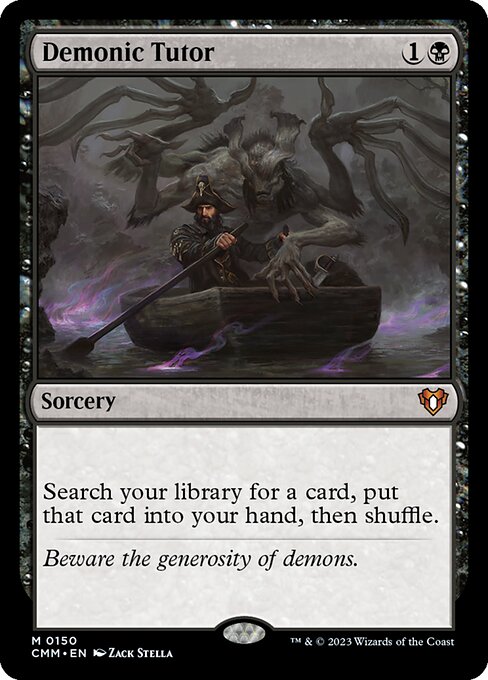
Demonic Tutor
, sorcery, any card to hand. Game Changer. The job is whatever the deck is missing; the mistake is what people fetch. On turn two with an empty board the right target is almost always the card that makes more cards or mana (Necropotence, itself a Game Changer, is the loud example), not the finisher you cannot cast for five turns. Search for the finisher on the turn you can also cast it.
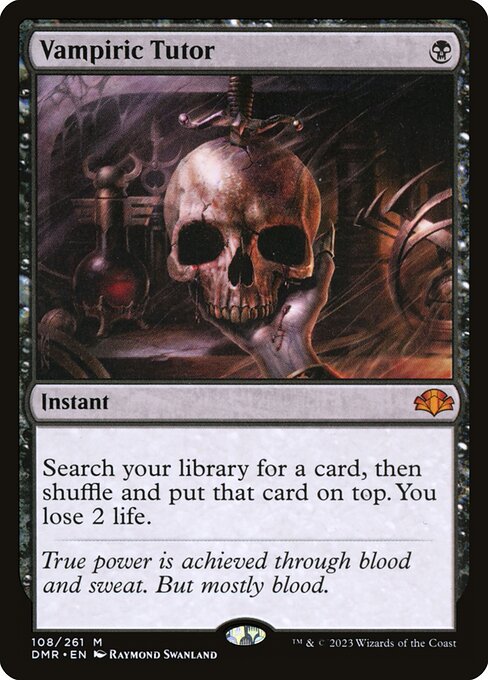
Vampiric Tutor (and Imperial Seal)
, instant, any card to the top of your library, and you lose 2 life. Game Changer, as is Imperial Seal, the sorcery version. Hold it for your upkeep or for the end step of the player to your right, so the card you found is the card you draw. With Necropotence out the rule flips, because Necro skips your draw step: tutor, pay 1 life to exile the top card, and it is in your hand at your next end step.
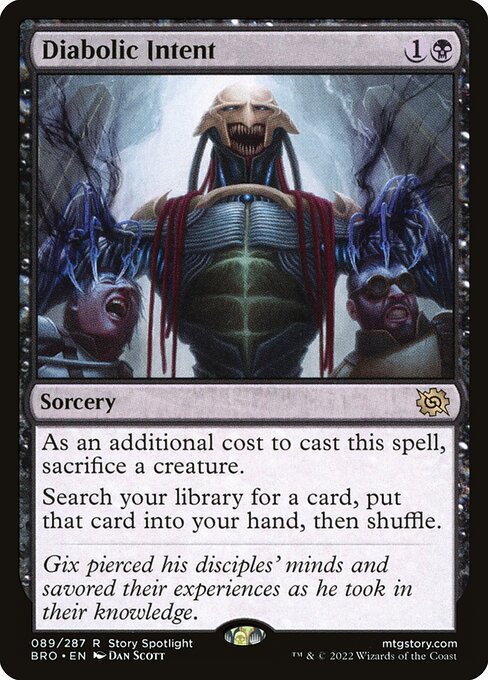
Diabolic Intent
, sorcery, any card to hand, and you sacrifice a creature as you cast it. Not a Game Changer, and in the right deck it is Demonic Tutor again. The right deck makes tokens or runs creatures that want to die: feed it a 1/1 Spirit, a Germ or a creature with a death trigger and the sacrifice costs nothing. In a deck with eight creatures and no tokens it rots in hand.
Below the Game Changer line
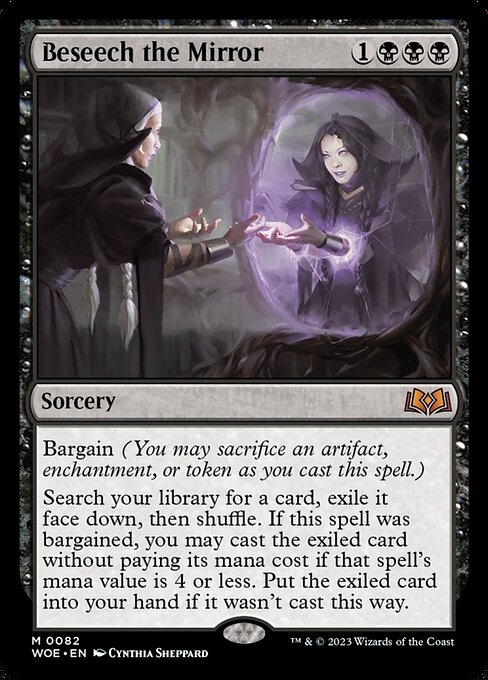
Beseech the Mirror () exiles the card it finds face down, and if you sacrificed an artifact, enchantment or token as you cast it (bargain) you may cast that card for free when its mana value is 4 or less: sacrifice a Treasure and it finds and casts a four-drop in one go. Otherwise the card goes to your hand, so at worst it is a four-mana Demonic Tutor. Diabolic Tutor () and Profane Tutor (suspend 2 for : it waits in exile and casts itself two upkeeps later) are the budget copies. Rune-Scarred Demon ( , a 6/6 flier that tutors when it enters) is the best top-end option, and Entomb (, instant) puts the card in your graveyard for Reanimate or Animate Dead instead.
Green: creatures and lands, straight onto the battlefield
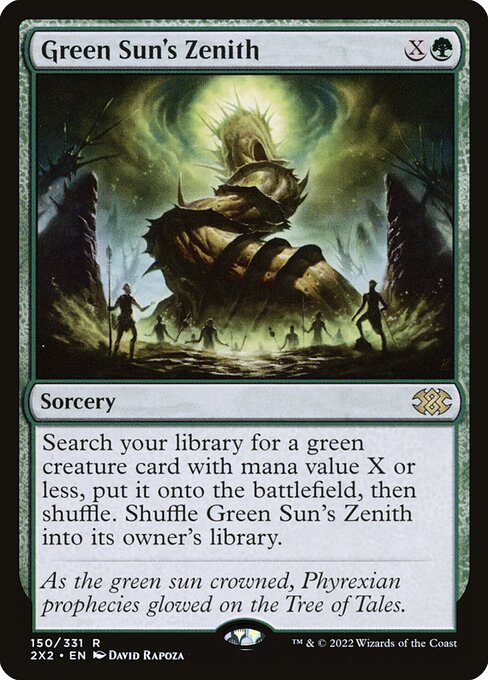
Green Sun's Zenith

 , sorcery, a green creature with mana value X or less goes onto the battlefield, then the Zenith shuffles itself back into your library. Not a Game Changer. It is a different card at every point in the game: on turn one, X=0 fetches Dryad Arbor (a land that is also a 1/1 creature, so it is summoning sick and cannot tap for mana until your next turn) and you are a land ahead; midgame, X=3 is an Eternal Witness that rebuys the removal you already spent; late, X=8 is Craterhoof Behemoth, which has haste. It only finds green creatures, so a green-black deck cannot Zenith for a black one.
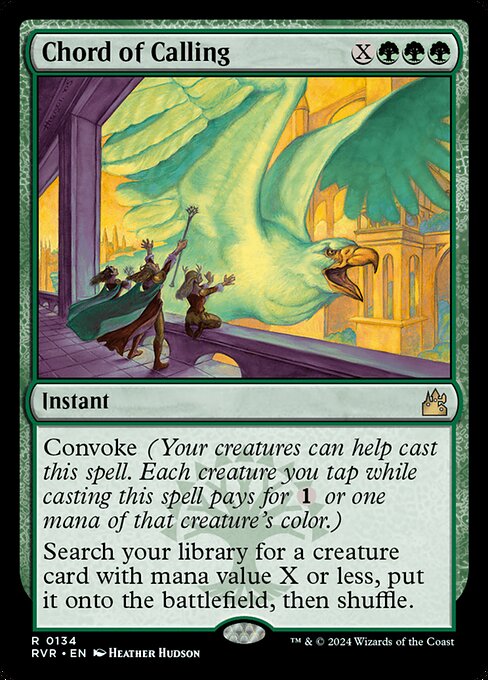
Chord of Calling
, instant, with convoke: each creature you tap while casting it pays or one mana of its color, and any creature with mana value X or less, of any color, goes onto the battlefield. Not a Game Changer. The line that wins games is the end-step Chord: at the end of the turn before yours, tap the creatures that did not attack (summoning-sick creatures can convoke, because tapping for convoke is not a  ability) and drop the creature you need when nobody has a sorcery-speed answer. You untap with it a turn earlier than anyone expected.
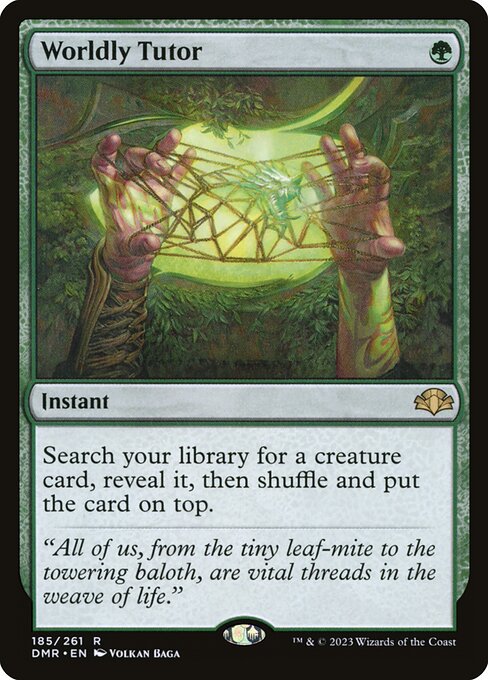
Worldly Tutor
, instant, any creature card to the top of your library. Game Changer; Sylvan Tutor (the sorcery) is not. The upkeep rule applies word for word. It beats the Zenith on color and speed, finding a creature of any color at instant speed, which in a green-blue deck means the blue combo piece. It loses because the creature is still in your library and you still have to cast it.
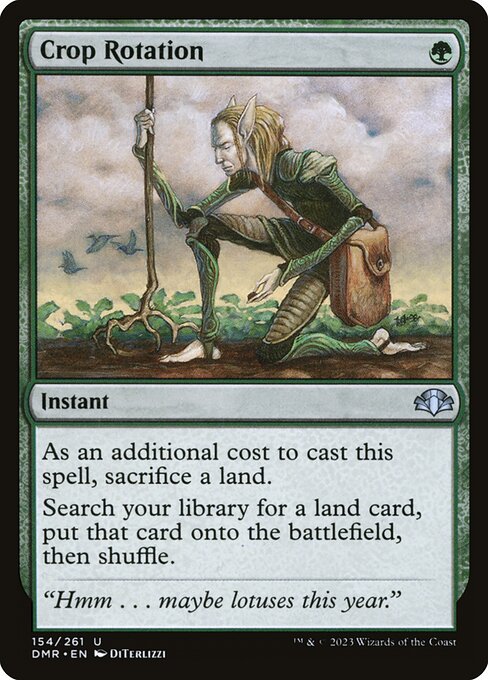
Crop Rotation
, instant, sacrifice a land, and any land card goes onto the battlefield. Game Changer. Most players undersell land tutors, and the lands this one finds are some of the strongest cards in the format: Gaea's Cradle (a Game Changer) on a board of five creatures, Field of the Dead (another), or, in a deck with black, Bojuka Bog in response to a Reanimate, which exiles the graveyard the spell was pointed at. Sylvan Scrying (, land to hand) costs you neither a land nor a Game Changer slot.
Natural Order (, sacrifice a green creature for a green creature onto the battlefield) and Survival of the Fittest ( enchantment; and a discarded creature card finds any creature, repeatably) are both Game Changers. Finale of Devastation (, which also searches your graveyard), Eldritch Evolution (, sacrifice a creature for one with mana value up to 2 higher) and Fauna Shaman (Survival on a creature, with in the cost) are not.
Blue: spells and artifacts, at instant speed
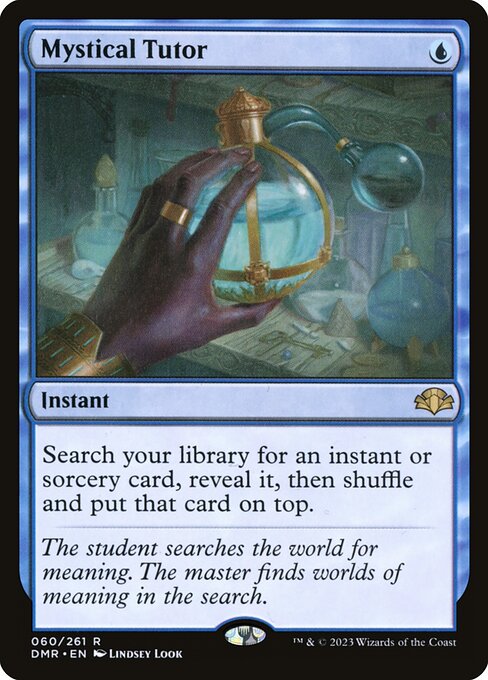


Mystical Tutor
 , instant, an instant or sorcery to the top of your library. Game Changer. Blue's best tutor finds answers, and the way to use it is to find the answer before the problem is on the stack: upkeep, with a wrath (a spell that destroys every creature) on top, when the token deck has gone wide (filled the board with creatures). The trap is casting it in response to a threat and expecting to counter that threat. The counterspell is on top of your library, not in your hand, and the threat resolves.
Whir of Invention
, instant, with improvise, and an artifact with mana value X or less goes onto the battlefield. Not a Game Changer. Improvise lets you tap artifacts to pay the generic part of the cost (never the ), so a deck with four mana rocks (artifacts that tap for mana) casts it for three blue and a few taps. An instant that puts the card onto the battlefield answers things the same turn: Grafdigger's Cage in response to a reanimation spell, or Lightning Greaves at end of turn so your commander swings with haste. Fabricate (, sorcery, artifact to hand) is the budget copy.
Spellseeker
for a 1/1 that may find an instant or sorcery with mana value 2 or less when it enters. Not a Game Changer. The two-mana ceiling sounds narrow until you list what sits under it: Counterspell, Cyclonic Rift (a Game Changer), Dramatic Reversal, and in a blue-black deck Demonic Tutor and Vampiric Tutor, which makes Spellseeker a tutor for a tutor. It is also a creature, so creature tutors like Chord of Calling and Eldritch Evolution can find it, and any blink effect (exile it and return it) reuses its search. Merchant Scroll (, sorcery, a blue instant to hand) is the cleaner card in mono-blue. Gifts Ungiven and Intuition, the two pile tutors (an opponent decides which of the cards you found go to your graveyard), are both Game Changers and only worth it in a deck that plays from the graveyard.
White: equipment, enchantments and small creatures
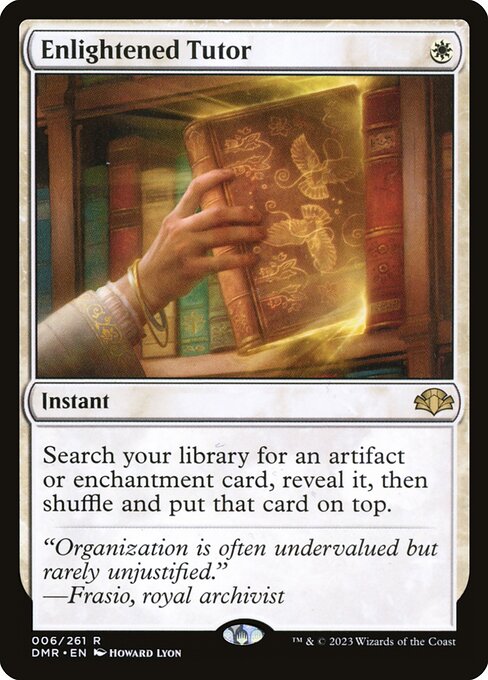
Enlightened Tutor
, instant, an artifact or enchantment to the top of your library. Game Changer. The job is an engine piece: Smothering Tithe (also a Game Changer), Land Tax, Skullclamp, or whichever enchantment the deck is built around. The line: at the end of the turn before yours, find the engine, draw it, cast it, and the card you spent finding it is paid back by the engine's second turn on the battlefield. In a deck built around one Equipment or one mana rock, it is a second copy of the plan for one mana.
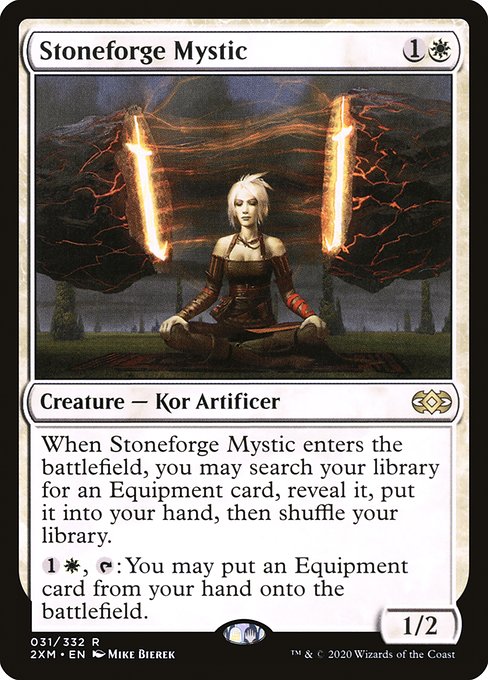
Stoneforge Mystic
for a 1/2 that may find an Equipment card when it enters, with a second ability for and that puts an Equipment from your hand onto the battlefield without casting it. Not a Game Changer. Stoneforge Mystic fetches Skullclamp (an Equipment) in a token deck, and in a Voltron deck (one creature wearing every Equipment) it fetches Batterskull on turn two and skips the five-mana cost on turn three. Steelshaper's Gift (, sorcery, Equipment to hand) and Open the Armory (, sorcery, Aura or Equipment to hand) are the spell versions.
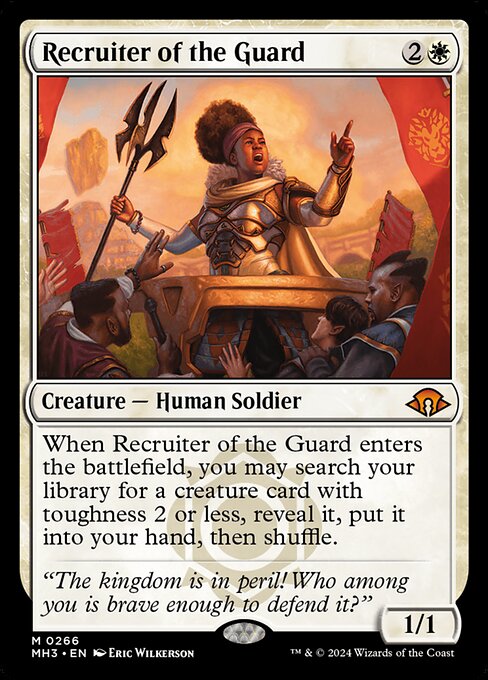
Recruiter of the Guard
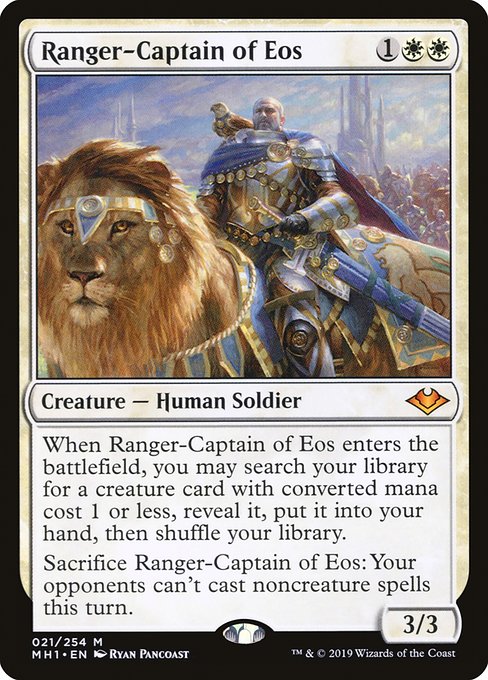
for a 1/1 that may find a creature with toughness 2 or less when it enters. Not a Game Changer. Toughness, not power, and that decides what it hits: Opposition Agent is a 3/2, so Recruiter of the Guard finds it; Drannith Magistrate (also a Game Changer) is a 1/3, so it does not, while red's Imperial Recruiter (power 2 or less) does. In a hatebears deck (cheap creatures that tax or stop opponents) it finds most of the deck; in a deck of 4/4s it finds nothing. Ranger-Captain of Eos () finds a creature with mana value 1 or less (Esper Sentinel, Mother of Runes) and can be sacrificed to stop opponents casting noncreature spells for the turn, which protects whatever you tutored last turn. Idyllic Tutor (, sorcery, enchantment to hand) is the pick for enchantress decks that would rather not run a Game Changer.
Red: one real tutor and a few recruiters


Gamble
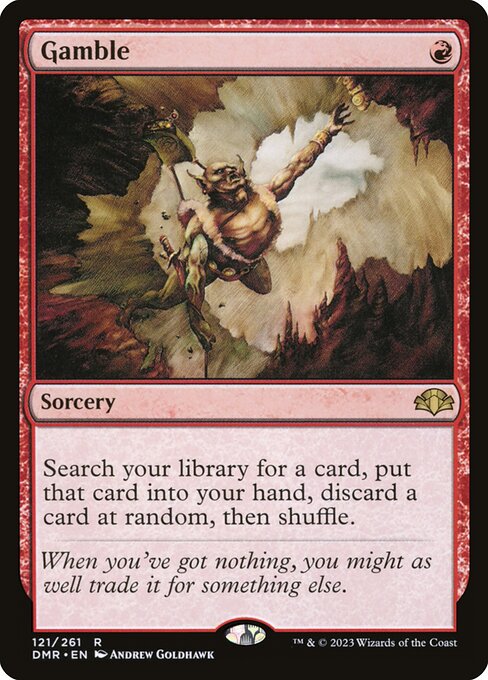
 , sorcery, any card to hand, then you discard a card at random, then shuffle. Game Changer, which surprises people until they count what it does for one mana. The trap is the empty hand: cast it with no other cards and the random discard is the card you just found. With six other cards in hand the odds of losing the target are one in seven. The decks that love it are the ones where the discard is fine either way: with Goblin Welder on the battlefield (it swaps an artifact you control for an artifact card in your graveyard), Gamble for an artifact and you are happy whichever zone it lands in.
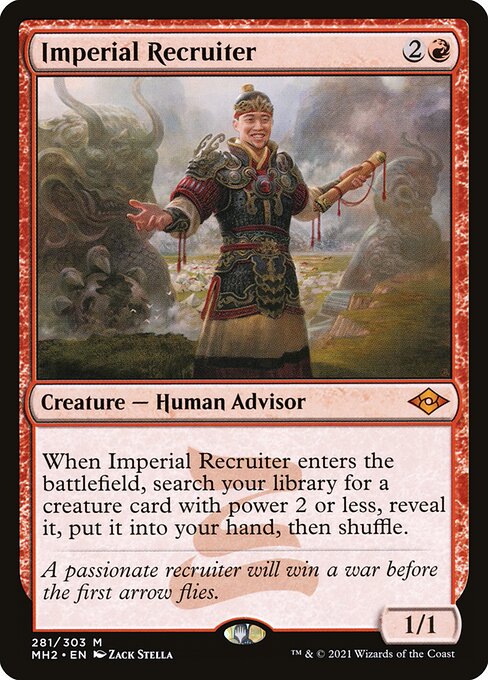
Imperial Recruiter
for a 1/1 that finds a creature with power 2 or less when it enters (not "may": it has to search). Not a Game Changer. The power ceiling catches red's best low-power creatures, Kiki-Jiki, Mirror Breaker (a 2/2), Ragavan, Nimble Pilferer and Goblin Welder, plus Drannith Magistrate and Spellseeker in two-color decks. The two Recruiters find each other, so a Boros deck can chain one search into the next (in Izzet, Imperial Recruiter into Spellseeker does the same job), and a Kiki-Jiki copy of it searches again.
The tribal recruiters
Goblin Matron (, a Goblin card to hand) and Goblin Recruiter (, any number of Goblin cards to the top of your library in the order you choose) are the best creature-type tutors in the game, and the Recruiter is the stronger card: it stacks your next several draws. Sarkhan's Triumph (, instant) does the Matron's job for Dragons. Beyond these, red's searching is bolted onto bodies that are already something else, and none of it is a reason to be in red. The color's real card advantage is impulse draw (exile the top card, play it this turn), not searching.
Colorless: tutors any deck can run
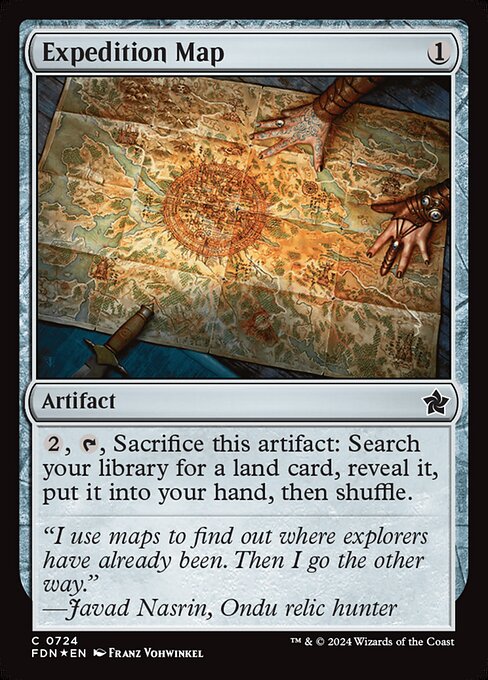
Expedition Map
for an artifact that sacrifices itself for and to put any land card in your hand. Not a Game Changer. Three mana, in one turn or across two, for the land that defines your deck is a fair price: Cabal Coffers and Urborg, Tomb of Yawgmoth in mono-black, Bojuka Bog in any deck with black that faces a graveyard deck, Field of the Dead in a lands deck (one built around playing extra lands). Mono-red and mono-white, with the fewest ways to find a land, are where Expedition Map earns the slot first.
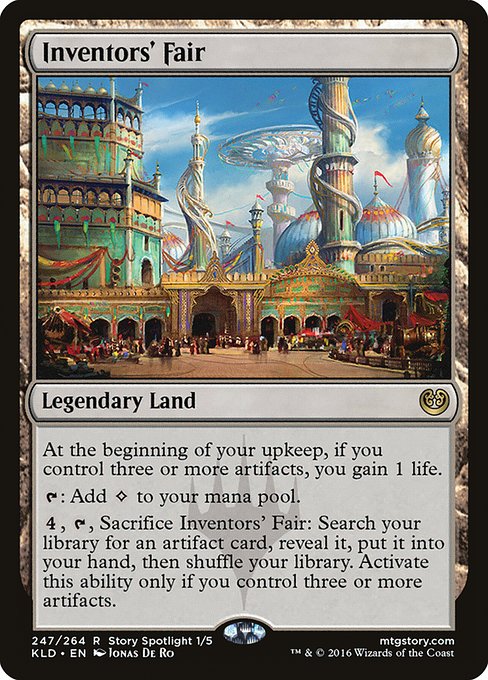
Inventors' Fair
A legendary land that taps for  , gains you a life each upkeep while you control three or more artifacts, and with those same three artifacts sacrifices itself for
 and to find any artifact card. Not a Game Changer. Inventors' Fair costs a land slot rather than a spell slot, which is the point: it taps for mana for ten turns and becomes a tutor on the one turn you need it to. Any deck with a dozen artifacts should run it ahead of a basic.
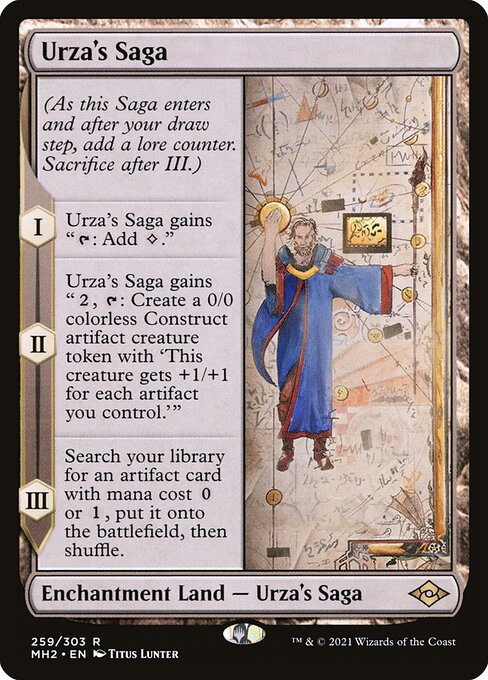
Urza's Saga
An enchantment land Saga: chapter I lets it tap for , chapter II lets you pay and for a Construct token that grows with your artifacts, and chapter III finds an artifact with mana cost  or and puts it onto the battlefield, after which the Saga is sacrificed. Not a Game Changer. Urza's Saga gets a lore counter as it enters and after each of your draw steps, so the search lands two turns after you play it, on Sol Ring, Skullclamp, Pithing Needle or whichever one-mana artifact the deck is built around. Count it as a spell when you count lands, because it is gone by then.
Planar Portal ( , then and per search) and Ring of Three Wishes (, then and per search, three times) find any card in any color, and are the right pick for a Bracket 2 deck that wants its one win condition eventually without a Game Changer. Both cost ten mana or more before the first card shows up.
Two-color tutors worth the splash
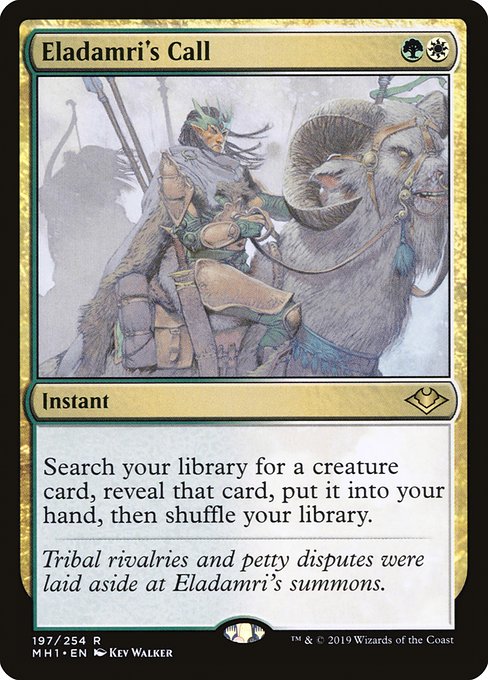

Eladamri's Call (, instant, any creature card to hand) is the best creature tutor in the format for the decks that can cast it: two mana, instant speed, no restriction, no life, no top-of-library tax, and not a Game Changer. Cast it at the end of the turn before yours and untap with the creature in hand and all your mana. Fiend Artisan ( : hybrid, so black or green mana pays for it, but its color identity is black-green and it needs a black-green commander) is the repeatable one: pay , tap it and sacrifice another creature to put a creature with mana value X or less onto the battlefield, at sorcery speed. In an aristocrats deck (sacrifice creatures for value) it is the engine and the tutor in one slot.
Tutor habits that decide games
Searching for the wrong thing loses more games than running too few tutors. The rules our own pods settled on:
How the Bracket Calculator reads your tutors
Our Commander Bracket Calculator does three things with a deck's tutors, and knowing them answers "how many tutors should I run" better than a number would.
The Game Changer count sets a floor. Twelve tutors are on the list it uses: Demonic Tutor, Vampiric Tutor, Imperial Seal, Enlightened Tutor, Mystical Tutor, Worldly Tutor, Gamble, Natural Order, Survival of the Fittest, Crop Rotation, Gifts Ungiven and Intuition. One Game Changer anywhere in the deck makes it at least Bracket 3; a fourth makes it Bracket 4, and that cap covers the whole deck, so three Game Changer tutors plus Rhystic Study is Bracket 4. A Bracket 2 deck runs none, which is why Diabolic Intent, Green Sun's Zenith, Chord of Calling, Spellseeker, Stoneforge Mystic, Eladamri's Call and Expedition Map do so much of the work in the decks most tables actually play.
With no Game Changer in the list, it reads the tutor suite as evidence of tuning. Four or more tutors is one of its eight upgrade markers (heavy tutoring); two or more that search for any card at all is another (unconditional tutors); any three markers together (the others include a low curve and fast mana beyond Sol Ring) read as Bracket 3. Running no tutors at all is one of the markers of a Bracket 1 exhibition deck. The practical answer: a Bracket 2 deck sits comfortably at one to three tutors with at most one of them unrestricted, a Bracket 3 deck at four to six with up to three Game Changers in the whole deck, tutors included, and a Bracket 4 deck runs every one it can cast.
Land search is its own bucket. Expedition Map, Sylvan Scrying and Crop Rotation are not counted as tutors, because a land tutor's ceiling is a land rather than a win condition (Crop Rotation's Game Changer status still applies), so a lands deck running all three plus one real tutor counts one tutor, not four, and is not flagged for heavy tutoring. Paste any list in to see which flags your deck trips, then open the public deck explorer to see how other players in your colors fill the same slots. The by-color series also covers ramp and removal, and our counterspells guide sorts counterspells by the job they do.


Comments
Join the conversation.