

Three Life Before Combat: The Frodo, Adventurous Hobbit Commander Deck Plan

This Frodo, Adventurous Hobbit commander deck has one job every turn: gain three life before combat. Do that and Frodo's attack tempts you with the Ring, and once the Ring has tempted you twice he draws a card on every swing. Everything else in the other ninety-nine cards is either a cheap way to gain those three life or a way to make each point of life you gain cost your opponents something.
The list is our bracket 3 build on the house account, Frodo, Adventurous Hobbit Bracket 3, audited at bracket 3 (Upgraded) with two Game Changers (the cards the bracket system counts against a deck), Farewell and The One Ring, and no two-card infinite combos. It started as the average list for the commander and ended thirteen cards different; the changes are explained below, cuts included.
What Frodo actually asks of you
Frodo, Adventurous Hobbit costs 
 and has vigilance, which matters more than it looks. His text: "Whenever Frodo attacks, if you gained 3 or more life this turn, the Ring tempts you. Then if Frodo is your Ring-bearer and the Ring has tempted you two or more times this game, draw a card." He also has partner with Sam, Loyal Attendant, but Sam costs

 , so a Sam pairing is a three-color deck and a different post. This build runs Frodo alone in white and black.
Two rules details decide how the deck is built. First, the attack trigger checks its condition both when it triggers and when it resolves, so the three life must already be gained when you declare Frodo as an attacker; life from lifelink damage arrives too late for that turn's trigger. Second, "gained 3 or more life this turn" counts life gained, not net life. Paying 2 life to Call of the Ring or losing 1 to Bitterblossom does not undo a gain of 3.
The Ring tempting you is an emblem that grows. Each time it tempts you, you choose a creature as your Ring-bearer and the emblem gains its next ability, in order: your Ring-bearer is legendary and can't be blocked by creatures with greater power; whenever it attacks, you draw a card and then discard a card (a loot, in table slang); whenever it becomes blocked by a creature, that creature's controller sacrifices it at end of combat; and whenever it deals combat damage to a player, each opponent loses 3 life. Choose Frodo every time. His attack trigger is itself a tempt, so a single earlier tempt is enough for his first qualifying attack to draw, and by the fourth tempt every connected attack is a card, a loot and 9 life off the table.
The three-life engine

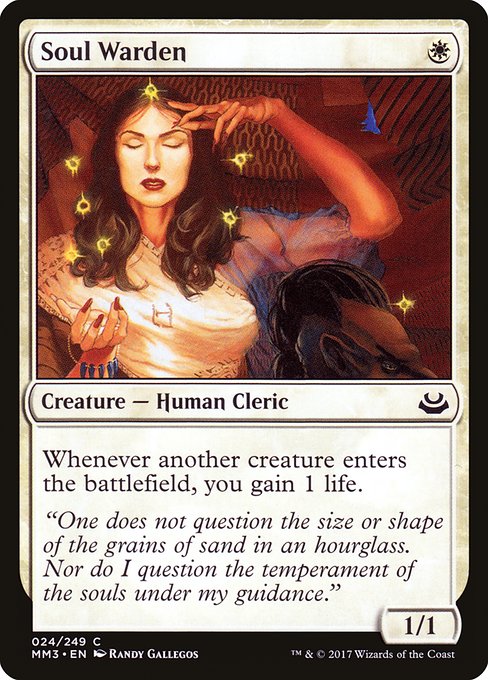


The cheapest three life in the deck come from creatures entering. Soul Warden, Soul's Attendant, Hinterland Sanctifier, Lunarch Veteran, Lifecreed Duo, Dazzling Angel, Suture Priest, Elas il-Kor, Sadistic Pilgrim and Daxos, Blessed by the Sun each gain you 1 when another creature enters (the two Souls count anyone's creatures, the rest only yours), and with three of them out any creature you play is 3 life. That is why Bitterblossom is in the deck: a Faerie at every upkeep, before combat, is Frodo's condition met without casting a spell. Players call this family the Soul Sisters, after Soul Warden and Soul's Attendant, and this post calls them sisters. Ocelot Pride is the end-step version: on any turn you gained life it makes a Cat, the sisters trigger on the Cat right then, and because you order your own end-step triggers you can let that life count toward Gollum, Obsessed Stalker's drain in the same end step. Cleric Class at level one adds 1 to every gain, so each of those triggers becomes 2.
Extort is the second engine, and at a four-player table it is better than most players remember. Syndic of Tithes, Basilica Screecher, Thrull Parasite, Tithe Drinker, Blind Obedience and Sorin of House Markov each let you pay  when you cast a spell so that each opponent loses 1 life and you gain the total, which with three opponents is 3 life from a single payment. One extort permanent and one spell is Frodo's number. Pristine Talisman gains 1 every time it taps, and Kaya's Guile gains 4 at instant speed, which is how you turn Frodo on in a turn where nothing else lined up.
The sequencing trap is the one most pods fall into with lifegain decks: casting creatures after combat. In this deck every creature spell goes in the first main phase, every extort payment too, and only then do you move to combat. If the count is at 2 going into combat, tap Pristine Talisman or cast Kaya's Guile at the beginning of combat. Do not attack and hope.
Where the damage comes from


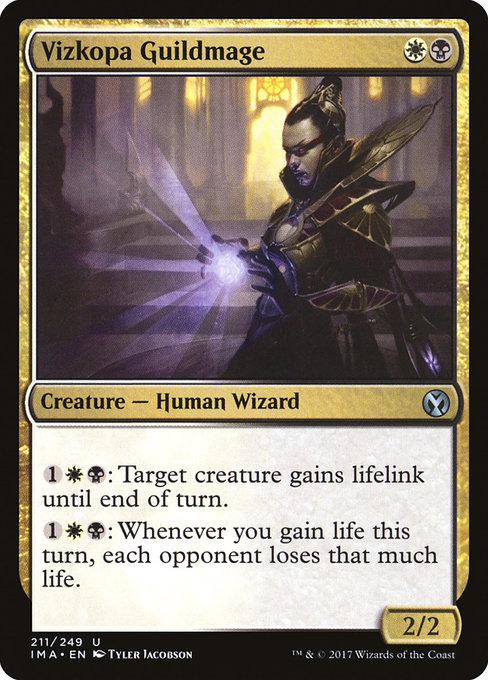
Two kinds of payoff, and they want different kinds of lifegain. Starscape Cleric and Marauding Blight-Priest trigger per event: every separate gain of 1 from a sister costs each opponent 1, so ten small gains are 10 life lost by each opponent from one Cleric, and life loss can't be prevented. Vito, Thorn of the Dusk Rose (one target opponent) and Vizkopa Guildmage (each opponent) scale with the amount, so they want the lumps: a Kaya's Guile, a Heliod's Intervention for X, a lifelink hit from Archangel of Thune. Vizkopa's second ability only lasts the turn, so activate it in the first main phase of the turn you plan to gain the most.
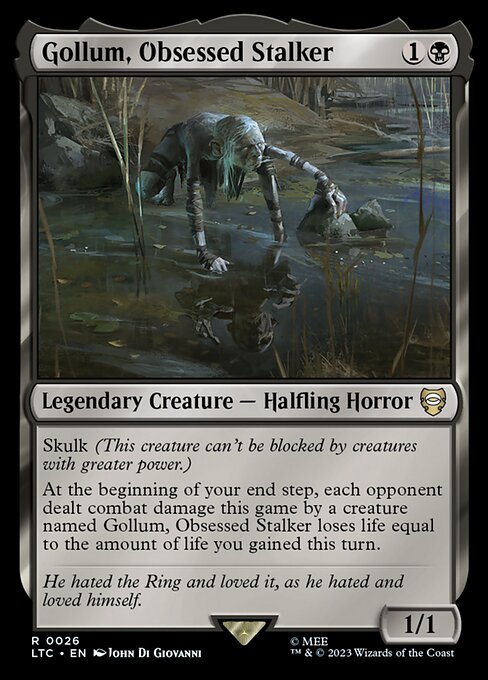
Gollum, Obsessed Stalker is the quiet finisher. Once he has dealt combat damage to an opponent, that opponent loses life equal to what you gained at each of your end steps for as long as a Gollum is on the battlefield, and skulk (he can't be blocked by creatures with greater power) makes the first connection easy. The trigger checks the name rather than the card, so a Gollum recast through Lurrus of the Dream-Den still drains everyone the first one hit. Mirkwood Bats drains on every token you make, which with Bitterblossom, Ocelot Pride, Griffin Aerie and Dawn of Hope is several a turn. Archangel of Thune and Heliod, Sun-Crowned turn the same triggers into counters, Sorin of House Markov flips into a planeswalker in your second main phase on the same three-life threshold Frodo uses, and Witch of the Moors makes every opponent sacrifice a creature at your end step on any turn you gained life, which here is every turn.
One card to watch: Amalia Benavides Aguirre explores (reveal the top card, take it if it is a land, otherwise grow by a counter) once per lifegain event, and at exactly 20 power she destroys all other creatures, yours included. One big hit is one counter; a turn of sister triggers with Archangel of Thune out is many, so count her power before that turn rather than before the big hit.
Card draw: the Ring, the Gaffer and the second tempt
The One Ring is one of the deck's two Game Changers and the best card in it: protection from everything until your next turn when you cast it, then a growing pile of cards for  . Each activation adds a burden counter and the upkeep life loss climbs with them, and this is the deck that can afford to pay it for longer than most. Call of the Ring tempts you every upkeep and offers a card for 2 life each time you name a Ring-bearer, which runs the tempt count up fast. The Gaffer and Griffin Aerie check the same "gained 3 or more life" threshold Frodo does at the end step, so a turn that turned Frodo on also draws a card and makes a 2/2 flier. The Gaffer checks every end step, not only yours, and Soul Warden, Soul's Attendant and Authority of the Consuls trigger on opponents' creatures, so a busy opponent's turn with Kaya's Guile held up can draw you a card at their end step as well. Dawn of Hope turns spare mana into cards one gain at a time.
One tempt before Frodo's first attack is what Samwise the Stouthearted and Nazgûl are for. Both tempt you on entering, Samwise at instant speed, and either one on turn three means the turn-four attack draws; a second early tempt adds the emblem's loot on top. Sam's Desperate Rescue does the same once a creature has died. A Frodo cast on turn two whose first attack on turn four already draws a card is the opening the deck is built for. Frodo, Sauron's Bane is the other Ring card: for the body, then and to reach his Rogue form, and from there every hit tempts you again until the fourth tempt, after which each player he connects with loses the game.
What we changed and why
The starting point was the average list for the commander. We cut thirteen cards and added thirteen, and the audit linked above is of the list after those changes.
Cut
- Wrath of God and Nightmare Unmaking, cut. Wrath kills our own board of one- and two-drops. Nightmare Unmaking's modes key off the number of cards in your hand, and with The One Ring and The Gaffer keeping that hand big, the mode that spares your creatures misses the threats and the other exiles your own team. Dusk // Dawn stays because its front half spares creatures with power 2 or less, which is most of this deck, Fell the Mighty stays because it lets you pick the line, and Farewell stays as the reset button when an opponent's board is enchantments and artifacts.
- Dance of the Dead, Ascend from Avernus and Jolted Awake, cut. Reanimation for a deck whose creatures cost one or two is already handled by Lurrus of the Dream-Den, Sevinne's Reclamation, Lively Dirge and the back half of Dusk // Dawn.
- Fake Your Own Death, cut. A combat trick protecting one attacker in a deck that wins with triggers.
- Lotus Petal, cut. A card spent for one mana, once, in a deck with 37 lands, five mana rocks (artifacts that tap for mana) and Wayfarer's Bauble, which is more mana than a curve this low needs.
- Gonti's Machinations, cut. It takes two turns of losing life to charge, then fires once and is gone. Most of the cards added below do their job every turn.
- Knight of Dusk's Shadow, cut. "Your opponents can't gain life" is a card you play against lifegain decks, and we are the lifegain deck.
- Desolate Mire, Snowfield Sinkhole and Vesuva, cut. Desolate Mire makes no mana on its own (every activation needs from another source), Snowfield Sinkhole always enters tapped, and Vesuva enters tapped with nothing in the deck worth copying. 37 lands was three too many at this curve; the deck now runs 34 lands, five rocks and the Bauble.
- Ajani's Pridemate, cut for Voice of the Blessed, which is the same card with flying and vigilance at four counters and indestructible at ten.
Added
- Bitterblossom: the single best enabler for Frodo, for the reason above. The 1 life a turn is nothing here.
- Ocelot Pride: a lifelink one-drop that makes a Cat at your end step whenever you gained life, which triggers the sisters and Mirkwood Bats right then, and with the city's blessing (ten or more permanents) it copies every token you made that turn, Faerie and Griffin included.
- Mirkwood Bats: tokens into drain, since the deck now makes a token most turns.
- Heliod, Sun-Crowned: a counter per lifegain event, indestructible, and to give Frodo lifelink so his own hits count toward the end-step checks.
- Archangel of Thune: a counter on every creature per gain. With three sisters out, one creature spell grows the whole team three times.
- Vito, Thorn of the Dusk Rose and Marauding Blight-Priest: a second copy of each kind of payoff, per-amount and per-event, so the drain doesn't depend on drawing Vizkopa or Starscape.
- Valkyrie Harbinger: the top end. A 4/4 flying Angel at every end step you gained 4 or more, a bar this deck clears most turns.
- Dawn of Hope: card draw that scales with the engine, and lifelink Soldiers for the sisters when there is nothing better to do with four mana.
- Samwise the Stouthearted and Nazgûl: tempt on entering, so Frodo's first qualifying attack draws; both together add the emblem's loot. Samwise also returns a permanent card put into your graveyard from the battlefield this turn to your hand, which after a wrath (a spell that destroys every creature) is a sister back in hand for .
- Daxos, Blessed by the Sun: a sister that also triggers on death, and a two-drop Lurrus of the Dream-Den can recast from the graveyard.
- Voice of the Blessed: see the Pridemate cut.
Mulligans and the first four turns
Keep a hand with two lands that make both colors, a one-mana sister, and either Bitterblossom, Call of the Ring or a tempt creature. The curve you want: sister on one, Frodo on two, Call of the Ring or a tempt creature on three, and on four a second sister plus any creature, which is 3 life before combat and, because the Ring has already tempted you once, the first draw. With Bitterblossom on three instead, the turn-four attack is the first tempt and the draws start a turn later. A hand of removal and lands with no way to gain life is a mulligan even though it looks safe, because Frodo does nothing on his own.
Two pod-level notes. Frodo has vigilance, so attacking never costs you a blocker, and the Ring's first ability means only creatures with power no greater than his can block him; after the third tempt those blockers are sacrificed at end of combat, so send him at the player with the fewest small creatures and let the emblem clear the rest. And when an opponent casts a wrath, the back half of Dusk // Dawn, Sevinne's Reclamation and Lurrus of the Dream-Den rebuild the sisters for a few mana each, which is why the deck's own wraths spare small creatures too. That back half can only be cast from the graveyard, so a loot from the Ring or the first mode of Lively Dirge can put it there on purpose.
Where it loses
Graveyard hate hurts the rebuild plan more than a wrath does: a Rest in Peace on the table turns Lurrus and Sevinne's into blanks. An opponent's "can't gain life" effect switches off Frodo, The Gaffer, Griffin Aerie, Dawn of Hope, Gollum, Obsessed Stalker and every "whenever you gain life" payoff, while extort's life loss, Mirkwood Bats, Suture Priest and the Ring's fourth ability keep working. Vanishing Verse and Anguished Unmaking are in the list partly for that reason, and there is no shame in pointing exile at a two-mana Knight. The deck is also slow to kill: it needs several turns of triggers to take 120 life off a table, so it belongs in a pod where games run long rather than one racing to end on turn six.
Frodo, Adventurous Hobbit Bracket 3 (EDH)
- 1 Arcane Signet
- 1 Orzhov Signet
- 1 Pristine Talisman
- 1 Sol Ring
- 1 Talisman of Hierarchy
- 1 Wayfarer's Bauble
- 1 Swiftfoot Boots
- 5 Plains
- 5 Swamp
- 3 Snow-Covered Plains
- 2 Snow-Covered Swamp
- 1 Archangel of Thune
- 1 Dazzling Angel
- 1 Valkyrie Harbinger
- 1 Basilica Screecher
- 1 Mirkwood Bats
- 1 Lifecreed Duo
- 1 Ocelot Pride
- 1 Soul Warden
- 1 Soul's Attendant
- 1 Syndic of Tithes
- 1 Lunarch Veteran // Luminous Phantom
- 1 Witch of the Moors
- 1 Vizkopa Guildmage
- 1 Suture Priest
- 1 Hinterland Sanctifier
- 1 Voice of the Blessed
- 1 Thrull Parasite
- 1 Tithe Drinker
- 1 Marauding Blight-Priest
- 1 Nazgûl
- 1 Authority of the Consuls
- 1 Blind Obedience
- 1 Call of the Ring
- 1 Dawn of Hope
- 1 Griffin Aerie
- 1 Soul Snare
- 1 Cleric Class
- 1 Abstruse Appropriation
- 1 Anguished Unmaking
- 1 Despark
- 1 Flare of Fortitude
- 1 Go for the Throat
- 1 Heliod's Intervention
- 1 Kaya's Guile
- 1 Path to Exile
- 1 Swords to Plowshares
- 1 Vanishing Verse
- 1 Bitterblossom
- 1 Arcane Lighthouse
- 1 Bleachbone Verge
- 1 Caves of Koilos
- 1 Command Tower
- 1 Concealed Courtyard
- 1 Exotic Orchard
- 1 Fetid Heath
- 1 Isolated Chapel
- 1 Scoured Barrens
- 1 Shattered Sanctum
- 1 Shineshadow Snarl
- 1 Tainted Field
- 1 Temple of Silence
- 1 Vault of Champions
- 1 War Room
- 1 Windswept Heath
- 1 Godless Shrine
- 1 Brightclimb Pathway // Grimclimb Pathway
- 1 The One Ring
- 1 Lurrus of the Dream-Den
- 1 Frodo, Sauron's Bane
- 1 Gollum, Obsessed Stalker
- 1 Samwise the Stouthearted
- 1 The Gaffer
- 1 Sorin of House Markov // Sorin, Ravenous Neonate
- 1 Leonardo, Cutting Edge
- 1 Elas il-Kor, Sadistic Pilgrim
- 1 Vito, Thorn of the Dusk Rose
- 1 Amalia Benavides Aguirre
- 1 Daxos, Blessed by the Sun
- 1 Heliod, Sun-Crowned
- 1 Kor Haven
- 1 Farewell
- 1 Fell the Mighty
- 1 Lively Dirge
- 1 Sam's Desperate Rescue
- 1 Sevinne's Reclamation
- 1 Dusk // Dawn
- 1 Starscape Cleric
- 1 Frodo, Adventurous Hobbit
The full list is above, and the bracket 3 audit is of exactly these hundred cards. If you copy it to your account, change something and want to know whether it still sits at 3, the Commander Bracket Calculator will tell you, and recording your games with it will tell you whether three life a turn is actually enough at your table.


Comments
Join the conversation.