

Glarb, Calamity's Augur Deck Tech: Inside Arthas, The Lich King

Glarb, Calamity's Augur is a three-mana Sultai commander that turns the top of your library into a second hand. in my deck, Arthas, The Lich King (the commander is a proxied card featuring Arthas, the Lich king from World of Warcraft) every card in the 99 exists to exploit that. This is a landfall deck at its core, and Glarb is the filter that keeps the land drops and the big spells flowing.
Let's be clear about what we're evaluating here. The deck's lifetime record is 8-19 across 27 recorded games. That's a 29% win rate at a four-player table, barely above the 25% baseline. But the wins are not close wins. They're avalanches. Understanding why both of those things are true is the whole article.
What Glarb, Calamity's Augur Does in Commander
For 

 you get a 2/4 Frog Wizard with deathtouch and three lines of text that matter. You may look at the top card of your library at any time. You may play lands and cast spells with mana value 4 or greater from the top of your library. And the piece that ties it together:
  : Surveil 2.
Evaluate each ability on its own and none of them wins games. Together, they're a card advantage engine with no mana cost attached. Tap Glarb, look at two cards, bin what you can't use, keep what you can, and "what you can use" is any land plus most of the deck. This list's average mana value is 3.97 and the curve deliberately bulges at four, where 24 of the nonland cards sit. That curve isn't an accident. It's the deck bending itself around the commander's mana-value threshold.
The deathtouch matters more than it looks, too. A 2/4 deathtoucher doesn't get attacked, and Legolas's Quick Reflexes can even untap him mid-combat to trade up while re-buying the surveil.
How the Surveil Engine Feeds the Landfall Plan
Here's the actual game plan, in my own words from the deck notes: the deck wins when multiple landfall permanents are in play and I'm making more than one land drop per turn. Glarb's job is to guarantee the top of the library is always either a land or a spell worth casting.
The surveil half does double duty, because everything it bins is still live. Fifteen cards in the list carry my Graveyard Synergy tag, cards that treat the graveyard as an extension of the hand. Crucible of Worlds, Conduit of Worlds, and Icetill Explorer replay the lands I surveilled away. Colossal Grave-Reaver cheats out the creatures that hit the bin from the top of the library, which is exactly where Glarb keeps putting them.
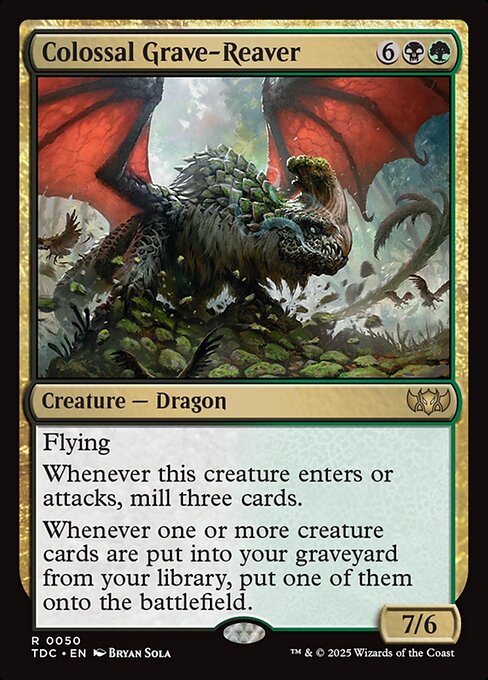
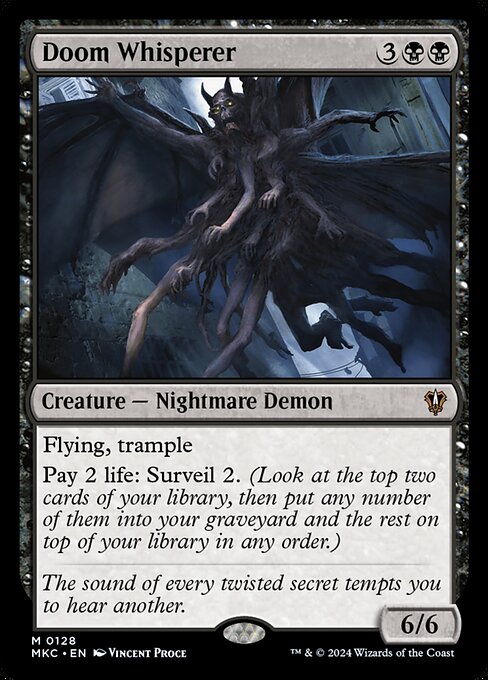
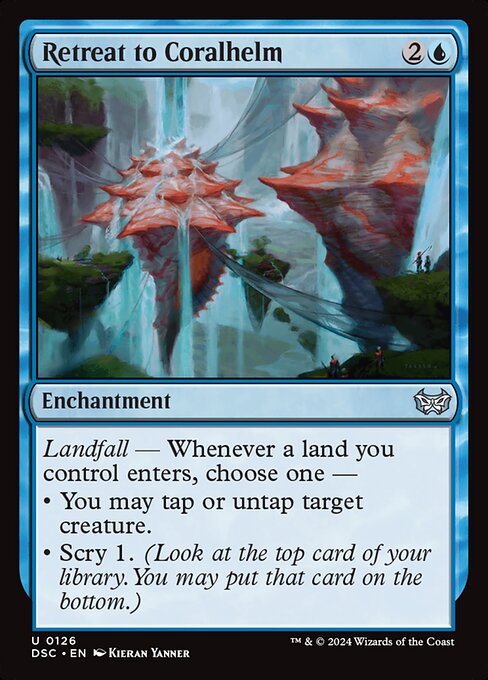
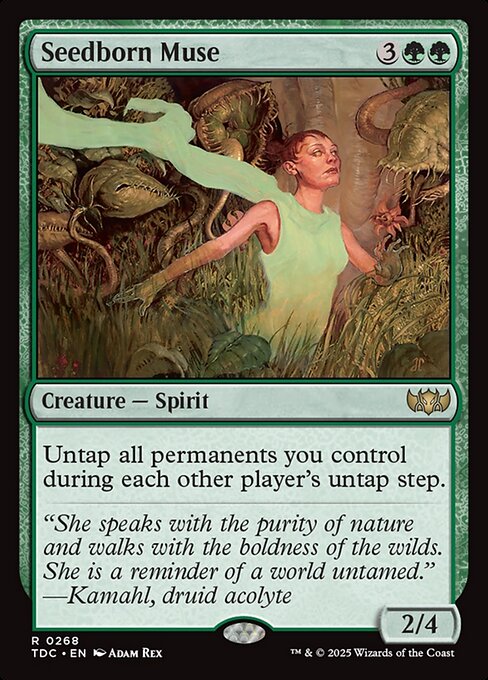

These are the commander's best friends in the 99. Doom Whisperer adds a second surveil engine that pairs with Grave-Reaver, in one recorded win I surveilled my own life total down to 4 to dump my whole board into play on an opponent's end step, then untapped and killed the table. Matoya, Archon Elder converts every surveil into a real card. Retreat to Coralhelm untaps Glarb on every land drop, and Seedborn Muse untaps him four times a turn cycle. Once two of these are online, the deck stops drawing one card a turn and starts playing off a conveyor belt.
The Landfall Payoffs That Actually Close Games
The engine is Glarb; the payoffs are green. Fourteen cards carry the Landfall tag, and the ones that show up in my winning game notes are consistent: Scute Swarm appears in two wins, and the cleanest kill on record was Scapeshift sacrificing eight lands into eight new ones with Yarok, the Desecrated doubling every trigger. Another win ended with just under 16,000 Scute Swarm tokens. When this deck wins, nobody at the table is confused about how.
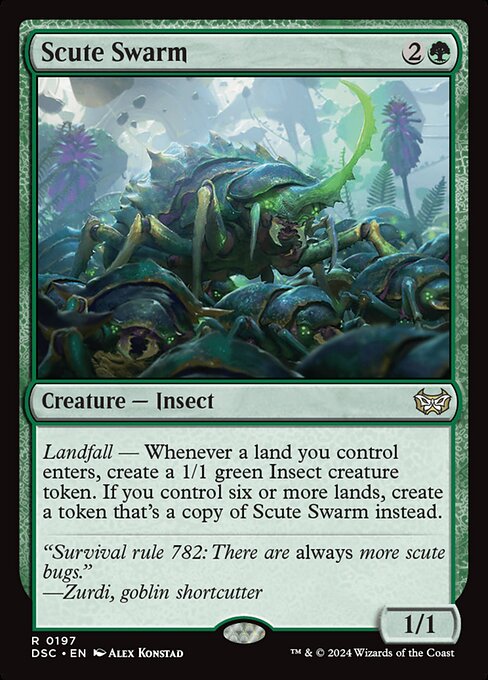
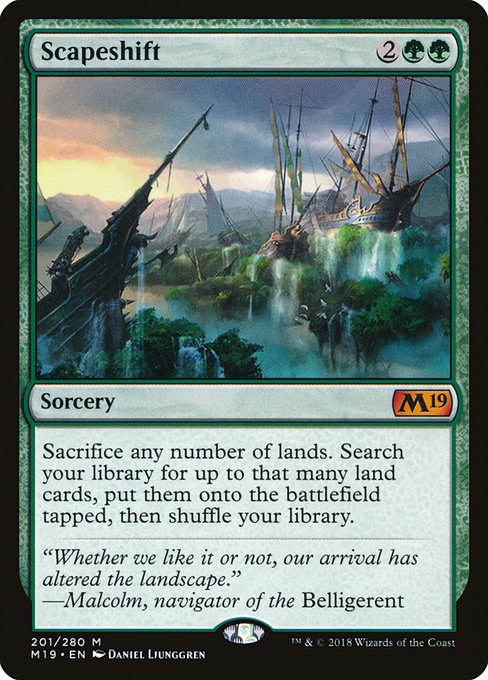
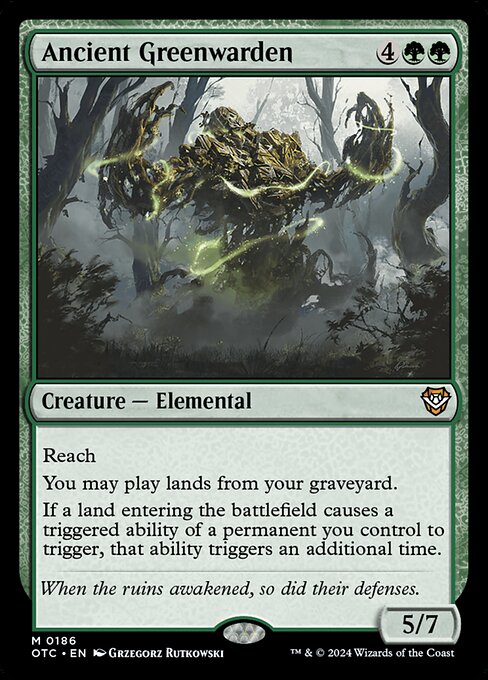
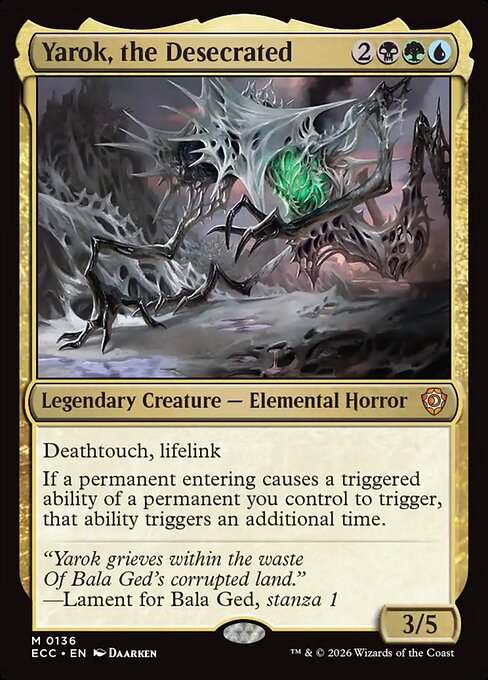
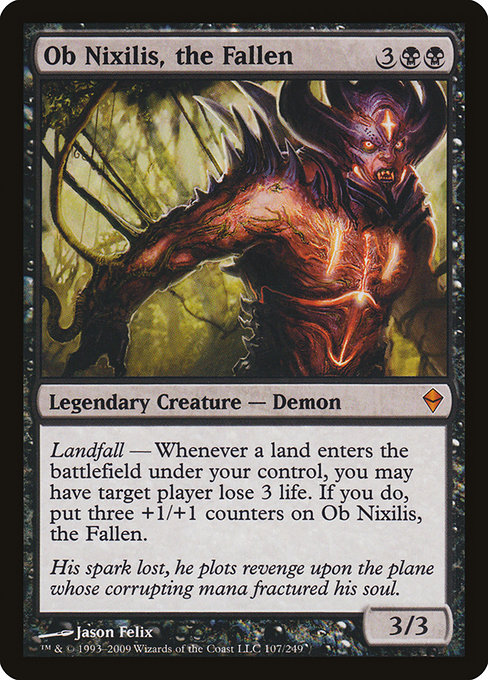
The doublers: Ancient Greenwarden, Yarok, the Desecrated, Traveling Chocobo, are the multiplication step, and Ob Nixilis, the Fallen turns land math directly into life totals. Lumra, Bellow of the Woods is the single best topdeck the deck has: ramp, landfall burst, and a finisher in one card that Glarb can cast straight off the library.
Arthas, The Lich King (EDH)
- 1 Conduit of Worlds
- 1 Crucible of Worlds
- 1 Scroll Rack
- 1 Sensei's Divining Top
- 1 Lightning Greaves
- 1 Hedge Shredder
- 1 Phyrexian Metamorph
- 6 Forest
- 4 Island
- 4 Swamp
- 1 Birds of Paradise
- 1 Traveling Chocobo
- 1 Wayward Swordtooth
- 1 Colossal Grave-Reaver
- 1 Ancient Greenwarden
- 1 Avenger of Zendikar
- 1 Bloom Tender
- 1 Tireless Provisioner
- 1 Oracle of Mul Daya
- 1 High Fae Trickster
- 1 Delighted Halfling
- 1 Scute Swarm
- 1 Icetill Explorer
- 1 Doom Whisperer
- 1 Clever Impersonator
- 1 Seedborn Muse
- 1 Exploration
- 1 Guardian Project
- 1 Retreat to Coralhelm
- 1 Dryad of the Ilysian Grove
- 1 Assassin's Trophy
- 1 Cyclonic Rift
- 1 Drag to the Roots
- 1 Force of Vigor
- 1 Legolas's Quick Reflexes
- 1 Bloodstained Mire
- 1 Command Tower
- 1 Drowned Catacomb
- 1 Exotic Orchard
- 1 Flooded Grove
- 1 Misty Rainforest
- 1 Polluted Delta
- 1 Twilight Mire
- 1 Undergrowth Stadium
- 1 Verdant Catacombs
- 1 Windswept Heath
- 1 Wooded Foothills
- 1 Yavimaya Coast
- 1 Breeding Pool
- 1 Hedge Maze
- 1 Sunken Hollow
- 1 Undercity Sewers
- 1 Watery Grave
- 1 Overgrown Tomb
- 1 Underground Mortuary
- 1 Zagoth Triome
- 1 The Great Henge
- 1 Loot, Exuberant Explorer
- 1 Ob Nixilis, the Fallen
- 1 Muldrotha, the Gravetide
- 1 Lumra, Bellow of the Woods
- 1 Yarok, the Desecrated
- 1 Greensleeves, Maro-Sorcerer
- 1 Nissa, Worldsoul Speaker
- 1 The Gitrog Monster
- 1 Azusa, Lost but Seeking
- 1 Sakashima of a Thousand Faces
- 1 Sakashima the Impostor
- 1 Matoya, Archon Elder
- 1 Zimone, Mystery Unraveler
- 1 Tatyova, Benthic Druid
- 1 Aesi, Tyrant of Gyre Strait
- 1 Koma, Cosmos Serpent
- 1 Teval, the Balanced Scale
- 1 Yavimaya, Cradle of Growth
- 1 Jace, the Mind Sculptor
- 1 Nissa of Shadowed Boughs
- 1 Wrenn and Seven
- 1 Blasphemous Edict
- 1 Damnation
- 1 Death Begets Life
- 1 Dread Return
- 1 Nature's Lore
- 1 Rise of the Witch-king
- 1 Rite of Replication
- 1 Scapeshift
- 1 Skyshroud Claim
- 1 Will of the Abzan
- 1 Glarb, Calamity's Augur
What a 29% Win Rate Really Means Here
The honest Spike read: this deck has a high ceiling and a real consistency problem. The losses cluster into two patterns: faster combo decks ending the game before turn six, and games where the engine assembles but the pilot fumbles it. My own note after a recent loss reads "37 missed triggers," and that's the tax this archetype charges: once three landfall permanents and a doubler are in play, every fetchland is a stack of triggers, and missing them is losing equity you already paid for.
The other pattern is threat visibility. Glarb telegraphs nothing, but 56 Scute Swarms telegraph everything. I've died at 5 life with a lethal board because the table correctly identified me as the must-kill player. If you build this commander, budget interaction for the turn after you become the archenemy, not before.
Arthas, The Lich King
5 games · 3–2| Date | Result | Winner | ELO |
|---|---|---|---|
| 2026-07-28 | Loss | RuricMo AHH Real Monsters! | +22 |
| 37 missed triggers. I suck at this game | |||
| 2026-06-09 | Loss | Adam Council of Cowards | +31 |
| Wasn't the problem. Still got cucked | |||
| 2026-05-26 | Win | DonSpider Arthas, The Lich King | +9 |
| [[Elesh Norn, Mother of Machines]] suppressed my deck for awhile. my commander helped me dig for answers. [[Jace, the Mind Sculptor]] kept bouncing elesh norn so I could finally blast off with my landfall triggers | |||
| 2026-04-07 | Win | DonSpider Arthas, The Lich King | +24 |
| 2026-04-01 | Win | DonSpider Arthas, The Lich King | +9 |
| My deck played well. Ultimately won with [[scute swarm]] after using [[scapeshift]] to sacrifice 8 lands and bring 8 more in with [[yarok, the desecrated]] doubling the triggers. Side note, lerg struggled with mana early | |||
If you're weighing a Glarb build of your own, run the list through the bracket calculator to see where it lands, and check the combo finder. Sultai top-of-library piles hide more loops than you'd expect. And if you want to know whether your version actually wins more than 29% of the time, record your games and let the data argue for you.


Comments
Join the conversation.