

Ms. Bumbleflower EDH Deck Tech: Two Spells a Turn, Every Turn

My Ms. Bumbleflower deck tech comes down to one number: two spells a turn. Every spell I cast hands an opponent a card and drops a +1/+1 counter somewhere, and the second spell each turn draws me two. The other 99 cards exist to make that second spell cheap, to cash the counters in, or to tax the cards I give away.
On paper the list is 34 lands, an average mana value of 2.36, 18 ramp pieces, 17 draw pieces, six counterspells and about $688 of cardboard. It also has zero recorded games on Nerd Leagues, so this is the theory version. I'll flag where the theory runs out.
What Ms. Bumbleflower Does at a Four-Player Table
Ms. Bumbleflower costs 


 for a 1/5 with vigilance, and the body is the least interesting thing about her. The text is the whole deck:
Whenever you cast a spell, target opponent draws a card. Put a +1/+1 counter on target creature. It gains flying until end of turn. If this is the second time this ability has resolved this turn, you draw two cards.
Three details carry more weight than they look. "Target opponent" means I pick who gets fed, every single time. "This turn" means any turn, so a counterspell on someone else's turn is the first half of a draw-two. And the official ruling puts the trigger on the stack above the spell that caused it, resolving even if that spell gets countered, so a counter war still pays me.
A good chunk of the list is the Peace Offering precon's skeleton. Chasm Skulker, Forgotten Ancient, Managorger Hydra, Twenty-Toed Toad, Simic Ascendancy and Wizard Class all shipped in that box. What changed is everything around them.
Ms. Bumbleflower (EDH)
- 1 Arcane Signet
- 1 Fellwar Stone
- 1 Howling Mine
- 1 Sol Ring
- 1 Thought Vessel
- 1 Wedding Ring
- 1 Swiftfoot Boots
- 1 Esper Sentinel
- 1 Scrawling Crawler
- 1 Psychosis Crawler
- 4 Forest
- 3 Island
- 3 Plains
- 1 Birds of Paradise
- 1 Shrieking Drake
- 1 Forgotten Ancient
- 1 Bloom Tender
- 1 Evolution Witness
- 1 Faerie Mastermind
- 1 Twenty-Toed Toad
- 1 Grand Abolisher
- 1 Noble Hierarch
- 1 Managorger Hydra
- 1 Consecrated Sphinx
- 1 Kami of Whispered Hopes
- 1 Seedborn Muse
- 1 Chasm Skulker
- 1 Faeburrow Elder
- 1 Ghostly Prison
- 1 Gleaming Splendor
- 1 Hardened Scales
- 1 Mystic Remora
- 1 Propaganda
- 1 Rhystic Study
- 1 Simic Ascendancy
- 1 Smothering Tithe
- 1 Wizard Class
- 1 An Offer You Can't Refuse
- 1 Arcane Denial
- 1 Counterspell
- 1 Cyclonic Rift
- 1 Dawn's Truce
- 1 Enlightened Tutor
- 1 Fierce Guardianship
- 1 Generous Gift
- 1 Heroic Intervention
- 1 Long River's Pull
- 1 Mystical Tutor
- 1 Path to Exile
- 1 Peerless Recycling
- 1 Swan Song
- 1 Swords to Plowshares
- 1 Teferi's Protection
- 1 Worldly Tutor
- 1 Adarkar Wastes
- 1 Bountiful Promenade
- 1 Brushland
- 1 Command Tower
- 1 Exotic Orchard
- 1 Flooded Grove
- 1 Flooded Strand
- 1 Glacial Fortress
- 1 Hinterland Harbor
- 1 Misty Rainforest
- 1 Rejuvenating Springs
- 1 Reliquary Tower
- 1 Sea of Clouds
- 1 Seaside Citadel
- 1 Sunpetal Grove
- 1 Windswept Heath
- 1 Yavimaya Coast
- 1 Breeding Pool
- 1 Canopy Vista
- 1 Temple Garden
- 1 Spara's Headquarters
- 1 Hallowed Fountain
- 1 Prairie Stream
- 1 The Ozolith
- 1 Kutzil, Malamet Exemplar
- 1 Tataru Taru
- 1 Selvala, Explorer Returned
- 1 Loran of the Third Path
- 1 Jolrael, Mwonvuli Recluse
- 1 Kwain, Itinerant Meddler
- 1 Boseiju, Who Endures
- 1 Tamiyo, Field Researcher
- 1 Cultivate
- 1 Farseek
- 1 Nature's Lore
- 1 Tempt with Discovery
- 1 Three Visits
- 1 Wear Down
- 1 Ms. Bumbleflower
The Game Plan: Two Spells Every Turn
Forty of the 66 nonland cards cost two mana or less: sixteen one-drops and twenty-four two-drops. That is not an accident. The second trigger has to come from a second spell, so the deck is built from spells cheap enough to double up on without a ramp-heavy turn.
Seedborn Muse turns "every turn" from a slogan into a schedule. My permanents untap during each opponent's untap step, so the same mana casts two spells on their turns too, and the draw-two shows up four times a rotation instead of once. The cheapest repeatable trigger is Shrieking Drake: to cast, bounce itself on entry, cast again. Casting it twice is for two opponent cards, two counters and two cards for me.
The off-turn spells come mostly from interaction. Six counterspells (Fierce Guardianship free with the commander out, Swan Song, An Offer You Can't Refuse, Arcane Denial, Counterspell and Long River's Pull) plus instant-speed protection in Heroic Intervention, Dawn's Truce and Teferi's Protection. Every one of them is also a Bumbleflower trigger. Six is the right count for a blue deck in a four-player pod, and the counterspells-by-job breakdown explains why the mix matters more than the number.
The draw suite underneath is overbuilt on purpose: Rhystic Study, Mystic Remora, Esper Sentinel, Faerie Mastermind, Consecrated Sphinx and Howling Mine on top of the commander's own draw-two. Reliquary Tower, Thought Vessel and the first level of Wizard Class mean I never discard any of it.
Key Synergies: Counters, Draws, and Drain


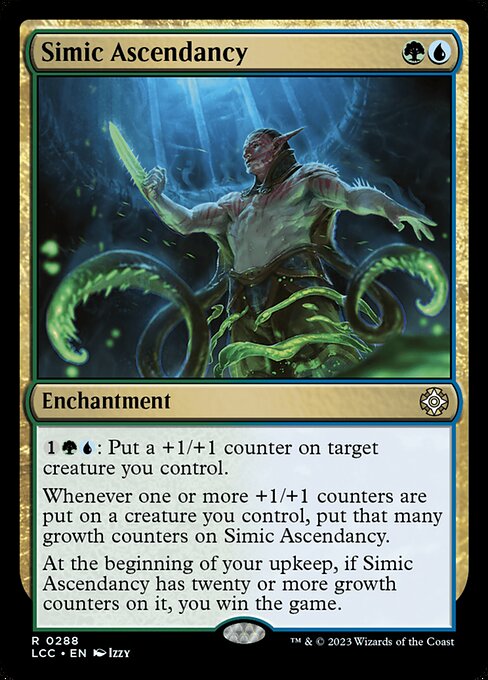
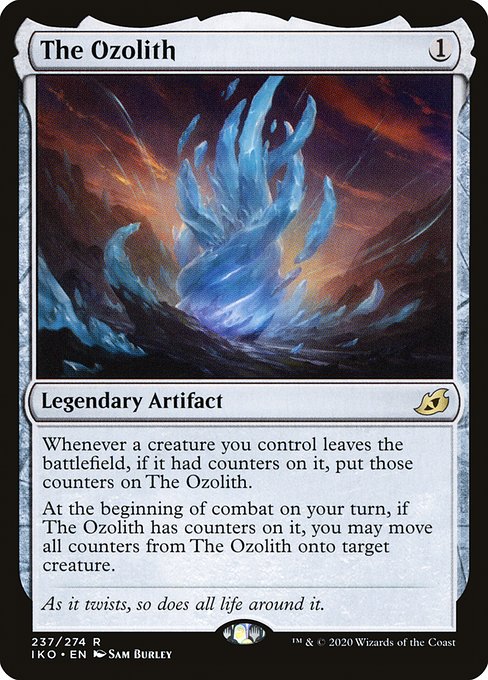
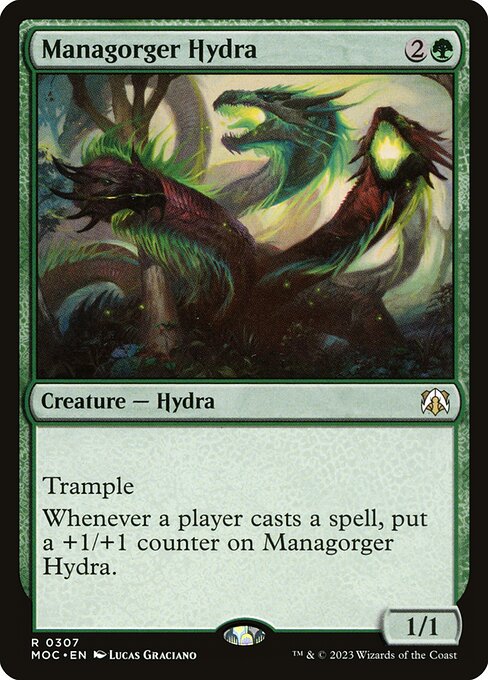
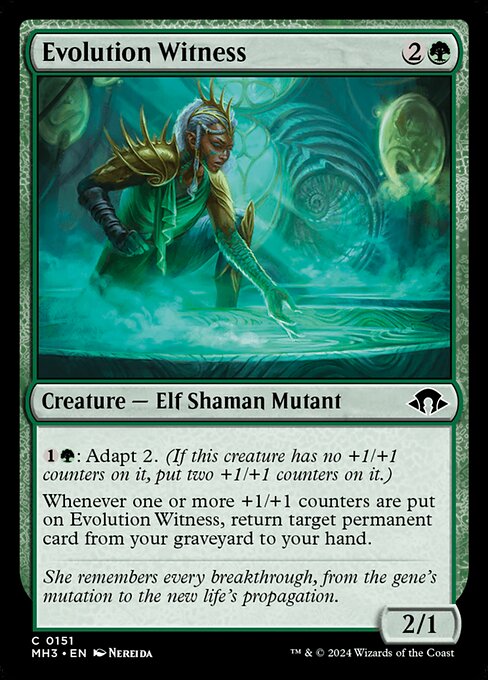
I tag nine cards Counter_Synergy, and they split into multipliers and payoffs. Hardened Scales and Kami of Whispered Hopes each add one to every counter placement, so a single trigger drops three counters with both out. Simic Ascendancy counts every one of them as a growth counter and wins at twenty: two triggers a turn with both doublers is six, and with Seedborn Muse that is one rotation of the table, not a whole game. The Ozolith keeps the counters when a creature dies. Managorger Hydra and Forgotten Ancient grow off every spell anyone casts, which at a four-player table is a lot of spells. Evolution Witness returns a permanent card from my graveyard every time counters land on it, so with Bumbleflower out every spell I cast is also a Regrowth. Twenty-Toed Toad wins on attack at twenty counters or twenty cards in hand, and this deck threatens both.
The draws feed the same engine. Jolrael, Mwonvuli Recluse makes a 2/2 Cat on my second draw each turn, which the draw-two guarantees. Level three of Wizard Class turns every draw into another counter. Kutzil, Malamet Exemplar draws whenever creatures with power above their base deal combat damage, and every creature carrying a counter qualifies.
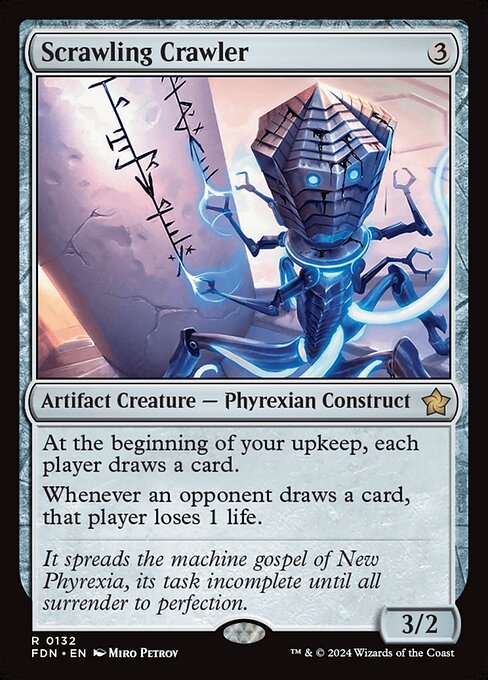
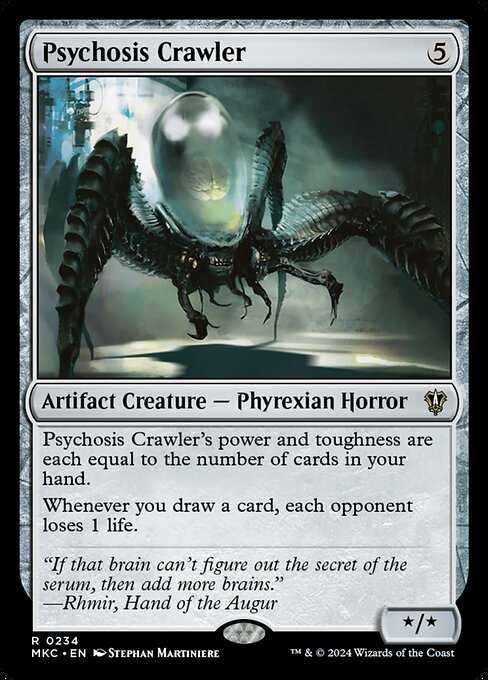
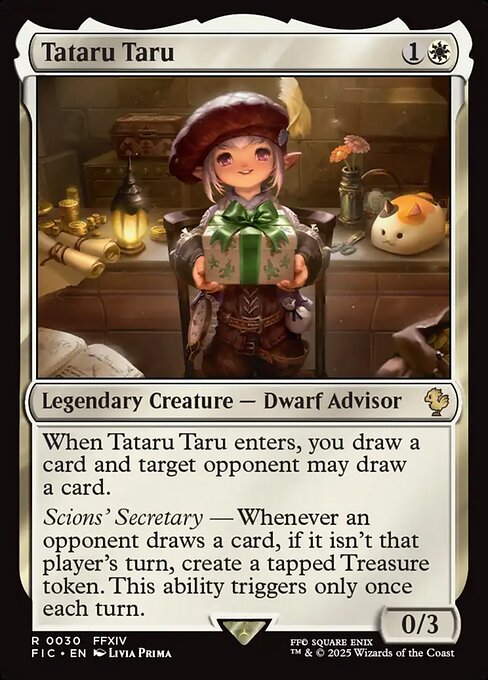

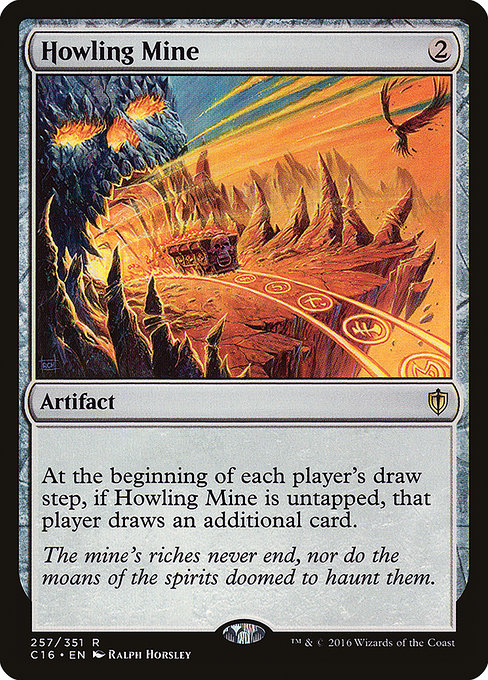

The cards I hand out are not free for the recipient. Scrawling Crawler costs an opponent 1 life every time they draw, so each trigger is a ping aimed at whoever I target. Psychosis Crawler hits every opponent when I draw. With both out, each of my upkeeps costs every opponent 2 life before I've cast anything, because Crawler makes everyone draw and my own draw pings them again. Tataru Taru makes a tapped Treasure when an opponent draws on a turn that isn't theirs, which Bumbleflower can arrange on any turn I cast a spell. Gleaming Splendor makes one whenever an opponent draws their second card in a turn, and its  ability makes two players draw. Howling Mine wires all of this into every opponent's draw step: their extra card is Crawler damage, a Faerie Mastermind draw and a Splendor Treasure at once. The two Crawlers are what I tag Life_drain, and they are the deck's slowest win. More on that below.
The Mana Base: 34 Lands and 18 Ramp Pieces
Thirty-four lands: 22 fixing lands, ten basics and two utility lands. Colored sources come out at 17 white, 17 blue and 19 green against pip requirements of 22, 24 and 26, so the base leans green and the three fetches do real work finding the shock or basic I'm missing. Boseiju, Who Endures is removal that counts as a land drop, and Reliquary Tower is hand-size insurance.
On top of that sit five dorks (Birds of Paradise, Noble Hierarch, Bloom Tender, Faeburrow Elder, Kami), four rocks (Sol Ring, Arcane Signet, Fellwar Stone, Thought Vessel), five green ramp spells including Three Visits and Nature's Lore, and Smothering Tithe. Fifty-two of the hundred cards make mana. For a 2.36 curve that is a lot, and it is deliberate: Bumbleflower on turn three off a dork, then enough mana to pay for two spells on every turn of the rotation. The draw-two is what keeps that much mana from flooding me.
How to Pilot Ms. Bumbleflower: Targets and Sequencing
- Dork or rock on turn one, Bumbleflower on turn three. Then stop developing and start counting spells.
- Never cast one spell when two cheaper ones do the same job. The second trigger is the card advantage; the first is the cost of entry.
- Pick the draw target like it matters, because it does. Feed the player short on mana, or the player Scrawling Crawler is already killing. Never feed the player holding up mana with a combo in the deck.
- Put counters where they compound. Evolution Witness first if there's a permanent in the yard, the Hydra for the clock, Bumbleflower herself when I need a flier to connect for Kutzil.
- Engine on my turn, interaction on theirs. Grand Abolisher and Kutzil shut off responses during my turn, so that's when the expensive permanents land. Counterspells, gift spells and the Drake are for everyone else's turn.
Strengths and Weaknesses of This Ms. Bumbleflower Deck
The strengths are density. Ten cards here are on the official Game Changers list (Rhystic Study, Smothering Tithe, Cyclonic Rift, Fierce Guardianship, Teferi's Protection, Consecrated Sphinx, Seedborn Muse, Enlightened Tutor, Mystical Tutor and Worldly Tutor), and the three tutors all point at engine pieces. Paste the list into the bracket calculator and it will tell you where that lands.
The weaknesses are structural. The deck hands out cards: twenty spells in a game is twenty free cards spread across three opponents, and the pod this deck will sit down with leans cEDH, where our games end on combo lines more often than combat damage. Feeding the wrong player is how it loses. It runs no wrath effects and six removal spells, so a wide board gets answered by Propaganda, Ghostly Prison or an overloaded Rift. Almost every payoff is a creature (Hydra, Ancient, Witness, Skulker, Toad, both Crawlers), so one wipe resolving through my protection resets the game to Bumbleflower and a pile of lands; The Ozolith softens that without fixing it. And if I'm cutting, Wedding Ring and Kwain, Itinerant Meddler go first: symmetrical draw with a life point attached is the softest thing in the list.
The last weakness is the one I can't argue around: zero games, ELO 1000. In a four-player pod 25% is break-even, and until this list has a record, every claim above is theory. That's what recording the games is for. Check back when the number has moved.




Comments
Join the conversation.