

How Many Lands Should You Run in Commander?
Short answer: start at 36-38 lands in a 100-card Commander deck, then adjust from there. Low-curve decks with plenty of cheap card draw can trim toward 33-35, while landfall decks and top-heavy lists want 38-40. There is no single correct number — but there is a correct number for your deck, and this guide shows you how to find it.
Why 36-38 Lands Is the Commander Baseline
A 100-card singleton deck needs to hit its first four or five land drops reliably, every game, without flooding out in the late game. Decades of collective deckbuilding have landed on roughly 37 lands as the sweet spot for an average deck — an average mana value around 3, a normal amount of ramp, a normal amount of card draw.
Think of 37 as sea level. Every real deck sits a little above or below it, and the rest of this guide is about figuring out which direction yours should move.
When to Run Fewer Lands in EDH
Trim toward 33-35 lands when your deck has several of these traits:
- A low mana curve. If your average mana value is under 3 and your top end stops around 5, you simply need fewer lands to operate.
- Cheap ramp in bulk. Ten or more pieces of one- and two-mana acceleration like Sol Ring, Arcane Signet, and the Signet cycle effectively act as extra mana sources.
- Heavy cheap card draw. Decks that constantly churn through their library, with engines like Rhystic Study, find land drops even with fewer lands in the deck.
- Cards that convert flood. If your list runs several ways to pitch or spend excess lands, missing the downside of a low count gets easier.
Be honest about this checklist. The most common deckbuilding mistake in Commander is cutting lands to squeeze in "one more spell" — and mana screw loses far more games than a slightly less spicy 99.
When to Run More Lands in Commander
Push toward 38-40 lands when:
- Your curve is top-heavy. If your deck wants to cast six- and seven-mana haymakers on time, you need to hit every land drop for the first six turns.
- You're a landfall deck. Lands are your payoff, not just your resource. Landfall lists happily run 40 or more.
- Your commander is expensive. A commander that costs six or more, that you plan to cast on curve (and recast after removal), demands a denser mana base.
- You run little ramp. Fewer than 8 ramp pieces means your lands carry the whole load.


Do Ramp Cards Replace Lands?
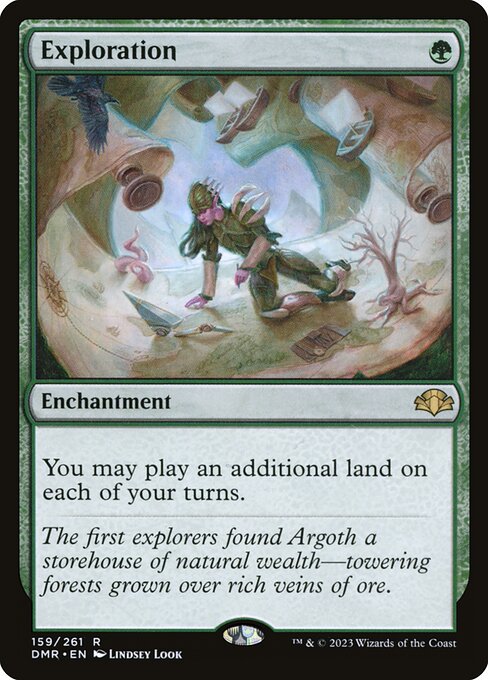
Partially — and this is where players get into trouble. Mana rocks and dorks accelerate you, but they don't replace land drops one-for-one, because they're more fragile. A board wipe or an Vandalblast can erase your artifact mana; nothing short of mass land destruction takes your lands.
A reasonable rule of thumb: for every 3-4 cheap ramp pieces beyond your first few, you can shave about one land. That's how a deck with 12 ramp cards lands comfortably at 35 while a no-ramp deck wants 38. For what those ramp pieces should be, see our guides to how many ramp cards your EDH deck needs and the best ramp cards by color.
A Simple Formula for Your Land Count
If you want a starting point that's better than a flat 37, use this:
- Start at 38 lands.
- Subtract 1 for every 4 pieces of ramp that cost two or less.
- Subtract 1 if your average mana value is under 2.8.
- Add 1-2 if your commander costs 6+ or your curve tops out at 7 or higher.
- Add 2-3 if you're a landfall or lands-matter deck.
That gets almost every deck within one land of its right number. The last step is playtesting: if you're consistently missing land drop four, add a land. If you're regularly holding two dead lands on turn eight, cut one.
Test Your Land Count, Don't Guess It
The math gets you close, but real games tell the truth. Build your list in the Nerd Leagues deck builder, watch your curve as you build, and then track your actual games in a league — a few weeks of recorded results will expose a greedy mana base faster than any spreadsheet.
Land count is one leg of a three-legged stool. The other two are ramp and card draw, and they're covered in the companion guides: how many ramp cards you need and how many card draw spells to run. Get all three right and your deck will do its thing every game — which is the whole point.



Comments
Join the conversation.