

Reality Fracture Commander Precon: Multiverse Reforged Reviewed

Reality Fracture has one Commander precon of its own: Multiverse Reforged, a four-color deck (white, blue, black, red) with Jace, Multiverse Architect in the command zone, built to trade 1/1 tokens for six- to ten-mana creatures straight from your library. It releases October 2, 2026 at a $49.99 MSRP. Buy it for the play pattern or the new legends; skip it if you want a deck that pilots itself. The deck isn't out yet, so this is a read of the full decklist, not a play report.
What Is in the Reality Fracture Commander Deck?
You get a 100-card deck, ten double-sided tokens, a reference card, and a deck box. Jace and the second commander, Nissa, Leyline Tamer, are borderless foils. The other 98 cards are nonfoil, and 16 of those are new to Magic.


The plan is polymorph: trade a creature you control for the first creature card off the top of your library. Jace does it, and so do Mass Polymorph, Synthetic Destiny, and Proteus Staff. About a dozen noncreature token makers, from Secure the Wastes to the land Kher Keep, supply the fodder, so every creature card left to hit is expensive.
The mana holds up: 39 lands and 13 mana rocks. Three of those lands are new. The Turbulent duals enter untapped once your opponents control eight lands between them, which is usually turn three or four in a full pod and around turn eight in a duel. See every card on our Reality Fracture Commander set page.
Two warnings. Ob Nixilis, the Ascended makes 4/4 white Angels, but Wizards says the first print run ships with the main set's 3/3 blue Angel token instead; the right one comes in Collector Boosters and later printings. And while the deck is on schedule in North America, Wizards' September 17 update lists it as delayed in Asia-Pacific and Japan. The rest of the product lineup is in everything confirmed about Reality Fracture.
One scope note: the five $29.99 Foundations Commander decks releasing the same day are a separate beginner line, and as of this writing Wizards hasn't published their decklists, so they aren't reviewed here.
How Jace, Multiverse Architect Plays in a Four-Player Pod
Jace costs 



 , enters with 4 loyalty, and can be your commander. His +1 draws two cards, then puts a card from your hand on the bottom of your library. His −3 is the polymorph, with a twist: it can exile a planeswalker as well as a creature, and it stops on the first creature or planeswalker card it reveals.
The loyalty math matters more than the text. Flip the turn he lands and Jace drops to 1 loyalty, and every −3 has to be paid back with three turns of +1. That's one free creature every four turns. The faster line is to use him up and recast him, but commander tax (an extra  per recast) makes the second Jace cost seven mana and the third nine.
The −3 also targets. If any of your three opponents kills the token in response, the ability does nothing and the loyalty is still spent, so the safest flips happen while the table is tapped out.
His static ability is written for multiplayer: at the beginning of combat on each opponent's turn, that player pays or their creatures can't attack Jaces you control that turn. That's three tolls per turn cycle, but a toll isn't a wall, and a Jace on 1 loyalty is one unblocked 1/1 from the command zone.
The toll covers Jace tokens too. Fatehold Charm brings the main set's new mechanic into the deck (here's how empower Jace works), and because the −3 accepts planeswalkers, a nearly drained Jace token is legal fodder.
Every Card Jace Can Flip in Multiverse Reforged
With Jace in the command zone, 19 of the 99 cards can come off the top: 18 creatures plus one planeswalker. No creature in the deck costs less than six mana, and the average hit has a mana value of about 7.2. Here's how we'd sort them by what they do on arrival:
- Haymakers (8): Archon of Cruelty, Serra's Emissary, Darksteel Angel, Avacyn, Angel of Horror, The Ur-Sphinx, Memnarch, the Warden, Archfiend of Despair, Akroma, Angel of Fury
- Role-players (9): Nissa, Leyline Tamer, Overlord of the Mistmoors, Ob Nixilis, the Ascended, Ginger, Queen of Sweets, Elspeth, Sun's Champion, Omnath, Locus of the Void, Tamiyo, Upriser Crowned, Niv-Mizzet, Ghost Counsel, Jhoira, Weatherlight Corsair
- Awkward (2): Venser, Fervent Forger, who wants to flash in on an opponent's turn, and Dack Fayden, Helping Hand, who gets his own section below

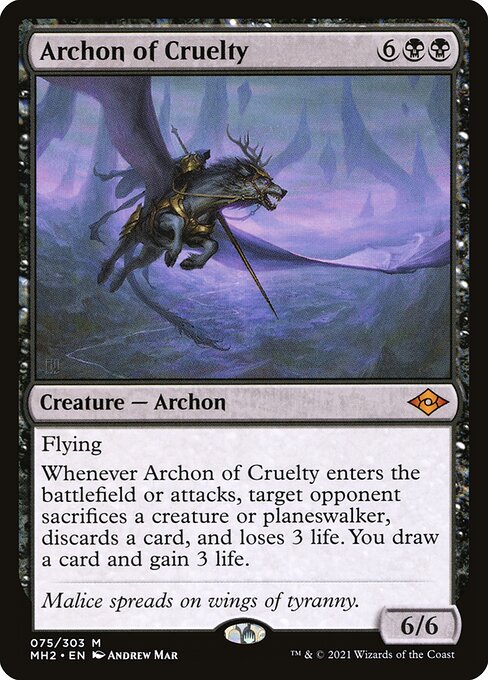


That's roughly two flips in five landing a haymaker. Two role-players improve in a pod. Ob Nixilis destroys every tapped creature your opponents control, which on your turn usually means everything that attacked since your last one. Ginger crowns you the monarch and makes a Gingerbrute at the beginning of each upkeep while you keep the crown: four bodies per turn cycle at a full table.
One trick to learn before game one: Brainstorm and Brainsurge put cards from your hand back on top of your library, turning a stranded Darksteel Angel into a guaranteed flip. Jace's +1 does the opposite, and a bomb sent to the bottom stays there until Fabled Passage or Mass Polymorph shuffles your library.
Dack Fayden, Helping Hand Gives Your Creatures Away
Read Dack twice. When he enters, you reveal cards until you've turned over one creature card per opponent and put them all onto the battlefield, goaded for the rest of the game (they must attack every combat, and someone other than you if they can). Then comes the last line: "For each of those permanents, choose a different opponent. Each opponent gains control of the permanent for which they were chosen."
In a four-player pod that's three creatures, from a deck where the cheapest costs six, handed to the table. The pitch is three goaded bombs brawling with each other while you watch, and enters triggers do still resolve for you, because the creatures arrive under your control first. But the bodies and static abilities belong to your opponents. If Dack turns over Darksteel Angel, one opponent can't lose and nobody else can win until somebody removes an indestructible 4/4.
Swords to Plowshares, Despark, and Sunfall can clean up the gift, but every creature Dack gives away is a flip you'll never make. Our call: in a pod that enjoys chaos, he's the best story in the box. If you're playing to win, he's the first cut.
Is Nissa, Leyline Tamer the Better Commander?
Nissa costs  for a 5/5 with deathtouch and vigilance, and her landfall trigger (it fires whenever a land enters under your control) draws a card. The first time it resolves each turn, it also puts the first creature card off the top of your library onto the battlefield, no token needed. Crack Fabled Passage or Contaminated Landscape on an opponent's turn and she flips again.
The precon has only three lands that can do that, though, and she costs seven, dies to every removal spell at the table, and comes back at nine. Start with Jace and treat Nissa as the rebuild.
Is the Multiverse Reforged Precon Worth $49.99?
At MSRP, yes, if you want this play pattern and it isn't your first deck. Polymorph asks you to sequence token makers, keep fodder alive through board wipes, and know what's left in your library. Wizards' own buyer's guide files this deck under experienced players and points newer ones at the Foundations Commander decks, and that's the right call.
Don't overpay. As of September 18, TCGplayer's market price for a sealed presale copy is around $75, while retailers like Best Buy are taking preorders at MSRP. Singles are just as frothy: Darksteel Angel is listed near $43 on our card page, and presale prices on precon-only cards usually sag once decks are opened. What lasts is reusability, since Omnath, Memnarch, and Ginger are colorless and fit any deck you own.
When you upgrade, start with subtraction, because every creature card in the library is a possible flip. Cut Dack and Venser, then add cheap polymorphs like Polymorph and Transmogrify. Wizards uses the average precon as its reference point for Bracket 2, so once you start swapping cards, run the new list through our deck audit.
To see what else the set adds, browse the main Reality Fracture card list. When the deck hits your table, record the games: a deck that wins off the top of its library is exactly where a logged win rate beats a gut feeling.


Comments
Join the conversation.