

Star Trek cEDH Set Review: The Few New Cards That Clear the Bar, and the Reprints That Matter More

This Star Trek cEDH set review is short where it counts. Across the main set, the four Commander decks and the Stardates reprint sheet, two new cards deserve real testing and three more earn a slot in a specific kind of list. The reprints will matter more to a cEDH player than any of the five, because they make a list cheaper to build. cEDH, for anyone new to the term, is Commander played to win: games end around turns three to five, and a card that does something impressive for four mana is usually a card that never gets cast.
The review treats the main set (Star Trek), the four Star Trek Commander decks and the Stardates sheet together, because a cEDH player shopping the release does not care which box a card came in. For the casual read on the same cards, our best Star Trek cards for your 99 and best new commanders in Star Trek posts cover that ground, and this one will not repeat them.
The bar a card has to clear
Our breakdown of how cEDH decks win in 2026 comes down to three packages: Thassa's Oracle with Demonic Consultation or Tainted Pact, Underworld Breach loops, and infinite mana turned into a kill by a commander or an outlet. A new card matters to cEDH if it does one of two jobs. Either it stops or protects one of those packages for two mana or less, or it is itself a missing piece in a shell that already wins. "Strong in a long game" is not a job. Most of this set is built for long games, which is why most of it is not here.
Test of Courage: green's other Nature's Claim

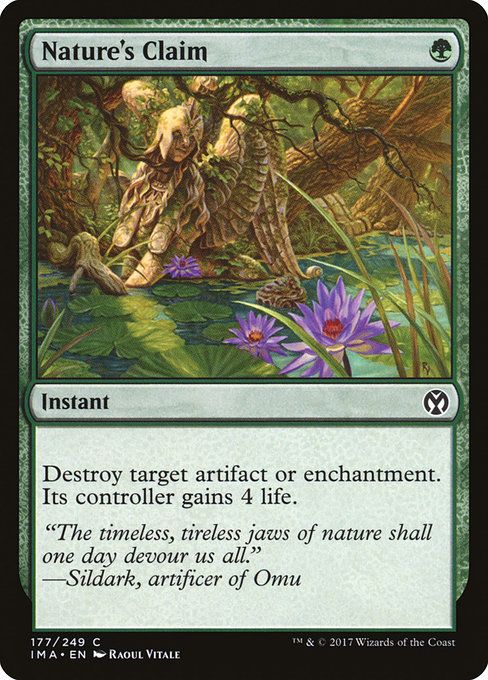
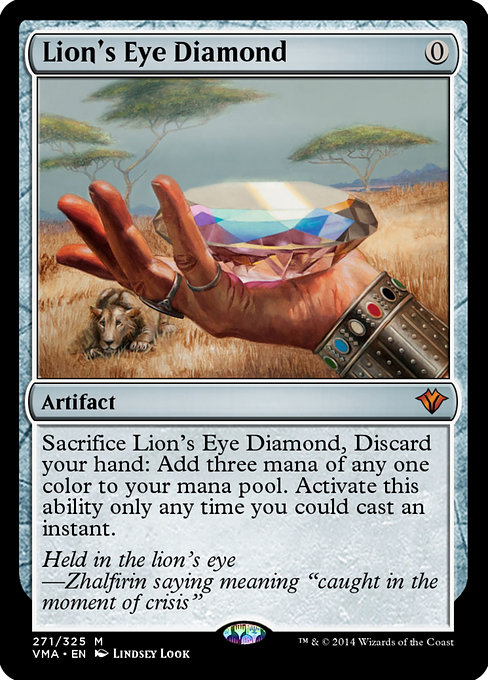
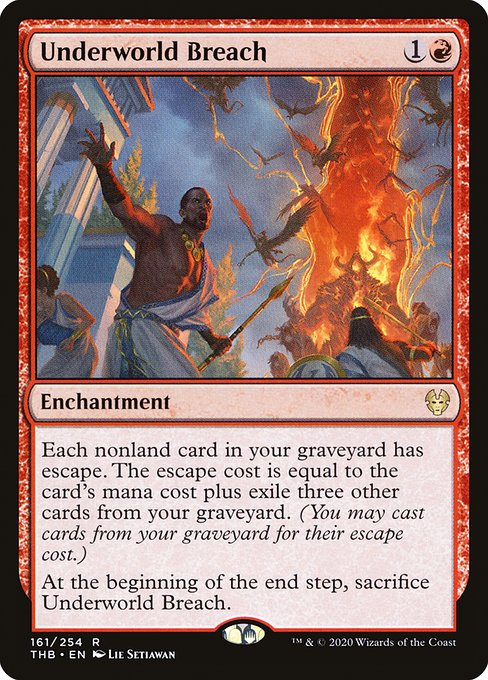
Test of Courage is a one-mana green instant with two modes. The second, Obliterate the Transwarp Network, destroys an artifact or enchantment with mana value 3 or less. Run down what that reaches at a cEDH table and the restriction barely bites: Rhystic Study, Mystic Remora, Underworld Breach, Isochron Scepter, Grinding Station, Sol Ring, Mana Vault, Grim Monolith, Mox Diamond, Chrome Mox, Lion's Eye Diamond, Food Chain, Necropotence, Sylvan Library, Deafening Silence. The notable miss is The One Ring at four.
Nature's Claim hits everything for the same mana, but it hands the permanent's controller 4 life, which has decided more than one Ad Nauseam game. Test of Courage gives nothing away, and its first mode, Alter the Past, exiles a card from any graveyard at instant speed and gains you 2 life.
That first mode is the part you learn from playing against Breach. Underworld Breach lets its controller cast cards from the graveyard by paying their cost and exiling three other cards, an ability called escape. A Breach player escapes Lion's Eye Diamond, sacrifices it for three mana, then escapes Brain Freeze to mill themselves and refill the graveyard. The moment Brain Freeze goes on the stack, the Diamond is sitting back in their graveyard. Exile it right there and the loop stops until they find another mana source, for one green mana you were holding anyway. Sevinne's Reclamation opens a second window: it targets the Diamond in the graveyard, so exiling the Diamond in response leaves the spell with nothing to return. Test of Courage is the first card from this set to put in a green cEDH deck, probably alongside Nature's Claim rather than instead of it.
Khan, Vengeful Heart: a fourth creature Food Chain can loop


Khan, Vengeful Heart costs 
 , draws two cards on entry if you sacrifice another creature or artifact, and carries the one line that matters: "You may cast this card from exile." Three creatures share that ability, and all three are the engine behind Food Chain decks: Misthollow Griffin, Eternal Scourge and Squee, the Immortal. Khan is the fourth.
The loop, for anyone who has not seen it. Food Chain reads "Exile a creature you control: Add X mana of any one color, where X is 1 plus the exiled creature's mana value. Spend this mana only to cast creature spells." Exile Khan for five black mana, recast him from exile for four, and you net one mana per cycle. Repeat for as much creature-only mana as you want. The draw-two trigger is optional each time, so you also draw a pair of cards for every spare creature or artifact you are willing to sacrifice.
The home is any Food Chain shell whose color identity includes black. Ukkima, Stalking Shadow with Cazur, Ruthless Stalker is the obvious one. There, Khan joins the loop creatures that turn Food Chain into as much creature-only mana as the deck needs. Ukkima itself is a 0/4, so its leave-the-battlefield trigger only deals damage once something has grown it. The First Sliver decks are five colors and can run him too. A fourth loop creature is not a new combo. In a deck whose whole plan is Food Chain plus one of these bodies, though, a fourth copy of the body is a real consistency gain, and Khan is the only one of the four that also draws cards while it loops.
One warning. Drannith Magistrate turns off every creature in this category at once, Khan included, because casting from exile is casting from somewhere other than your hand.
Highly Illogical: a two-mana counter that can hit Oracle
Highly Illogical costs 
 and counters a spell with mana value 2 or less, or any spell if you pay the kicker. Mana value 2 or less is where the cEDH win pieces live: Thassa's Oracle, Demonic Consultation, Tainted Pact, Underworld Breach, Brain Freeze, Dramatic Reversal, Isochron Scepter, Grinding Station, Lion's Eye Diamond. Blue already has one-mana answers to pieces of that list. Spell Snare counters exactly mana value 2, so it misses Consultation and the Diamond; Stern Scolding counters only creature spells; An Offer You Can't Refuse and Swan Song cannot touch Oracle because it is a creature. Highly Illogical is one card that covers Oracle, Consultation, Pact, Breach and the Diamond, for two.
The honest comparison is Delay. Same two mana, same single blue pip, and Delay handles Ad Nauseam and Rhystic Study without asking for four mana. Highly Illogical goes in after Delay, not ahead of it, in a list that wants one more two-mana answer and already runs the one-mana suite. If your list casts Counterspell and Mana Drain reliably, you have better options than either.
Brazen Bluff: red's punisher counter, and the trick with the stack
Brazen Bluff costs  . You target a noncreature spell an opponent controls; they may exile it, and if they do not, you may cast a noncreature spell from your hand without paying its mana cost. Red's interaction in cEDH has been Pyroblast and Red Elemental Blast, which only work against blue. Brazen Bluff does not care about color, so it points at Demonic Consultation or Ad Nauseam, which Pyroblast cannot see.
Punisher cards, the ones that let the opponent choose which bad thing happens, usually fail because the opponent takes the cheaper option. Here the cheaper option is often terrible for them: a player who just cast Ad Nauseam is not going to exile it, so you get the free spell. The trick is that their spell is still on the stack when Brazen Bluff finishes resolving, so the free spell can be a counterspell aimed right at it. Force of Will without exiling a blue card or paying the life, or Mana Drain when you only had two red open. Two mana for either their spell leaving the game or your best counter cast for free is a fair deal.
The costs are real. Two red pips is awkward in the four- and five-color lists, Oracle itself is a creature and out of reach, and a bluff with nothing behind it just lets them resolve the spell. It fits a red-heavy list, the kind built around Rograkh, Son of Rohgahh that already runs both Blasts, and it needs a second counter in hand to be at its best.
Test of Priorities: a cantrip that answers a Stifled Oracle
Test of Priorities is a instant with two modes. Power to Engines surveils 2 and draws a card, which is a passable instant-speed cantrip (a cheap spell that draws a card to replace itself) and nothing more. Power to Life Support exiles a creature you control and returns it at the beginning of the next end step, and that mode has one job in cEDH.
A common answer to a Thassa's Oracle win is an ability counter: Stifle, Tale's End, Trickbind, or Disallow, which this very release reprints. If they counter the Oracle trigger, exile Oracle with Test of Priorities during your main phase. It comes back at the beginning of your end step, triggers again, and with an empty library the trigger wins unless they have a second ability counter waiting. On an opponent's turn the same mode saves a Kinnan, Bonder Prodigy from a Toxic Deluge, and he misses only the rest of that turn. It is a tech choice for Oracle decks that fear Stifle more than they fear losing a cantrip slot, not a staple.
Near misses
Salt Vampire is a two-mana lifelink body that looks at an opponent's hand and makes them exile a nonland card of your choice, after which they draw a card. Unlike Kitesail Freebooter and Mesmeric Fiend, the exile is permanent, and unlike Freebooter it can take a creature, so it removes Thassa's Oracle from a hand for good. The replacement draw is the catch: you trade a known threat for an unknown one. It is at its best when you have already seen the hand and know the one card that matters.
Merciful Mandate untaps all creatures you control for  at instant speed, and during a combat phase it may end that phase, which removes every spell and ability from the stack. Vitalize does the untap half for one green mana and has lived in creature-mana lists for years; Mandate costs twice as much. The combat clause is the interesting half. End the combat phase with a Najeela, the Blade-Blossom activation or a Winota, Joiner of Forces trigger on the stack and it vanishes, since both only happen in combat. If your mana comes from Bloom Tender and Faeburrow Elder, Mandate is a ritual that can also kill a combat phase. For everyone else it is too narrow.
U.S.S. Defiant, Mirror Migrant is a two-mana colorless artifact with flash that phases itself and one of your creatures out until your next turn (phased-out permanents are treated as though they do not exist). That is commander protection any deck can cast, and the Spacecraft stays around afterward. Lists built around one creature, Kinnan, Bonder Prodigy or Winota, Joiner of Forces, are the only ones likely to want it.
Looks competitive, isn't
Jadzia Dax, Living Legacy reads like fast mana: two mana, no tap symbol, and at the start of your first main phase she adds  for each counter on her, growing by one every turn. The problem is the timing. That mana arrives in your precombat main phase and empties when the phase ends, so it never pays for a counterspell on an opponent's turn and never funds anything after combat. A mana creature you cannot tap in response is a ramp card for high-power tables short of cEDH, and a good one, which is a different review.
Subcommander T'Pol is a three-mana flash creature that counters an activated or triggered ability on entry. The format already does that for one mana with Stifle and for two with Tale's End and Trickbind; nobody pays three for the body.
Wesley Crusher, Starfleet Cadet has a mode that returns a creature with mana value 2 or less to its owner's hand, which looks like it bounces Thassa's Oracle. It does not stop the win. The trigger resolves whether or not Oracle is still on the battlefield, and with an empty library X only has to be zero or more, so against the usual Consultation or Pact line a bounce does nothing. Only when the library still holds a card or two does the devotion count come into play, and that is not how the line is played. Four mana for a soft counter does not change the math.
Kobayashi Maru Scenario offers draw two, a bounce and two tokens over three upkeeps, then forces you to lose on the fourth unless it is gone. A three-mana enchantment that draws two cards a turn late and then needs its own removal is not a cEDH card, whatever the ceiling looks like.
No new cEDH commander
None of the legends in the main set or the four decks is a cEDH commander, and the one that will tempt people is Captain Benjamin Sisko. He costs , and because his activated ability costs , his color identity is all five colors. A two-mana five-color commander sounds like a headline. What cEDH asks of a five-color commander is either a win line in the command zone, the way Najeela, the Blade-Blossom provides one, or an engine that works for cheap, and Sisko provides neither: his tokens need you to face dilemmas (choosing modes for a spell or ability, explained in our Star Trek mechanics post) and his big ability costs seven mana. His five colors would be in service of a deck that wants to play fair.
Hugh, First of Many gives your artifact spells replicate , meaning you can pay that much extra any number of times to copy the spell, and The Borg Queen costs seven. Both are strong commanders for high-power casual tables, not cEDH ones. The best new commanders in Star Trek post ranks the whole crop for ordinary pods.
The reprints do more for cEDH than the new cards
The main set carries all ten shocklands (dual lands that enter untapped if you pay 2 life) at rare, Steam Vents and Watery Grave among them, and shocklands are the cheap half of a cEDH mana base, the half a reprint actually moves. Engineered Explosives is back as well. Cast it for X equals zero with no colored mana, then pay and sacrifice it, and it destroys every nonland permanent with mana value 0, yours included: every Treasure token, Mox Diamond, Chrome Mox, Lion's Eye Diamond. That is a sideboard card in a format with no sideboards, but a two-mana sweep of a Treasure pile is a real effect.
The Commander decks reprint six of the ten Talismans: Talisman of Conviction, Talisman of Creativity, Talisman of Dominance, Talisman of Hierarchy, Talisman of Indulgence and Talisman of Progress, two-mana rocks that enter untapped and make colored mana for a point of damage, which is exactly the rock cEDH plays. Alongside them: Toxic Deluge, Brainstorm, Ponder, Exotic Orchard, Fabled Passage, Night's Whisper, Echo of Eons, Mind Stone, Thought Vessel and Disallow. A first cEDH list can pull a good share of its mana base and its cantrips out of these four boxes.
Stardates is thirty mythic reprints with new art, legal in Commander, Legacy and Vintage. The cEDH names on it: Talon Gates of Madara, a land you can put onto the battlefield from your hand for  at instant speed to phase out a creature, which is why it has been showing up in competitive lists since Modern Horizons 3; Phyrexian Tower, the sacrifice-outlet land; Minamo, School at Water's Edge, which untaps a legendary permanent, The One Ring included; and two five-color commanders with cEDH histories, Sisay, Weatherlight Captain and Kenrith, the Returned King. Sisay is a mono-white card by casting cost whose ability makes her a five-color commander, the same rule that gives Sisko his identity.
What to test first
If you play green, put Test of Courage in next to Nature's Claim and watch how often the graveyard mode comes up; expect it against Breach and almost nowhere else. If you play Food Chain with black, Khan, Vengeful Heart goes in as the fourth body and you cut the weakest card, never a loop creature.
Before any of that, paste the list into the Combo Finder to see what the new cards add, and check the combos Star Trek made possible for lines this review did not cover. If your pod plays at this level, a cEDH league on Nerd Leagues records every game against each deck's own rating, so you can see whether the deck wins more often after the change than it did before.


Comments
Join the conversation.