

The Ur-Dragon Commander Deck: A Bracket 3 Build That Casts Tiamat for One Mana

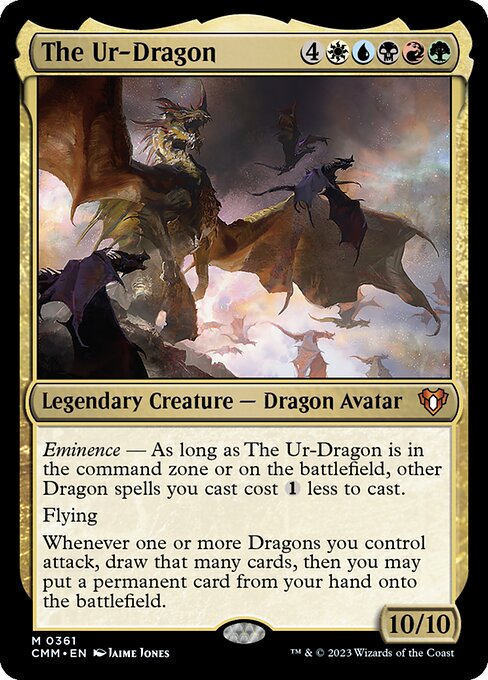
The Ur-Dragon commander deck is the five-colour Dragon deck, and it has been since 2017. The Ur-Dragon costs 


 , and most of its value arrives before you ever pay that. Eminence means that while it sits in the command zone or on the battlefield, your other Dragon spells cost
 less. Once it lands, whenever one or more Dragons you control attack, you draw that many cards and then may put a permanent card from your hand onto the battlefield.
This is our bracket 3 build of The Ur-Dragon commander deck. Brackets are the 1 to 5 power-level scale the format uses to match decks before a game; our Commander brackets explained guide covers them. We started from the average list and made eight swaps we can defend, and the bracket calculator put the result at 3 on its first pass. The list below is the one on the audit page.
Eminence pays for the first five turns
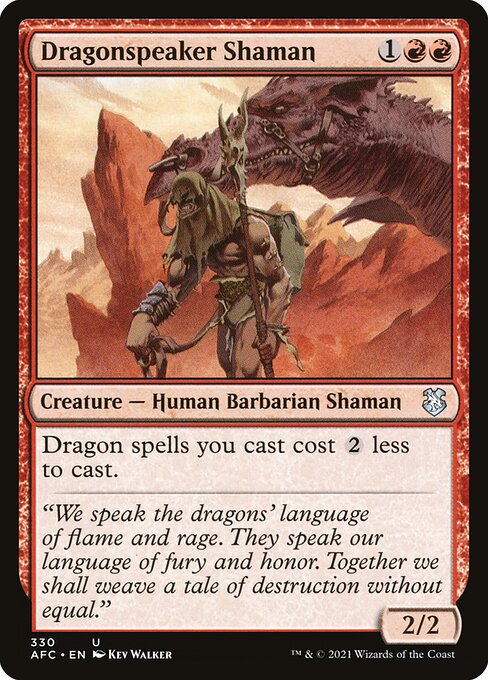
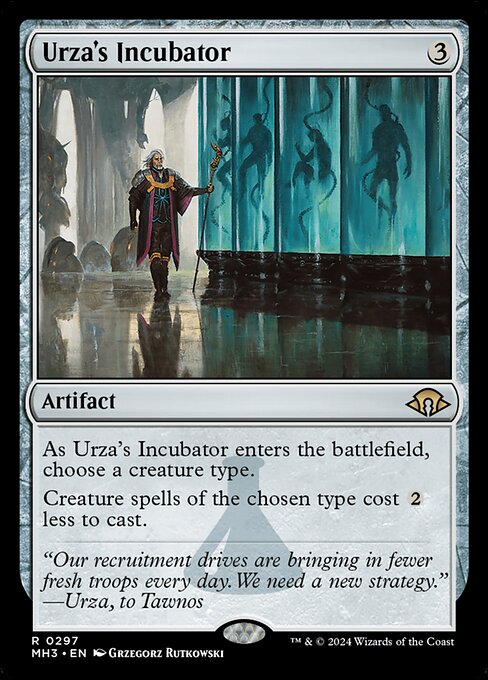
Nine mana is a lot, and the eminence discount works from the command zone, so the early game is about everything except the commander. Dragonlord's Servant takes another off every Dragon spell, Dragonspeaker Shaman takes  , Urza's Incubator naming Dragon takes off Dragon creature spells, and Herald's Horn takes more while it checks your top card each upkeep for a Dragon to put into your hand. With eminence and the Shaman, a Dragon such as Hellkite Courser costs ; add any second reducer and it is . Reducers only eat generic mana, so the coloured pips are the floor.
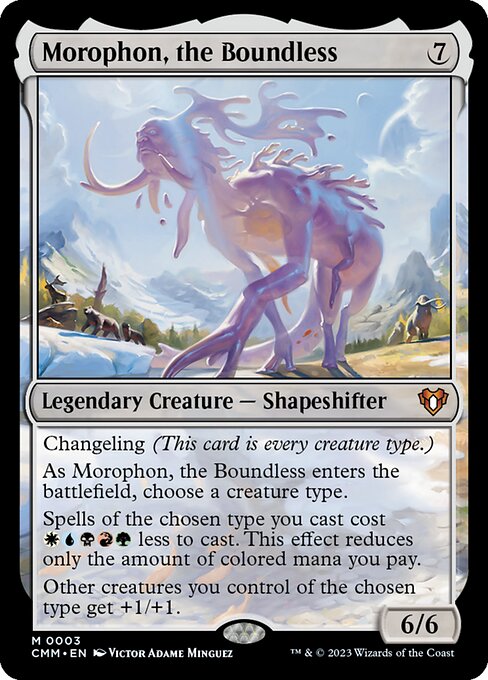
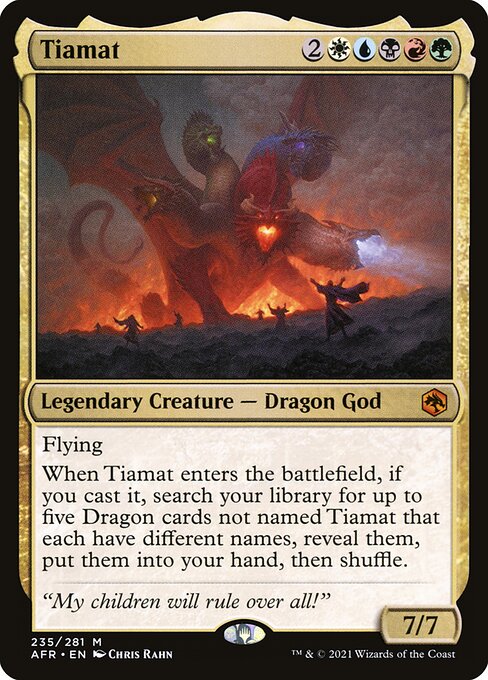
Morophon, the Boundless fills that gap. Naming Dragon, it removes from the cost of every Dragon spell you cast, and it only touches coloured mana. Tiamat is : eminence takes it to , and Morophon takes it to . Two-Headed Hellkite, at , becomes free. Morophon is a changeling, which means it is every creature type, so it is also a Dragon for every trigger in the deck.
The ramp underneath is thirty-six lands, Birds of Paradise, Sol Ring, Arcane Signet, Fellwar Stone, Dragon's Hoard and Dragonstorm Globe, six green land spells (Nature's Lore, Three Visits, Farseek, Cultivate, Kodama's Reach, Skyshroud Claim), and Mox Jasper, which only taps for mana once you control a Dragon and so does not count toward a keepable hand. Keep a seven with three lands and one ramp spell or mana rock (an artifact that taps for mana); mulligan the hand with four Dragons and two lands however good the Dragons look. The deck does little on turns two and three except ramp, and a hand that skips that step casts its first Dragon on turn six.
Every Dragon deals damage twice, entering and attacking
Combat with fliers is how the deck wins, and two engines make that combat lethal faster than a pile of 5/5s would.
Entering. Scourge of Valkas deals damage equal to your Dragon count to any target whenever it or another Dragon enters, Terror of the Peaks deals damage equal to the entering creature's power, and Dragon Tempest does the Valkas job again and hands fliers haste. Miirym, Sentinel Wyrm makes a nonlegendary token copy of each nontoken Dragon that enters, and Lathliss, Dragon Queen adds a 5/5 token on top, so with both out one Dragon spell is three bodies and three rounds of triggers.
Attacking. Thrakkus the Butcher doubles the power of every Dragon you control when it attacks. Twinflame Tyrant doubles the damage your sources deal to opponents and their permanents. Balefire Dragon deals the damage it dealt a player to each creature that player controls, Old Gnawbone makes a Treasure for each point of combat damage your creatures deal to players, and Klauth, Unrivaled Ancient adds mana equal to the total power of your attackers. Put Klauth's trigger on the stack first and Thrakkus's on top of it, so the doubling resolves before Klauth counts.
The win that skips combat. Call the Spirit Dragons gives your Dragons indestructible, and at the beginning of your upkeep puts a +1/+1 counter on a Dragon of each colour; if five different Dragons got counters, you win. The five-colour Dragons (Tiamat, Two-Headed Hellkite, Scion of the Ur-Dragon and the commander itself) each cover whichever colour you are missing, and Ancient Gold Dragon's 1/1 Faerie Dragon tokens are blue Dragons. Cast it when the table has already spent its enchantment removal.
The attack trigger, and the one Dragon you always cast
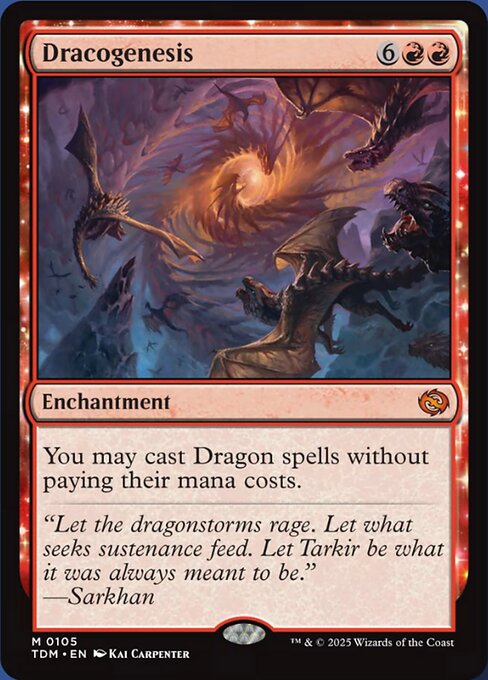
The draw half of The Ur-Dragon scales with attackers, so a four-Dragon swing is four cards. The second half wins games: you may put a permanent card from your hand onto the battlefield, with no cost and no restriction on type. That is how Dracogenesis reaches the table without anyone paying  , and from then on you may cast Dragon spells without paying their mana costs.
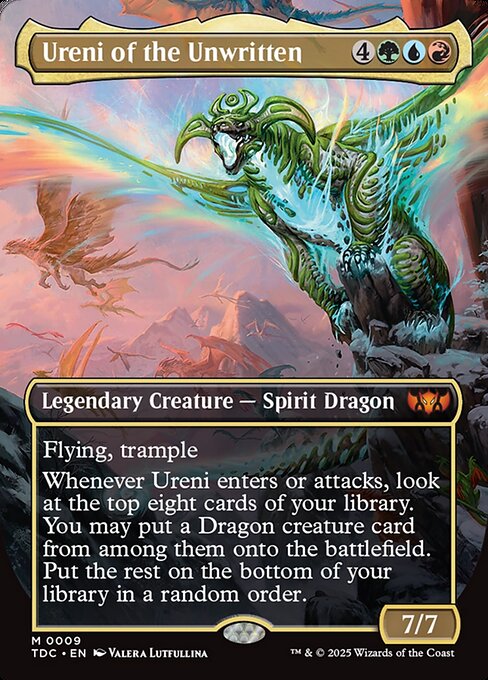
Tiamat searches for up to five Dragons when it enters, but only if you cast it. Put Tiamat onto the battlefield with the commander's trigger, or with Ureni of the Unwritten, which puts a Dragon from your top eight straight onto the battlefield, and the search never happens. Tiamat is the one Dragon you always cast, never put in: cast free off Dracogenesis, for with Morophon, off the top of the library with Korlessa, Scale Singer or from the graveyard with Rivaz of the Claw, it still finds five. The cards to cheat in are Dracogenesis, Ancient Silver Dragon, and whichever seven-drop other than Tiamat you could not afford that turn.
Hellkite Courser deserves its own paragraph. When it enters, you may put a commander you own from the command zone onto the battlefield; it gains haste and goes back to the command zone at the beginning of the next end step. The Ur-Dragon was never cast, so commander tax (the extra each time you cast it from the command zone) does not go up, and if it attacks with the team that turn you get the full trigger for the Courser's five mana (six before eminence) instead of nine. Courser is the card to take off Ureni's enter trigger when you cast Ureni before combat. Off Ureni's attack trigger the commander would arrive after attackers are declared and do nothing, so take a Dragon with an enter trigger instead, such as Dragonlord Atarka or Marang River Regent.

Eight swaps from the average list
The average list is fine. It is also somebody else's. These are the changes we would make before sleeving it.
Two cards stayed that a stricter editor would cut. Crux of Fate stays because "destroy all non-Dragon creatures" is a wrath (a spell that destroys every creature) that mostly spares you. It does take your five non-Dragons, Birds of Paradise, Dragonlord's Servant, Dragonspeaker Shaman, Rivaz of the Claw and Sarkhan, Soul Aflame, so cast it once the Dragons are down and the reducers have done their work. Dracogenesis stays because eight mana for an enchantment is wrong until you remember the commander puts it onto the battlefield for free.
What the audit says
The audit page for this exact list is at https://www.nerdleagues.com/commander-bracket/the-ur-dragon-d95c630f8b and it reads bracket 3. It counts three Game Changers, the official list of cards strong enough that running them moves a deck up the brackets, and three is the bracket 3 maximum: Cyclonic Rift, Smothering Tithe and Teferi's Protection. No mass land destruction, no extra turns, no two-card infinite combos, nothing banned. The same audit notes a high curve and little interaction, and both are true: the deck runs four answers that are not attached to a Dragon (Swords to Plowshares, Path to Exile, Cyclonic Rift and Crux of Fate), plus Exude Toxin, and it accepts that in exchange for Dragon density.
If your pod plays bracket 2, cut the three Game Changers: that is the audit's own suggested route down to bracket 2, and it leaves every Dragon in place. The audit also notes that the mana base stays a heavily upgraded one, which a bracket 2 table may notice. Smothering Tithe is the card you will miss.
The decklist
The deck lives at https://www.nerdleagues.com/decks/nerdleagues/the-ur-dragon-bracket-3, and the copy button below puts it in your own deck builder.
The Ur-Dragon Bracket 3 (EDH)
- 1 Arcane Signet
- 1 Dragon's Hoard
- 1 Dragonstorm Globe
- 1 Fellwar Stone
- 1 Herald's Horn
- 1 Sol Ring
- 1 Urza's Incubator
- 2 Forest
- 2 Island
- 2 Mountain
- 1 Plains
- 2 Swamp
- 1 Birds of Paradise
- 1 Balefire Dragon
- 1 Goldspan Dragon
- 1 Hellkite Courser
- 1 Scalelord Reckoner
- 1 Scourge of the Throne
- 1 Scourge of Valkas
- 1 Terror of the Peaks
- 1 Twinflame Tyrant
- 1 Two-Headed Hellkite
- 1 Marang River Regent // Coil and Catch
- 1 Scavenger Regent // Exude Toxin
- 1 Ancient Brass Dragon
- 1 Ancient Copper Dragon
- 1 Ancient Gold Dragon
- 1 Ancient Silver Dragon
- 1 Dragonlord's Servant
- 1 Dragonspeaker Shaman
- 1 Call the Spirit Dragons
- 1 Dracogenesis
- 1 Dragon Tempest
- 1 Garruk's Uprising
- 1 Kindred Discovery
- 1 Rhythm of the Wild
- 1 Smothering Tithe
- 1 Temur Ascendancy
- 1 Cyclonic Rift
- 1 Heroic Intervention
- 1 Path to Exile
- 1 Swords to Plowshares
- 1 Teferi's Protection
- 1 Arid Mesa
- 1 Bloodstained Mire
- 1 Cavern of Souls
- 1 Command Tower
- 1 Exotic Orchard
- 1 Flooded Strand
- 1 Haven of the Spirit Dragon
- 1 Maelstrom of the Spirit Dragon
- 1 Misty Rainforest
- 1 Path of Ancestry
- 1 Polluted Delta
- 1 Reflecting Pool
- 1 Scalding Tarn
- 1 The World Tree
- 1 Verdant Catacombs
- 1 Windswept Heath
- 1 Wooded Foothills
- 1 Breeding Pool
- 1 Ketria Triome
- 1 Temple Garden
- 1 Steam Vents
- 1 Watery Grave
- 1 Stomping Ground
- 1 Sacred Foundry
- 1 Hallowed Fountain
- 1 Overgrown Tomb
- 1 Blood Crypt
- 1 Mox Jasper
- 1 Ramos, Dragon Engine
- 1 Klauth, Unrivaled Ancient
- 1 Lathliss, Dragon Queen
- 1 Old Gnawbone
- 1 Rith, Liberated Primeval
- 1 Silumgar, the Drifting Death
- 1 Scion of the Ur-Dragon
- 1 Korlessa, Scale Singer
- 1 Tiamat
- 1 Thrakkus the Butcher
- 1 Miirym, Sentinel Wyrm
- 1 Dragonlord Atarka
- 1 Dragonlord Dromoka
- 1 Sarkhan, Soul Aflame
- 1 Rivaz of the Claw
- 1 Morophon, the Boundless
- 1 Ureni of the Unwritten
- 1 Crux of Fate
- 1 Cultivate
- 1 Farseek
- 1 Nature's Lore
- 1 Skyshroud Claim
- 1 Three Visits
- 1 Kodama's Reach
- 1 The Ur-Dragon
Piloting notes
Cast Dragons before combat. Temur Ascendancy and Rhythm of the Wild both grant haste, so a Dragon cast in the first main phase is an attacker this turn and an Ur-Dragon draw this turn. The deck draws enough that holding a Dragon back for the second main phase is almost never right.
Hold Heroic Intervention for the sweeper. One Dragon lost to spot removal is a card; a board of six Dragons lost to a wrath is the game. Rith, Liberated Primeval gives your other Dragons ward and Scalelord Reckoner destroys a nonland permanent of anyone who targets your Dragons, so single-target removal already costs the table something.
Scourge of the Throne checks life totals. Its extra combat only happens if it is attacking the player with the most life, or tied for it. Dragonlord Dromoka's lifelink can make you the life leader, and if you lead alone no opponent qualifies, so Scourge is just a flier that turn. Attack the player with the most life, and look at your own total before you count on the second combat.
Scion of the Ur-Dragon is a combat trick. For it searches for a Dragon, puts it in your graveyard and becomes a copy of it until end of turn. Copy Balefire Dragon after blockers for a one-sided wipe of that player's creatures, or Scourge of the Throne before attackers for the extra combat. The Dragon you binned comes back later with Rivaz, Haven of the Spirit Dragon or Ancient Brass Dragon, and Rivaz and Haven pull double duty: Rivaz taps for two mana for Dragon spells, and Haven taps for any colour for a Dragon.
Dragonlord Dromoka picks the turn you go off. Opponents cannot cast spells during your turn while it is on the battlefield, so the big Tiamat turn, or the Dracogenesis turn, happens after Dromoka resolves.
When you have played it, record the games. A deck page on Nerd Leagues keeps its own ELO rating, separate from yours, so after ten pod games you can see how this list performs against your actual table rather than against the bracket label; our guide to player ELO versus deck ELO explains how the two scores move.


Comments
Join the conversation.