

Edgar Markov Commander Deck: A Bracket 3 Build Where Every Vampire Is Two Bodies
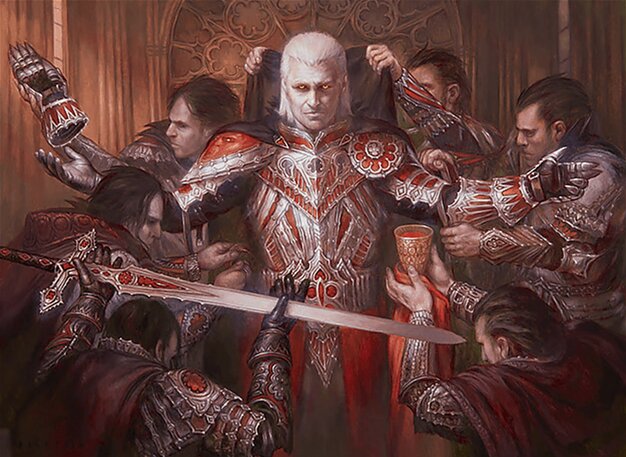
An Edgar Markov commander deck is one of the few tribal decks that runs at full speed with its commander still in the command zone. Edgar's eminence ability says that whenever you cast another Vampire spell, if Edgar is in the command zone or on the battlefield, you create a 1/1 black Vampire creature token. Nobody has to spend six mana to switch the deck on. From turn one, every Vampire you cast is two bodies, and the list below is built so that both of them hurt.
This is our bracket 3 Edgar Markov commander deck: nine cards away from the average Edgar list, each change explained below. The full list is on its deck page on the Nerd Leagues account, and its bracket audit comes back at bracket 3 with three Game Changers: Demonic Tutor, Vampiric Tutor and Teferi's Protection. Game Changers are the cards on the official list that push a deck's bracket up, and three is the most a bracket 3 deck may run; our brackets guide has the rest of the rules. We added no Game Changers and cut none. The two tutors (cards that search your library for whatever you need) are why the deck's best turns repeat instead of depending on the draw.
Eminence is the engine, Edgar is the payoff
The trigger happens when you cast the spell, so it does not care whether the creature resolves. If someone counters your Champion of Dusk, the token still arrives. In a pod with a blue player that is worth more than it sounds, because the deck's bodies can only be answered all at once.
Edgar himself costs 


 , has first strike and haste, and whenever he attacks every Vampire you control gets a +1/+1 counter. The turn to cast him is a turn you can attack with him, so the counters land on a board that already exists. Casting him on turn six into an empty board is the beginner mistake; two cheap Vampires that turn are four bodies, and he stays in the one zone where nobody can touch him.
There is also a turn-three Edgar in this list. Master of Dark Rites is a one-mana Vampire that taps and sacrifices another creature to add , spendable only on Vampire, Cleric or Demon spells. Turn one, Master. Turn two, any Vampire, which makes a token. Turn three, tap Master and sacrifice the token: three black mana plus three lands is exactly , and Edgar attacks with haste on turn three with a counter on every Vampire you control. It needs Master in your opening hand and a red and a white source among those three lands, so treat it as a bonus rather than the plan; it is still one reason the mana base keeps every untapped dual.
How the deck actually kills
A Vampire in this deck does three things: it enters, it attacks, and it dies. The list gets paid for each one, which is why it keeps pressure on through a board wipe instead of restarting from nothing.
Entering
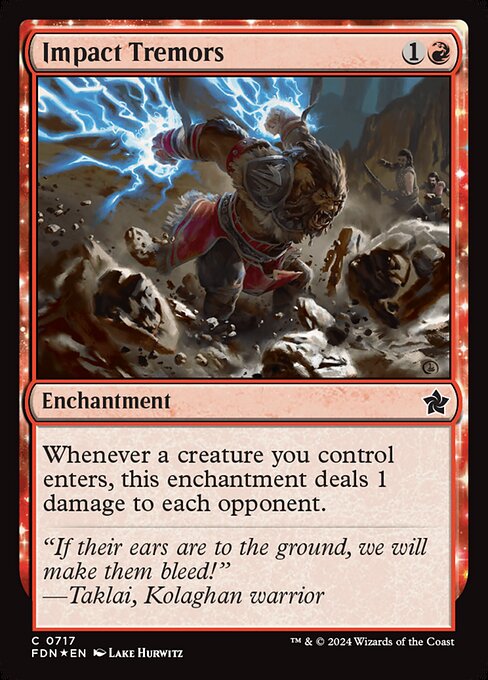
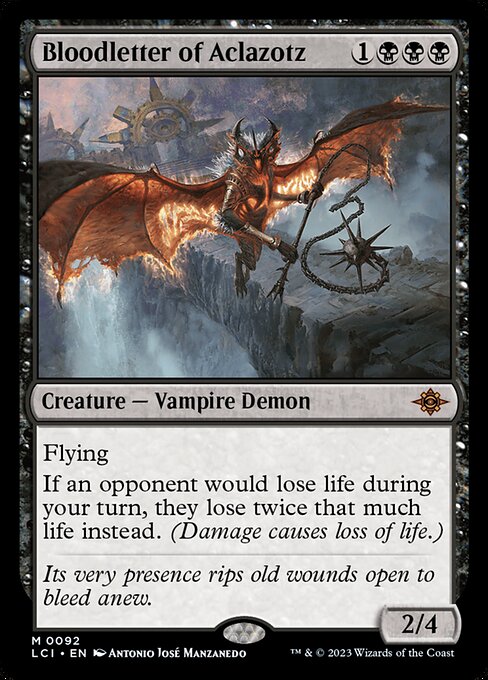
Purphoros, God of the Forge is the card the average list is missing. Its text: "Whenever another creature you control enters, Purphoros deals 2 damage to each opponent." With Edgar in the command zone every Vampire you cast is the creature plus the token, so each cast is 4 damage to each opponent, and 6 once Anointed Procession is doubling the token. Purphoros is indestructible, and it is not a creature until your devotion to red (the number of red mana symbols in the costs of permanents you control) reaches five, which this list rarely manages, so it sits through the wraths (spells that destroy every creature) that kill everything else. Impact Tremors is the two-mana version at 1 damage per creature, and Bloodletter of Aclazotz doubles every point of life an opponent loses on your turn. With all three out, one two-drop Vampire costs each opponent 12 life before combat.



Welcoming Vampire draws a card the first time each turn that another creature with power 2 or less enters under your control. The first Vampire you cast each turn draws, even a five-drop, because its token is a 1/1. Watch the anthems (effects that pump your whole team, like the lords below): once two of them are out the token enters as a 3/3 and the draw stops, and Intangible Virtue counts as one. Champion of Dusk draws a card for each Vampire you control when it enters and costs you that much life; count before you cast it, because with Edgar's tokens the number is bigger than it looks.
Attacking
Lords, the creatures that give the rest of their type +1/+1, are Legion Lieutenant, Stromkirk Captain (first strike for the team as well), Captivating Vampire, Markov Baron and Edgar, Charmed Groom, stacked under Edgar's own counters. Sanctum Seeker drains each opponent for 1 per attacking Vampire (they lose 1 life, you gain 1). Shared Animosity gives each attacker +1/+0 for every other attacker that shares a creature type with it, and the deck is 36 Vampires, so a seven-creature attack is +6 on each of them. Mirror Entity is the swap we are proudest of: changeling makes it every creature type, so it is a Vampire (Edgar makes a token when you cast it, and it takes his counters), and  turns every creature you control into an X/X with the counters and the lords stacked on top. Ten tokens and X=4 is forty power before any of that.
Dying
Aristocrats is the name for decks that make money when their own creatures die. The package here is Blood Artist, Cruel Celebrant, Vengeful Bloodwitch, Falkenrath Noble and Kalastria Highborn, fed by Viscera Seer, Yahenni, Undying Partisan, Indulgent Aristocrat, Village Rites and Skullclamp. Skullclamp on a token is the single best play in the deck: equip for  , the 1/1 gets +1/-1, dies to having 0 toughness, and you draw two cards. One thing you only learn by playing it: Intangible Virtue, any of the five lords or a single +1/+1 counter keeps the clamped token alive. Equip it anyway and sacrifice it to Viscera Seer; the draw comes from the token dying, and a sacrifice is a death.


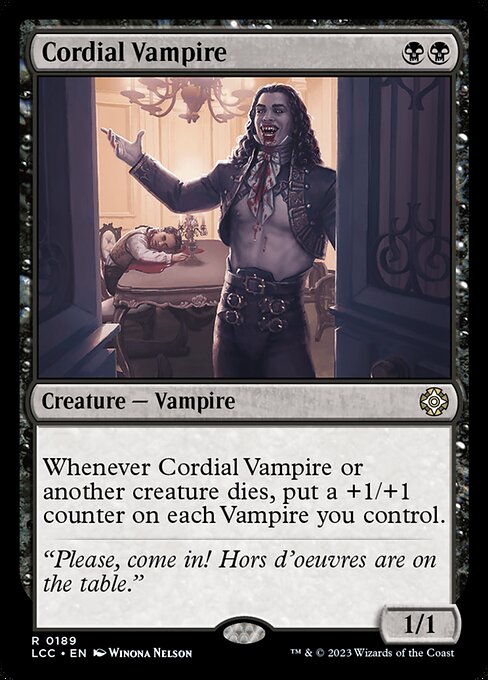
Cordial Vampire puts a +1/+1 counter on every Vampire you control each time any creature dies, so the sacrifice turns also grow the team, and Vito, Thorn of the Dusk Rose and Sanguine Bond turn every point of life those triggers gain you into a point an opponent loses. If you want the commander-level version of this plan, we ranked the best aristocrats commanders separately.
The list
Edgar Markov Bracket 3 (EDH)
- 1 Arcane Signet
- 1 Herald's Horn
- 1 Orzhov Signet
- 1 Sol Ring
- 1 Talisman of Hierarchy
- 1 Talisman of Indulgence
- 1 Skullclamp
- 3 Mountain
- 4 Plains
- 6 Swamp
- 1 Mirror Entity
- 1 Blood Artist
- 1 Bloodtithe Harvester
- 1 Captivating Vampire
- 1 Cordial Vampire
- 1 Cruel Celebrant
- 1 Welcoming Vampire
- 1 Bloodline Keeper // Lord of Lineage
- 1 Ruthless Lawbringer
- 1 Master of Dark Rites
- 1 Twilight Prophet
- 1 Bloodletter of Aclazotz
- 1 Bloodthirsty Conqueror
- 1 Champion of Dusk
- 1 Knight of the Ebon Legion
- 1 Legion Lieutenant
- 1 Sanctum Seeker
- 1 Falkenrath Noble
- 1 Indulgent Aristocrat
- 1 Markov Baron
- 1 Vampire Socialite
- 1 Kalastria Highborn
- 1 Malakir Bloodwitch
- 1 Charismatic Conqueror
- 1 Dusk Legion Zealot
- 1 Stromkirk Captain
- 1 Vengeful Bloodwitch
- 1 Scheming Silvertongue // Sign in Blood
- 1 Viscera Seer
- 1 Anointed Procession
- 1 Black Market Connections
- 1 Impact Tremors
- 1 Intangible Virtue
- 1 Phyrexian Arena
- 1 Sanguine Bond
- 1 Shared Animosity
- 1 Anguished Unmaking
- 1 Boros Charm
- 1 Path to Exile
- 1 Swords to Plowshares
- 1 Teferi's Protection
- 1 Vampiric Tutor
- 1 Village Rites
- 1 Bloodstained Mire
- 1 Bojuka Bog
- 1 Cavern of Souls
- 1 Caves of Koilos
- 1 Command Tower
- 1 Dragonskull Summit
- 1 Exotic Orchard
- 1 Isolated Chapel
- 1 Luxury Suite
- 1 Marsh Flats
- 1 Path of Ancestry
- 1 Secluded Courtyard
- 1 Shattered Sanctum
- 1 Unclaimed Territory
- 1 Vault of Champions
- 1 Vault of the Archangel
- 1 Voldaren Estate
- 1 Sacred Foundry
- 1 Savai Triome
- 1 Godless Shrine
- 1 Blood Crypt
- 1 Yahenni, Undying Partisan
- 1 Drana, Liberator of Malakir
- 1 Clavileño, First of the Blessed
- 1 Mavren Fein, Dusk Apostle
- 1 Vito, Thorn of the Dusk Rose
- 1 Elenda, the Dusk Rose
- 1 Edgar, Charmed Groom // Edgar Markov's Coffin
- 1 Legion's Landing // Adanto, the First Fort
- 1 Purphoros, God of the Forge
- 1 Sorin, Imperious Bloodlord
- 1 Damn
- 1 Demonic Tutor
- 1 Olivia's Wrath
- 1 Pact of the Serpent
- 1 Ruinous Ultimatum
- 1 Edgar Markov
Thirty-four lands, thirty-five Vampires plus the changeling, fifteen of them at one or two mana. Copy it to your account from the deck page and the bracket calculator will audit your version; swap one card and the number can move.
Nine cards the average list doesn't run
We started from the average bracket 3 Edgar list, and most of it is right. These are the cuts and what replaced them.

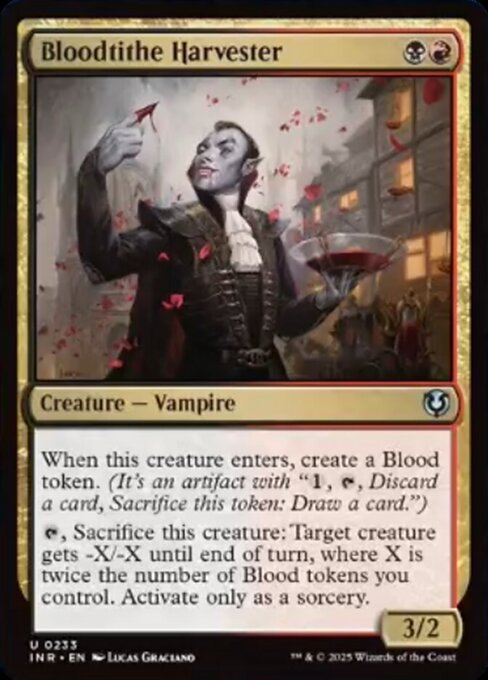
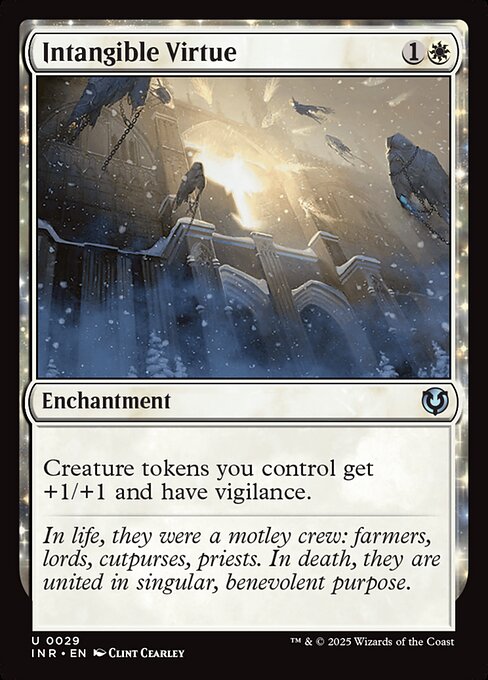

The Exquisite Blood decision
Exquisite Blood says that whenever an opponent loses life, you gain that much. Sanguine Bond and Vito, Thorn of the Dusk Rose say the reverse: whenever you gain life, a target opponent loses that much. Put one of each on the table and a single Blood Artist trigger loops until every opponent is dead. The average list runs all three, and that pair of enchantments is the thing that gets Vampire decks asked to leave bracket 3 pods: ten mana over two quiet turns, and fewer decks can answer an enchantment than a creature.
We cut Exquisite Blood and kept the other half. This deck gains life every turn without trying (lifelink tokens, Sanctum Seeker, every drain trigger), so a card that turns each of those points into a point of loss is just a good card here. One loop remains, and you should be upfront with your pod about it: Bloodthirsty Conqueror carries Exquisite Blood's text on a five-mana creature, so Conqueror with Vito or Sanguine Bond out ends the game the same way, and once both are on the battlefield the loop runs by itself the next time an opponent loses any life, whether you want it to or not. If you keep Conqueror, agree with your pod up front that you will never tutor for the second piece, and say so before combat if you draw into both. The audit does not list a two-card combo for this deck, so you will not see one on the bracket page; we are telling you anyway.
A few cards stayed that look wrong at first glance. Damn looks out of place in a deck with this many creatures until you cast Boros Charm for its indestructible mode first and then overload Damn for  (overload is an alternative cost that changes "target creature" to "each creature"): six mana for a wrath that only hits them. Ruinous Ultimatum costs , destroys every nonland permanent your opponents control, and is why the long games still end in your favour; the mana base stays heavy on dual lands in all three colour pairs partly so it is castable. And Teferi's Protection is a Game Changer slot spent on the best answer this deck has to a wrath: cast it in response, everything you control phases out, tokens included, and it all phases back in at the start of your next untap step, before you untap.
Mulligans and sequencing
Keep a hand with two to four lands and at least one Vampire that costs one or two: about seven opening hands in ten have one of the fifteen, and three in ten have two. A hand of five-drops is a mulligan even with Sol Ring in it, because eminence pays you for each Vampire you cast, and that hand does not cast one until turn three at the earliest.
Sequencing depends on whether Edgar is attacking. On the turns he is, cast your lords and your other Vampires before combat: his attack trigger only puts counters on the Vampires already on the battlefield, so anything cast afterwards misses it, and a lord cast after combat pumps nothing. With Purphoros, God of the Forge or Impact Tremors out, the first token you make before combat already costs each opponent life, which switches on Vampire Socialite (every other Vampire that enters after an opponent has lost life this turn arrives with an extra +1/+1 counter), so everything that enters after that first token gets its counter as well. Hold your token-makers until after combat only when Edgar is not attacking and Socialite needs combat damage to turn on; lords and attack triggers (Sanctum Seeker, Mavren Fein, Dusk Apostle, Clavileño, First of the Blessed) go first whenever anything attacks, because they only pay off if they are already on the battlefield.
Clavileño, First of the Blessed turns a target attacking Vampire that is not already a Demon into one, with a death trigger that draws a card and makes a tapped 4/3 flying Vampire Demon token. Point it at a 1/1 token, never at a lord, then sacrifice that token to Viscera Seer after damage: a 1/1 becomes a card and a 4/3 flier, every single turn.
Olivia's Wrath gives each non-Vampire creature -X/-X where X is the number of Vampires you control. Mirror Entity is a Vampire and survives, Purphoros, God of the Forge is not a creature while your devotion to red is under five, and the rest of your board is Vampires, so it is a one-sided wrath that gets bigger the longer the game goes. Hold it for the turn an opponent commits a board, then attack into nothing.
Then record the games
Whether this is really a bracket 3 deck gets settled by playing it. Copy the list, play it in your pod, and record the results; deck ratings on Nerd Leagues move the moment a game is logged, so after ten games you will know whether the Purphoros plan is winning or whether your table has learned to kill it on sight. And if you change cards, run the new list through the bracket calculator before you tell anyone the number: a fourth Game Changer moves it to 4 whether you meant to or not.


Comments
Join the conversation.