

Threat Assessment in Commander: How to Pick Your Targets

Threat Assessment in Commander: Why Picking the Right Target Matters
Quick answer: Threat assessment is when you analyze the board state in a Commander game and identify the cards, boards, and players who are the closest to winning (or preventing you from winning) the game, and you dole out your interaction and aggression accordingly. In Commander's multiplayer format, knowing who to attack, what to answer, and when to hold back is what actually decides four-player games.
Shutting down threats will not only keep you in the game long enough to hopefully get to your own win condition, it will also ingratiate you to your fellow players at the table. That said, threat assessment is far from obvious—it's an art form that requires reading the table, understanding different deck archetypes, and resisting emotional impulses.
Understanding Your Ranking Criteria: What Makes a Threat?
Before you can rank threats, you need to understand what separates a real threat from a scary-looking card. The term describes a player's ability to determine where their attention should be focused. And while sometimes the threat is incredibly obvious to the entire table, it's often a very subjective, nebulous and shifting quality.
The value of resources is different for each archetype in Commander. Aggressive decks win through the attack step, so when evaluating the threat of an aggro deck, you can just glance at their board state. By contrast, combo and control decks demand a different read entirely. The best threat assessments account for deck type, card advantage engines, protection layers, and how close each opponent is to executing their win condition.
1. Stax and Protection Pieces: Lock Down Threats First
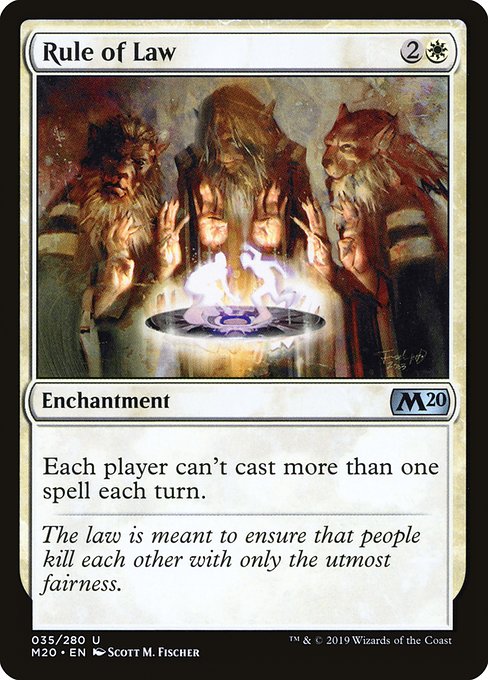
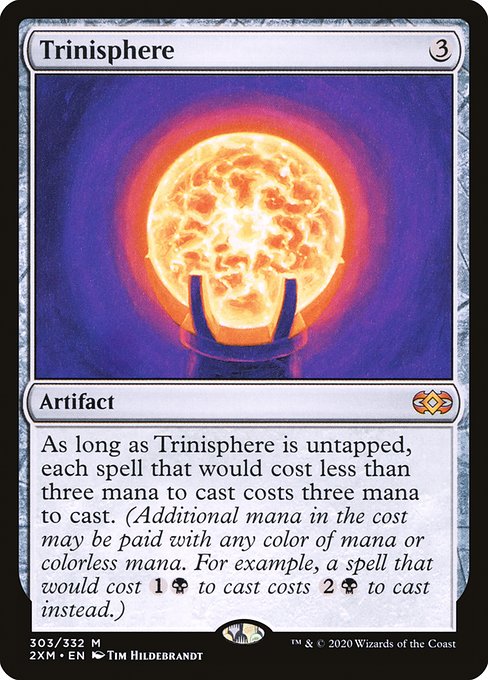
Stax pieces are high-priority targets because they alter the game's flow by restricting the resources and actions of all players, often disproportionately hindering opponents more than the controller. Cards like Ghostly Prison, Rule of Law, and Trinisphere don't generate immediate wins, but they can strangle an entire table.
The danger with stax pieces is that they're easy to overlook because they don't attack and don't immediately threaten life totals. However, these effects can create a lock on the game, preventing others from developing their strategies. If you see a stax player setting up their lock, they often represent the table's biggest threat despite having no creatures in play. You should always ask yourself if you must use your removal now. Do you need to Doom Blade that creature right now? Maybe you just need another mana or 2 to land that Sphere of Safety and can hold up on the removal.


2. Creatures with Evasion and Protection: Answer Before They Snowball
Large creatures with evasion (like flying, trample, or unblockable) often present a danger to your life total. They are easier to see coming and often easier to interact with since they lack built-in protection. That said, the urgency in dealing with these depends on how quickly they can knock out a player. If you don't have evasive creatures of your own (or another way to keep attacks from coming at you, like Ghostly Prison), large, evasive attackers often demand an answer sooner rather than later.
More dangerous still are creatures that stack protection layers. Voltron decks (decks which involve outfitting a single, terrifying creature with every shiny piece of Equipment that's ever been printed) for example, are big on layers of protection. Things like hexproof, ward, shroud, indestructible, will all make removal opportunities few and far between. Oftentimes, Voltron creatures will require a coordinated effort to strip away a few protective pieces of Equipment so that someone else can remove the creature before its owner can replace those defensive layers.
3. Growing Threats and Counter Doublers: Stop the Snowball
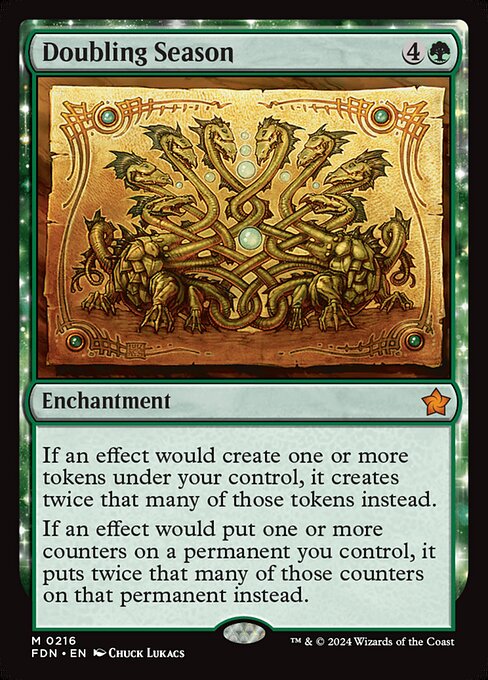
One thing to keep an eye out for is any creature that is growing stronger each turn, and how fast they're doing so. For example, creatures that accumulate +1/+1 counters quickly need to be watched. A creature that seems modest on turn three can become overwhelming by turn five if left unchecked, especially with Doubling Season, Ozolith, the Shattered Spire, or similar effects in play.
The key to managing growing threats is timing. You don't need to remove them immediately—only before they become unstoppable. If a player just cast a creature with one +1/+1 counter and you have removal available next turn, that's often the better play than answering it immediately. Save your premium interaction for creatures that are already a problem or on the verge of being one.

4. Value Engines: Card Advantage That Runs Away
An example could be a tribal deck with Kindred Discovery on the battlefield. Once it's out, all of their subsequent creatures will draw them cards until it's removed. Card advantage engines are insidious threats because they don't win the game on their own—but they give one player so much gas that victory becomes inevitable.
Unlike stax pieces that restrict everyone equally, value engines specifically empower one player. The scariest threats will attract the attention (and removal) of multiple players. Don't be afraid to let two significant threats "fight it out" by focusing your attention elsewhere. If everyone at the table recognizes a value engine as the threat, you might hold back and let other players spend their removal on it.
5. Combo Pieces and Infinite Loops: The Immediate Win Threats
Will it win the game on the spot? If a player drops a combo piece that allows them to generate infinite mana or infinite damage, you must interact immediately. Your removal must be held exclusively for these game-ending bottlenecks. Combo threats sit at the top of the threat hierarchy because they can end the game in a single turn if left unanswered.
The challenge is identifying which pieces are truly dangerous. Not every combo piece represents an immediate lethal—sometimes it's a setup card that's useful only next turn. But if you see a player assemble pieces that, together, generate infinite mana or damage, that threat gets your immediate and full attention, regardless of what else is happening at the table.
6. Wide Boards and Token Strategies: Assess Urgency Carefully
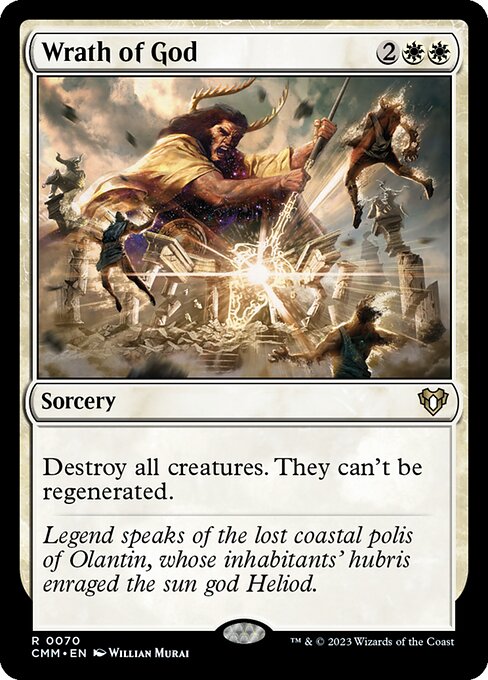
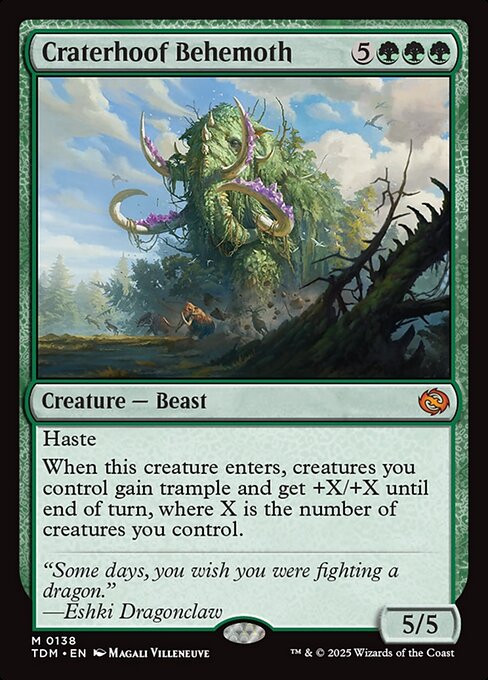
Wide boards in commander are very context-dependent. On one hand, even a seemingly innocuous board of small creatures can quickly become a significant threat with things like Overwhelming Stampede or Craterhoof Behemoth. Plus, numerous small bodies can overwhelm single blockers, apply considerable pressure through cumulative damage, and fuel sacrifice outlets. That said, a slew of creatures on one side of the board is usually pretty easy to spot and, under the best of circumstances, can be simple to answer via a board wipe.
The threat level of a wide board depends on what comes next. A player with ten 1/1 tokens isn't a threat until they play a lord or a pump spell. This is where reading ahead matters: if you know the token player also has Craterhoof Behemoth in hand, they represent a significant threat. If they're just grinding out incremental advantage, a board wipe is overkill.


Avoiding the Most Common Threat Assessment Mistakes
Even experienced players fall into predictable traps. The most common error is swinging at whoever attacked you last, or whoever is closest in turn order, instead of whoever is actually ahead. Revenge is not a strategy. If a third player is one turn from winning, the fact that someone chipped you for three last turn is irrelevant — point your damage where it matters.
Firing off your best answer on the first scary thing you see often leaves you defenseless when the real threat lands. Premium interaction is a limited resource. If you blow your one board wipe on a player who was not going to win anyway, you have effectively handed the game to whoever was holding back.
There's also the trap of "premature interaction." If Player A drops a 10/10 creature on Turn 4, it is terrifying. The instinct is to immediately destroy it. However, proper threat assessment requires patience and political maneuvering. Is it attacking me? If that 10/10 creature is swinging at Player C, it is not your problem. Let your opponents drain each other's life totals and removal spells. Never solve a problem for the table if you are not the target.
How to Get Better at Threat Assessment Right Now
Threat assessment begins before you even draw at the start of the game. As soon as you sit down and see each opponent's commander, you should have an idea of who will be the biggest threat. You should always start your threat assessment by leaning on past experiences. If you've played against the same players or decks before, you know what to expect.
Watch high-level gameplay and pay attention not to the flashy plays but to the quiet ones: the removal held for three turns, the attack pointed at the "wrong" player for a good reason, the counterspell saved for the real haymaker. Over time, the conscious checklist becomes intuition, and you will find yourself making the right call without having to think it through. That is the moment your Threat Assessment goes from a skill you practice to an edge you carry into every single game.
Threat assessment is a dynamic process, and a player doesn't necessarily need to be killed just because they committed a threat to the board, especially if it was answered. That just gives another player with a subtler presence the victory. Remember that your goal isn't to punish individual plays—it's to identify who's closest to winning and allocate your finite resources accordingly.
The Bottom Line: Threat Assessment Separates Winners from Everyone Else
Threat Assessment is the single most underrated skill in Commander, and it separates players who win consistently from those who just durdle until someone else takes over. Master it and you will win more games with the exact same 99 cards you already own.
The next time you sit down for a game, resist the urge to attack the player who attacked you last. Instead, look at the entire table. Who's closest to their win condition? What pieces are they still missing? Can you afford to ignore them for another turn or two? Which threats are actually threats, and which are distractions? Answer those questions first, and you'll find yourself winning more games—and getting invited back to the pod.


Comments
Join the conversation.