

The Archenemy Problem: What to Do When One Player Always Wins

If one player always wins your Commander games, the fix starts with figuring out why: it's almost always a deck power gap, a threat assessment failure, or a skill gap — and each one has a different solution. The good news is that every version of the archenemy problem is fixable without anyone leaving the pod.
Every playgroup I've ever heard of has lived through this. Someone at the table goes on a heater, wins four Commander nights in a row, and suddenly the vibe shifts. People sigh when they sit down across from them. Games start with three players silently agreeing on a target. That's the archenemy problem, and in Magic: The Gathering's most social format, it's as much a people puzzle as a gameplay one.
First, Check Whether One Player Actually Always Wins
Here's the thing our pod learned the hard way: memory is a terrible scorekeeper. Losses to the same player sting more than losses to anyone else, so they take up more room in your head. A player who wins 40% of games in a four-player pod feels unstoppable, even though everyone else is splitting the other 60%.
Nerd Leagues literally exists because of this. Before it was a website, it was a spreadsheet our group kept to settle exactly these arguments — who actually wins the most, and with what. More than once, the "unbeatable" player turned out to be merely good, and the real story was one specific deck running hot.
So before anyone gets salty, get the numbers. Once you know whether it's a player problem, a deck problem, or a perception problem, the fix picks itself.
Fixing a Deck Power Gap in Your Pod
The most common cause of the archenemy problem isn't skill — it's one deck that's simply built two brackets above everything else at the table. Nobody did it on purpose. One player just kept upgrading, swap by swap, until their "casual" deck had a tuned mana base and a tutor package while everyone else was still on precon lands.
The fix is a conversation, not a callout. Have everyone run their list through the Commander Bracket Calculator and compare results. Seeing "this deck is a 4, these three are 2s" on a screen depersonalizes the whole discussion — it's not "your deck is unfair," it's "these numbers don't match, what do we want to do about it?"
From there the pod has options that all keep the fun intact: the strong deck sits out in favor of something jankier, the rest of the table gets a few weeks to upgrade, or you lean in and make one night a month high-power night.
When Bad Threat Assessment Creates a Fake Archenemy
Sometimes the deck power is fine and the problem is that the table keeps letting the same player win. Classic pattern: two players spend the whole game trading removal spells over some early grudge while the third quietly assembles a board, and the eventual winner looks dominant when really they were just ignored.
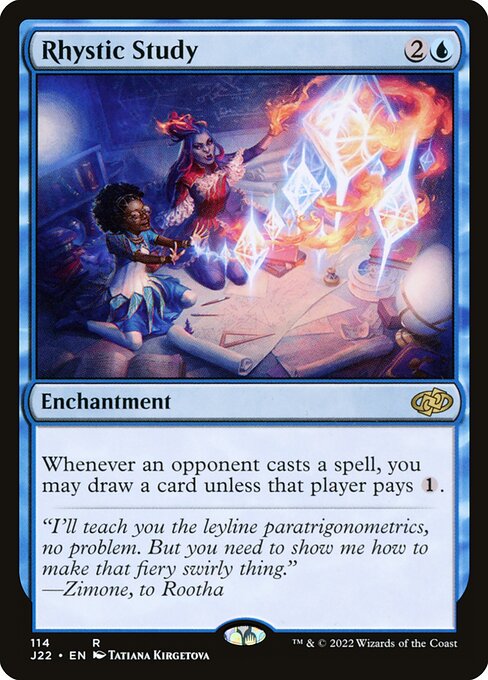
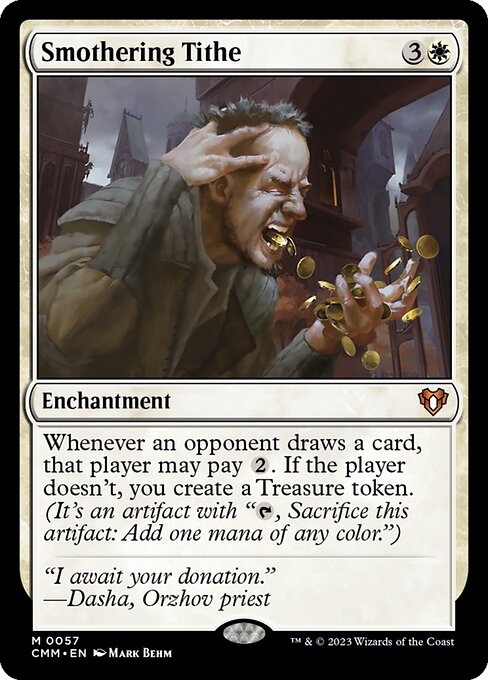
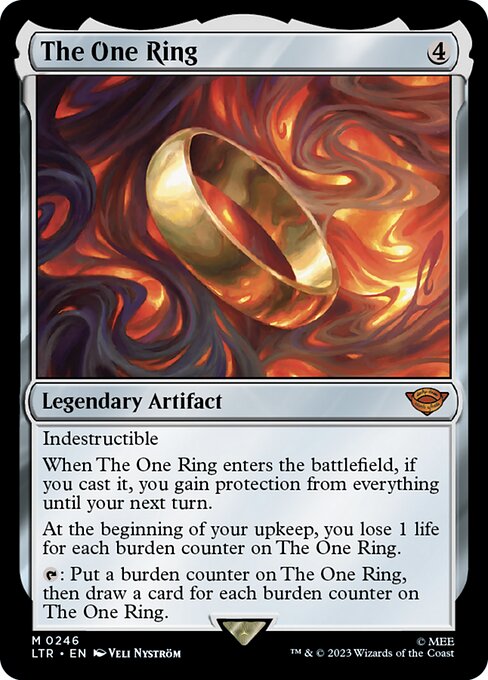
Cards like Rhystic Study, Smothering Tithe, and The One Ring make this worse, because they generate their advantage a card at a time and never feel urgent enough to answer — until suddenly the player running them is unbeatable.
If this is your pod's version of the problem, the fix is a group skill, not a group rule. We've written a whole guide on threat assessment in Commander, and the short version is: answer the engine, not the grudge. When the table learns to spend removal on what's actually winning, the "archenemy" usually comes back to the pack on their own.
Sometimes the Archenemy Role Is Actually Fun
Here's the spicy take: a pod with a known archenemy isn't always broken. When Adam's Bruna, Light of Alabaster voltron deck hits the table in our group, everyone knows the assignment — and those games are some of our best, because there's a shared story. One player against the table is basically a bonus game mode, as long as everyone signed up for it. He even wrote up what the data says about playing as the archenemy, and the win rate is a lot more human than the table's groaning suggests.
The archenemy problem is only a problem when it's unspoken. Named, measured, and agreed on, it's just a rivalry — and rivalries are what make a playgroup feel like a league.
Let the Numbers Settle It
Whatever flavor of the problem your pod has, the path out runs through the same door: track your games. A few weeks of real results tells you whether it's one player, one deck, or one bad memory — and watching ELO shift as the pod adjusts is honestly half the fun.
Set up a free Commander pod league for your playgroup on Nerd Leagues, record your games, and let the standings tell the story. The archenemy might not be who you think — and finding out together beats grumbling about it apart.



Comments
Join the conversation.