

The Best Aristocrats Commanders in EDH, Ranked

The best aristocrats commanders are the ones that do part of the deck's job from the command zone, so the other 99 cards (the 99, as Commander players call everything in the deck that isn't the commander) can do the rest. Aristocrats is the archetype that turns creatures into fuel: you sacrifice your own creatures on purpose and get paid for each death, and the name comes from Falkenrath Aristocrat and Cartel Aristocrat, two old Standard cards that did exactly that.
How this list is ranked
Every aristocrats deck needs three pieces. Fodder is the creatures you don't mind losing, usually tokens. A sacrifice outlet is a permanent that lets you sacrifice a creature whenever you want, ideally for free and at instant speed, so removal never catches your board before you can cash it in. A payoff is the card that rewards each death: drain an opponent, draw a card, grow something, make a Treasure.
The rule: a commander that supplies two of those pieces by itself ranks above one that supplies one, and within a tier the commander that leaves less for the 99 to do goes higher, with mana cost as the tiebreak. A commander that supplies none and only amplifies what you bring sits at the bottom. None of the ten is on the Game Changers list the bracket system uses, so the commander alone never bumps your deck's bracket.
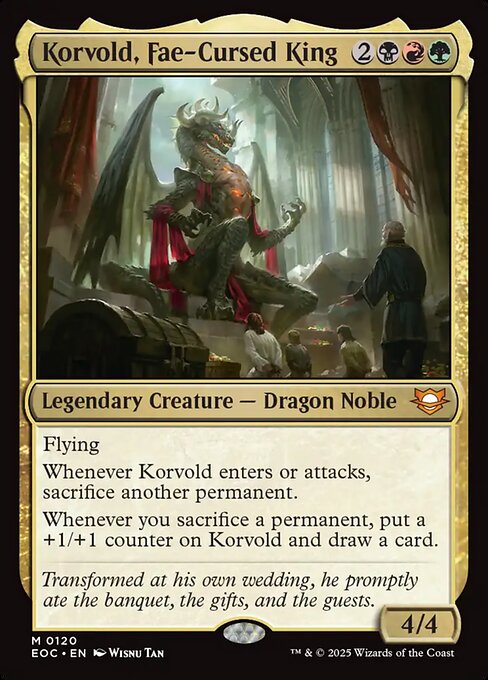
1. Korvold, Fae-Cursed King
Korvold, Fae-Cursed King costs 


 for a 4/4 flier that is an outlet and a payoff at once. Whenever Korvold enters or attacks, you sacrifice another permanent. Whenever you sacrifice a permanent, any permanent, Korvold gets a +1/+1 counter and you draw a card. Treasures, Clues, Food, a tapped Evolving Wilds, a spare token: all of it turns into cards, and every card finds more fodder.
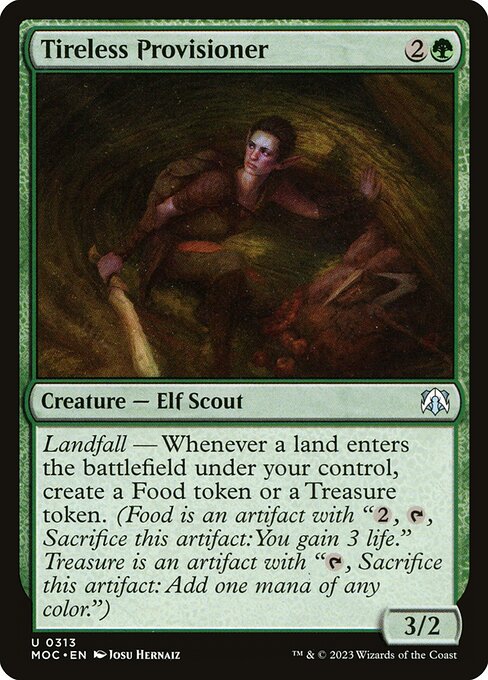
The word "another permanent" is also the trap. The sacrifice is mandatory, so if you cast him onto a board of nothing but lands, you sacrifice a land. Hold him until you have a token or a Treasure to feed him. Ophiomancer is the ideal roommate: it makes a deathtouch Snake at the start of every upkeep if you control none, so Korvold always has a snack. Tireless Provisioner does the same job with a Food or Treasure every time a land enters. For more high-ceiling commanders, see our list of the best commanders for bracket 4.


2. Yawgmoth, Thran Physician
Yawgmoth, Thran Physician costs , and his first ability is a free outlet and a payoff in one line: pay 1 life and sacrifice another creature to put a -1/-1 counter on up to one target creature and draw a card. "Up to one" means you never need a target, so every creature you own is a card in hand at instant speed, and pointed at an opponent's mana dork (a cheap creature that taps for mana) the counter is removal on top. His second ability (, discard a card) is proliferate: each permanent and player you choose gets one more of every kind of counter it already has, so one -1/-1 counter becomes a slow death sentence.
He is second rather than first because he only eats creatures, and in mono-black your fodder has to come from black cards alone. Nest of Scarabs makes a 1/1 Insect every time you put -1/-1 counters on something, so each activation replaces the creature it ate. Butcher Ghoul and Geralf's Messenger both have undying (when they die without a +1/+1 counter, they come back with one): Yawgmoth sacrifices one, puts the -1/-1 counter on the other to cancel its +1/+1 counter, and repeats until you run out of life or library. Every second activation brings the Messenger back and drains an opponent for 2. The Combo Finder at nerdleagues.com/combos flags that loop in any list you paste in. Protection from Humans is a bonus: many hatebears (cheap creatures whose job is to shut off a strategy) are Humans, and they cannot block, target or damage him.
3. Sephiroth, Fabled SOLDIER
Sephiroth, Fabled SOLDIER is the newest commander here and the cheapest two-piece engine at . Whenever he enters or attacks, you may sacrifice another creature to draw a card. Whenever another creature dies, a target opponent loses 1 life and you gain 1, whoever controlled it. The fourth time that drain resolves in one turn, he transforms into Sephiroth, One-Winged Angel, a flier with an emblem that keeps the drain going for the rest of the game, even if he leaves the battlefield.
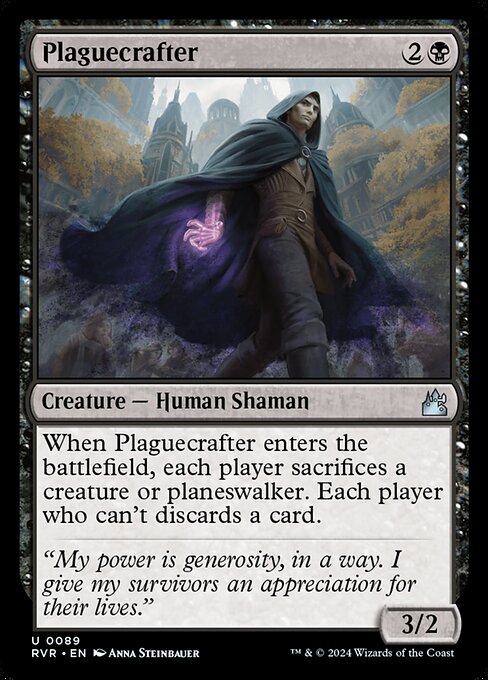
Because the drain counts opponents' creatures, the quickest flip in a four-player pod is Plaguecrafter or Fleshbag Marauder: each player sacrifices a creature, and if you sacrifice the Marauder itself that is four deaths on one card. A board wipe does the same if he survives it, so Toxic Deluge paying 2 life is the wipe you want over Damnation. He sits below Yawgmoth because his outlet fires once per enter or attack, while Yawgmoth's is free, repeatable and instant speed, so he can't cash in your creatures for cards in response to removal or a wipe the way Yawgmoth can.


4. Prossh, Skyraider of Kher
Prossh, Skyraider of Kher costs  . When you cast him you create X 0/1 Kobold tokens, where X is the mana you spent, so the first cast brings six bodies and every recast brings more, because the commander tax (the extra each time you cast your commander after the first) counts toward X. He is also a free outlet: sacrifice another creature and he gets +1/+0 until end of turn.
The payoffs you want reward bodies entering as well as leaving. Purphoros, God of the Forge deals 2 to each opponent for every Kobold that enters, so one cast of Prossh is 12 damage to each opponent before anyone attacks. Skullclamp, the equipment that gives +1/-1 and draws two cards when the equipped creature dies, turns a 0/1 Kobold into a 1/0 that dies on the spot for  . Food Chain is the famous one: exile Prossh for seven mana that can only be spent on creature spells, recast him, let his Kobolds pay the rising tax, and the token pile grows without limit. With Goblin Bombardment (sacrifice a creature: 1 damage to any target) or Blood Artist (each creature death drains a player for 1) out, that is the game.
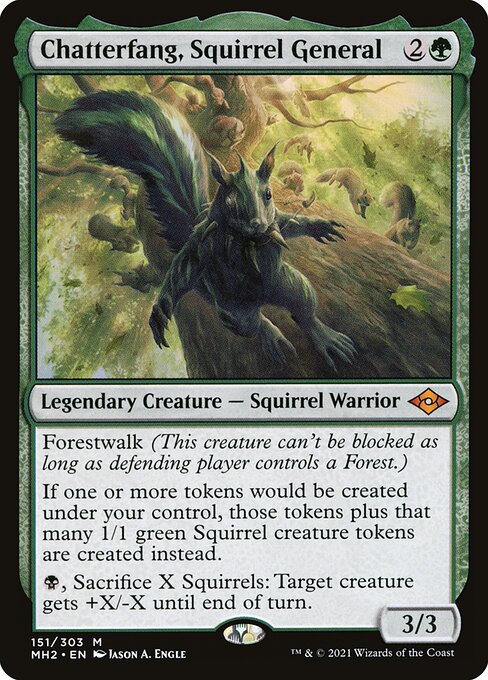
5. Chatterfang, Squirrel General
Chatterfang, Squirrel General is with a black activated ability, so he is a Golgari commander in practice. If one or more tokens would be created under your control, you get that many 1/1 Squirrels as well. Then and sacrifice X Squirrels gives a target creature +X/-X until end of turn: fodder doubling and an outlet that doubles as removal, for three mana.
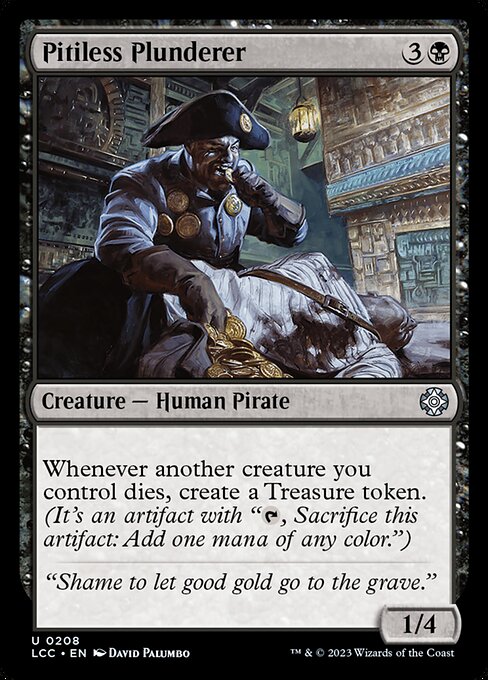
He ranks below Prossh because both halves are conditional. The outlet costs per activation and only eats Squirrels, and the fodder only appears if something else is already making tokens, so the 99 has to carry Squirrel Nest, Tendershoot Dryad or Deep Forest Hermit before he does anything. The loop to know is Pitiless Plunderer, which makes a Treasure whenever another creature you control dies. A Squirrel dies, Plunderer makes a Treasure, Chatterfang adds a Squirrel to it, the Treasure pays the for the next activation, and you repeat as long as you like: each lap gives any one creature at the table +1/-1 until it is dead, and every death trigger you own fires without end.


6. Meren of Clan Nel Toth
Meren of Clan Nel Toth is and supplies one piece, the payoff, but it is a payoff that makes the fodder renewable. Whenever another creature you control dies, you get an experience counter. At the beginning of your end step, you choose a creature card in your graveyard: if its mana value is less than or equal to your experience counters, it returns to the battlefield; otherwise it goes to your hand. She returns a card to hand even at zero experience, as long as there is a creature card in the yard to target.
Feed her creatures with a sacrifice built in: Sakura-Tribe Elder ramps a land, comes back at your end step once you have two counters, and ramps again; Spore Frog fogs one combat per turn forever at one counter. Mindslicer is the mean one: sacrifice it when the table is holding full hands and everyone discards, then it comes back once you have four counters. She crosses into the graveyard decks in our reanimator commander list, and with Viscera Seer or Woe Strider as the free outlet (each sacrifices a creature to scry 1) she is a full aristocrats deck.
7. Judith, the Scourge Diva
Judith, the Scourge Diva costs and is a pure payoff with an anthem attached: other creatures you control get +1/+0, and whenever a nontoken creature you control dies, she deals 1 damage to any target. Tokens do nothing for her, so a Judith deck wants cheap creatures that come back from the graveyard: Reassembling Skeleton, Gravecrawler, Bloodghast.
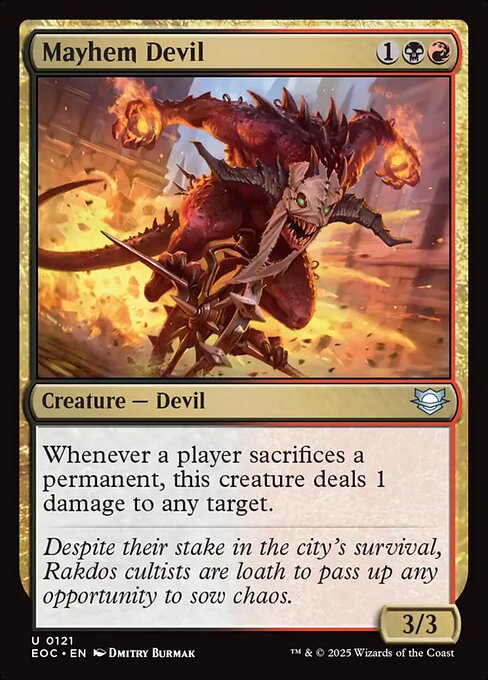
The line that defines the deck is Skeleton plus Skullclamp. The Skeleton is a 2/1 under Judith, Skullclamp makes it a 3/0, it dies immediately, you draw two cards and Judith pings for 1. Pay to return the Skeleton tapped and to re-equip, and three mana buys two cards and a point of damage every turn. Add Mayhem Devil and every sacrifice anyone at the table makes is another point. She can be a fair sacrifice deck, but only if you leave out Phyrexian Altar: Gravecrawler, another Zombie and the Altar is an unlimited-damage loop with her on the battlefield. For other commanders that play a fair game, see our list of the best commanders for bracket 3. She is seventh because one cheap removal spell on her turns the whole deck back into small creatures.


8. Mazirek, Kraul Death Priest
Mazirek, Kraul Death Priest is for a 2/2 flier that puts a +1/+1 counter on each creature you control whenever any player sacrifices another permanent. Note the word "player": an opponent cracking a fetchland (a land sacrificed to find another land), a Treasure or a Clue grows your entire board.
He is a payoff only, and a combat payoff at that. The build that makes him work is Grave Pact or Dictate of Erebos, the enchantments that make each opponent sacrifice a creature whenever one of yours dies: sacrificing one Sakura-Tribe Elder is then four counters on everything you control, if each opponent has a creature to give up. Add a go-wide token maker like Tendershoot Dryad (go-wide meaning many small creatures rather than one big one) and a free outlet, and a board of 1/1 Saprolings is a board of 5/5s by your next attack. The trap is the one every counters deck shares: a single wipe undoes all of it, so keep Mazirek in hand until the pact is in play.
9. Juri, Master of the Revue
Juri, Master of the Revue is the cheapest commander on the list at . Whenever you sacrifice a permanent, Juri gets a +1/+1 counter (Treasures, Clues and Food all count), and when Juri dies he deals damage equal to his power to any target.
The damage only happens if he dies. Exile (Swords to Plowshares), a bounce back to hand, or a tuck (shuffled into your library) gives you nothing, and a Juri with twelve counters is a lightning rod for exactly that. So make him die on your terms: Fling and Thud sacrifice him for damage equal to his power, then the death trigger deals the same again. A 10/10 Juri plus Fling is 20 to one opponent for at instant speed, and he returns to the command zone to do it again. Keep the Fling for him; the deck wins the moment somebody taps out with Juri big and a red mana open.
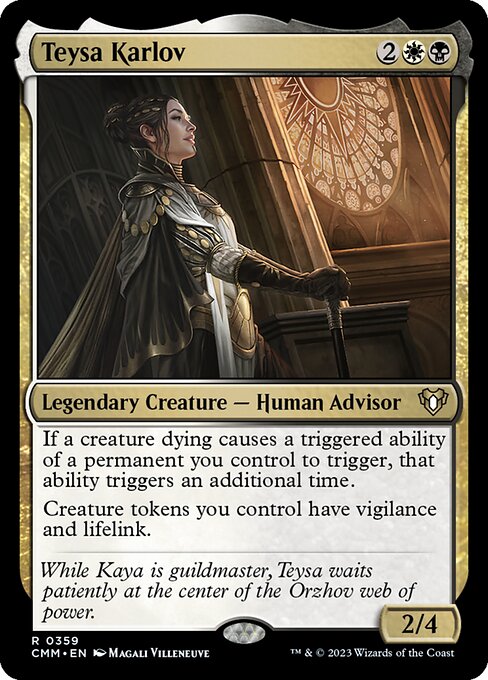
10. Teysa Karlov
Teysa Karlov at  is the commander this ranking is hardest on. If a creature dying causes a triggered ability of a permanent you control to trigger, that ability triggers an additional time, and your creature tokens have vigilance and lifelink. She is a multiplier: on her own she supplies no fodder, no outlet and no payoff, and on an empty board she is a 2/4 that does nothing, which is why the stated rule puts her last.
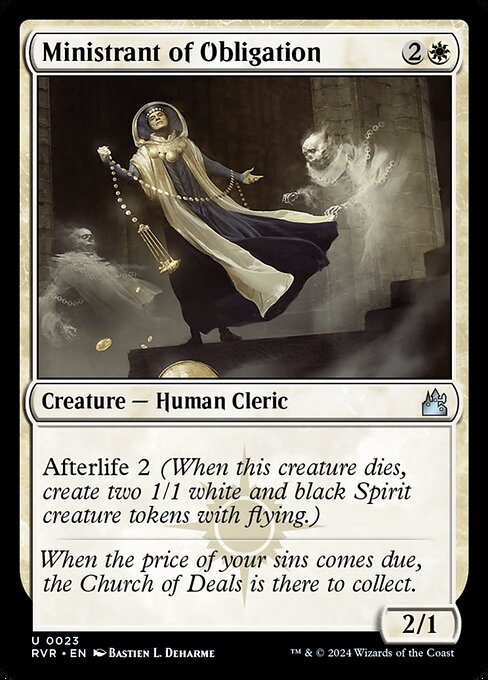
Put the pieces in the 99 and she turns every one of them into two. Blood Artist drains for 2 per death. Grave Pact makes each opponent sacrifice two creatures per death. Skullclamp draws four. Ministrant of Obligation's afterlife makes four Spirits instead of two, and Pawn of Ulamog gives two Eldrazi Spawn per nontoken death. Know what she does not double: activated abilities like Yawgmoth's draw, and spells like Village Rites (sacrifice a creature, draw two), because neither is a triggered ability of a permanent. Build her around triggers and ignore everything else.



Before you sit down
Staples not named above that belong in nearly every build: Zulaport Cutthroat, Cruel Celebrant, Carrion Feeder, Ashnod's Altar, Midnight Reaper, Grim Haruspex and Deadly Dispute. None is a Game Changer either.
One sequencing habit wins games with every commander here: activate your free outlet in response to the board wipe, not before it. Sacrifice your board on your own turn and you hand the table a turn cycle to answer your payoffs; wait, and the wipe does the sacrificing for you. The decks that lose with these commanders are the ones that cash in too early.
When the list is together, run it through the Commander Bracket Calculator. Aristocrats decks drift upward without you noticing, because a Chatterfang loop or a Food Chain line is a two-card infinite whether you built for it or not, and the calculator flags those lines so your pod hears about them from you rather than from the game.



Comments
Join the conversation.