

Sephiroth, Fabled SOLDIER Commander Deck: Count to Four, Keep the Emblem

The Sephiroth, Fabled SOLDIER commander deck lives or dies on one line of text that most people half-read. For 
 you get a legendary creature who, whenever he enters or attacks, lets you sacrifice another creature to draw a card. The second ability is the engine: whenever another creature dies, target opponent loses 1 life and you gain 1 life, and the fourth time that ability resolves in a single turn he transforms.
Read "another creature" literally. It does not say "another creature you control". An opponent's blocker dying to a deathtouch Snake, a creature they lose to an edict (a spell that makes each player sacrifice a creature of their choice), a board wipe that kills twelve things (as long as Sephiroth survives it): every one of those deaths is a drain and a step toward the flip. This mono-black aristocrats build (the usual name for decks that sacrifice their own creatures for value; we ranked the commanders for that style in our best aristocrats commanders post) is built to count to four as early and as often as the table allows.
Why four is the number that matters
When the fourth trigger resolves, Sephiroth transforms into his back face, Sephiroth, One-Winged Angel. As he does, you get an emblem: whenever a creature dies, target opponent loses 1 life and you gain 1 life. An emblem sits in the command zone, and no removal spell or board wipe can touch it. From that point the drain keeps running whether or not Sephiroth is still on the battlefield, and the back face adds flying plus an attack trigger that sacrifices any number of other creatures to draw that many cards.
Two things follow from that. First, emblems stack. If Sephiroth dies after flipping, recast him from the command zone (he arrives front face up), hit four deaths again, and a second emblem arrives. Two emblems is 2 life per death from every creature that dies at the table, for the rest of the game. Second, The Masamune doubles both faces. Its equipped creature gets "if a creature dying causes a triggered ability of this creature or an emblem you own to trigger, that ability triggers an additional time", so before the flip two deaths are four resolutions, and after the flip the Masamune can sit on any creature you control and the emblem still fires twice per death.


How the deck gets to four
In a four-player pod the fastest route is one of your creatures dying while Grave Pact is out. Each other player sacrifices a creature of their choice, which is three more deaths, so one sacrifice is four triggers and a transform. Priest of Forgotten Gods does it alone: tap it and sacrifice two other creatures, and any number of target players each lose 2 life and sacrifice a creature. Against three opponents who all have creatures that is five deaths, and a card from one activation, at instant speed.
The edict creatures are the slow, reliable version. Fleshbag Marauder, Merciless Executioner, Plaguecrafter, Demon's Disciple, Accursed Marauder and Gaius van Baelsar each make every player sacrifice something when they enter, which with Sephiroth out is three or four drains per body. Because they are creatures, Unearth, Victimize and Dread Return bring them back for a second round, and Dread Return's flashback (cast it again from your graveyard by sacrificing three creatures) is three more triggers on its own. Toxic Deluge is the ceiling, with one catch: pay X life and every creature gets -X/-X, Sephiroth included, and he cannot transform from the graveyard. Either keep X below his toughness so he survives and flips mid-wipe, or cast it after the flip, when the emblem drains for every creature that dies, Sephiroth among them. Fifteen creatures is fifteen drains either way, and the life you paid comes back on the spot.
End steps do work too. Avenger of the Fallen attacks with mobilize (it creates tapped and attacking 1/1 Warrior tokens equal to the creature cards in your graveyard, and they are sacrificed at the beginning of the next end step), so each Warrior is a death trigger at end of turn. Jadar, Ghoulcaller of Nephalia drops a fresh 2/2 Zombie with decayed (it cannot block, and it is sacrificed after it attacks) at the same end step, ready to be fed to something next turn. Plumb the Forbidden is the instant-speed version: sacrifice any number of creatures as you cast it, copy it once per creature, and each copy plus the original draws you a card for 1 life. Cast it in response to a wrath (a spell that destroys every creature) with four bodies and you draw five and flip, and then the wrath itself drains through the emblem for every creature it kills, Sephiroth included.
The decklist and its audit
Here is the full build. Its deck page is Sephiroth, Fabled SOLDIER Bracket 3, and its bracket audit places it at bracket 3 with one Game Changer, Bolas's Citadel. (Game Changers are the cards the bracket system singles out as pushing a deck's power; bracket 3 allows up to three.) With Liliana, Dreadhorde General cut (see the changes below), nothing in the list counts as mass land denial, so nothing pushes it to 4. There are also no tutors, which is a choice rather than an accident: you draw what you draw, and the games play out differently each time.
Sephiroth, Fabled SOLDIER Bracket 3 (EDH)
- 1 Arcane Signet
- 1 Ashnod's Altar
- 1 Sol Ring
- 1 Skullclamp
- 27 Swamp
- 1 Nine-Lives Familiar
- 1 Infestation Sage
- 1 Woe Strider
- 1 Marionette Apprentice
- 1 Al Bhed Salvagers
- 1 Demon's Disciple
- 1 Priest of Forgotten Gods
- 1 Umbral Collar Zealot
- 1 Pitiless Plunderer
- 1 Morbid Opportunist
- 1 Zulaport Cutthroat
- 1 Ophiomancer
- 1 Plaguecrafter
- 1 Avenger of the Fallen
- 1 Bloodsoaked Champion
- 1 Grim Haruspex
- 1 Merciless Executioner
- 1 Massacre Wurm
- 1 Forsaken Miner
- 1 Reassembling Skeleton
- 1 Blood Artist
- 1 Pawn of Ulamog
- 1 Bloodghast
- 1 Vengeful Bloodwitch
- 1 Viscera Seer
- 1 Gravecrawler
- 1 Gray Merchant of Asphodel
- 1 Accursed Marauder
- 1 Fleshbag Marauder
- 1 Bastion of Remembrance
- 1 Ghoulish Procession
- 1 Grave Pact
- 1 Phyrexian Arena
- 1 Vampiric Rites
- 1 Corrupted Conviction
- 1 Dark Ritual
- 1 Deadly Dispute
- 1 Flare of Malice
- 1 Plumb the Forbidden
- 1 Sephiroth's Intervention
- 1 Sheoldred's Edict
- 1 Tragic Slip
- 1 Village Rites
- 1 Bojuka Bog
- 1 High Market
- 1 Myriad Landscape
- 1 Witch's Cottage
- 1 Midgar, City of Mako // Reactor Raid
- 1 Bolas's Citadel
- 1 Bontu's Monument
- 1 The Masamune
- 1 Ayara, First of Locthwain
- 1 Zodiark, Umbral God
- 1 Yawgmoth, Thran Physician
- 1 Syr Konrad, the Grim
- 1 Gaius van Baelsar
- 1 Jadar, Ghoulcaller of Nephalia
- 1 Braids, Arisen Nightmare
- 1 Phyrexian Tower
- 1 Bone Shards
- 1 Dread Return
- 1 Feed the Swarm
- 1 Innocent Blood
- 1 Reanimate
- 1 Sign in Blood
- 1 Toxic Deluge
- 1 Unearth
- 1 Victimize
- 1 Sephiroth, Fabled SOLDIER // Sephiroth, One-Winged Angel
Paste any list of your own into the Commander Bracket Calculator to get the same report; it is the tool that produced the link above.
What we changed from the average list, and why
We started from a typical bracket-3 Sephiroth list and made eleven changes. Each is below with the reason we actually had, because the reasons are the part you can reuse in your own build.
- Cut The Darkness Crystal, added Grave Pact. The Crystal exiles an opponent's nontoken creature instead of letting it die. That switches off Sephiroth's trigger, Blood Artist and Syr Konrad, the Grim for every nontoken creature your opponents lose, which is a large share of the deck's drain. Grave Pact does the opposite job for
 .
- Cut Liliana, Dreadhorde General, added Massacre Wurm. Our first audit came back bracket 4 for one reason: Liliana's ultimate makes each opponent keep one permanent of each type and sacrifice the rest, and the bracket audit counts that as mass land denial, a bracket 4 marker. The Wurm costs the same six mana, gives every creature your opponents control -2/-2 when it enters, and makes each of their creature deaths cost that player 2 more life. Against a token deck it is a flip and a drain per body from a single card.
- Cut Dreadhorde Invasion, added Jadar, Ghoulcaller of Nephalia. Both make a Zombie body every turn, and both turn on Gravecrawler, which you can cast from your graveyard while you control a Zombie. The difference is the price. Invasion charges you 1 life every upkeep for a 1/1 Army, while Jadar is free, makes a 2/2 at your end step whenever you control no decayed creature, and is himself a nontoken black creature for Ayara, First of Locthwain's drain and for Flare of Malice's alternative cost.
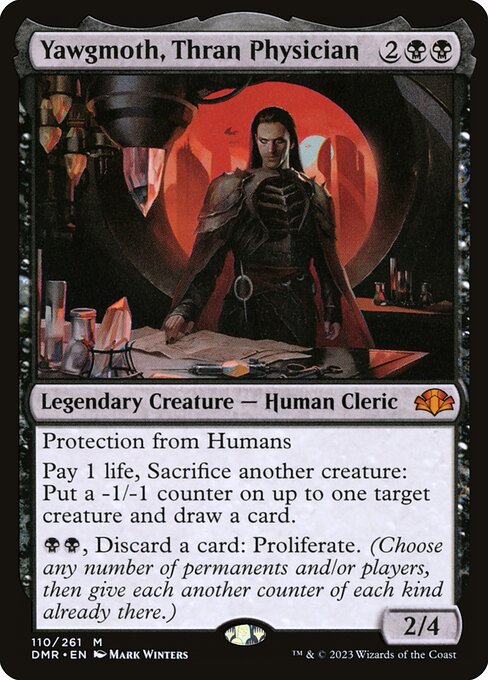
- Cut Vincent Valentine, added Yawgmoth, Thran Physician. Vincent grows only when an opponent's creature dies, and his recursion (he may transform when he attacks, and the back face returns front face up when it dies) only exists once he has attacked. Yawgmoth is a sacrifice outlet (a permanent that lets you sacrifice a creature whenever you like) that charges 1 life per use instead of mana, draws a card per body, and puts a -1/-1 counter wherever you want it. With Nine-Lives Familiar, which returns at the next end step with one fewer revival counter each time it dies, one card is nine deaths and nine draws over a game.
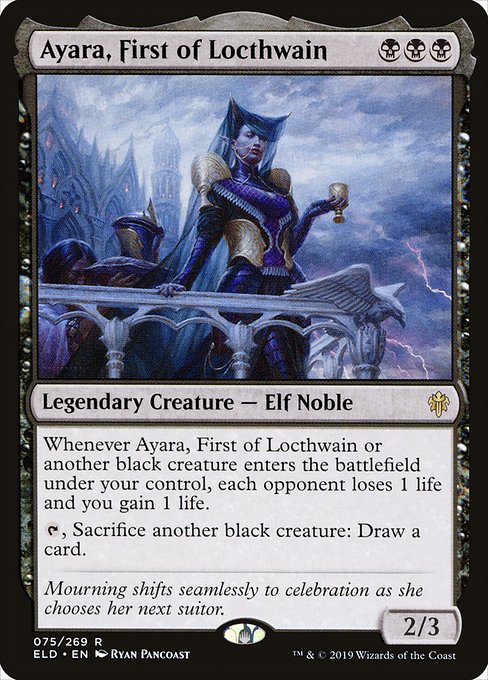
- Cut Endrek Sahr, Master Breeder, added Ayara, First of Locthwain. Endrek is five mana before it makes a Thrull and sacrifices itself once you control seven of them. Ayara costs , drains each opponent for 1 whenever she or another black creature of yours enters (nearly every creature in the deck), and taps to sacrifice another black creature for a card.
- Cut Resentful Revelation, added Plumb the Forbidden. A sorcery that digs three became an instant that converts a board into cards and death triggers.
- Cut Fight On!, added Grim Haruspex. Fight On! returns two creature cards to hand for three mana, and the deck already has six creatures that recur on their own plus four reanimation spells. Haruspex draws whenever another nontoken creature you control dies, which here happens several times a turn.
- Cut Overkill, added Bone Shards. Three mana became one. Bone Shards asks you to sacrifice a creature or discard a card as you cast it, and sacrificing a decayed Zombie to a removal spell is a Sephiroth trigger you would not otherwise have had.
- Cut Carrion Feeder, added Woe Strider. Both are sacrifice outlets that cost nothing to use. Woe Strider brings a 0/1 Goat to sacrifice on arrival, scries instead of growing (look at the top card of your library and decide whether it stays there), can block, and later in the game escapes from the graveyard with two +1/+1 counters (escape lets you cast it from there for
 plus exiling four other cards from your graveyard).
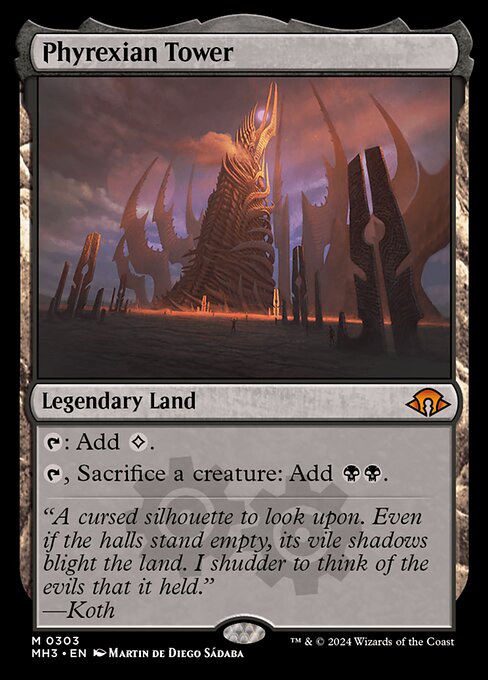
- Cut a Swamp, added Phyrexian Tower. A sacrifice outlet on a land. It works at instant speed, nothing counters it, and it nets you a mana while it does its job.
- Cut a second Swamp, added Bloodsoaked Champion. Thirty-three lands (Myriad Landscape among them) plus Sol Ring, Arcane Signet and Dark Ritual is enough for a deck whose top end is six mana. The Champion returns from the graveyard for on any turn you attacked, and Sephiroth attacks most turns, so it is a body for his attack trigger every single turn.


The rest of the engine
The drain pieces around Sephiroth are Blood Artist, Zulaport Cutthroat, Bastion of Remembrance, Vengeful Bloodwitch, Al Bhed Salvagers and Marionette Apprentice, and the differences between them decide what you sacrifice when. Blood Artist and Syr Konrad count any creature, like Sephiroth. Zulaport, Bastion and Bloodwitch count only yours. Salvagers and Apprentice also count artifacts, so sacrificing a Treasure from Pitiless Plunderer or Deadly Dispute for its mana is a drain while either of those two is out.
Fodder that comes back on its own: Bloodghast on a land drop, Gravecrawler while you control a Zombie, Reassembling Skeleton for , Nine-Lives Familiar eight times over, and Forsaken Miner, which has the neatest interaction in the deck. Targeting an opponent is a crime, and Sephiroth's drain targets an opponent, so every death trigger while he is out lets you pay to return the Miner from your graveyard. Sacrifice the Miner, drain, pay , Miner is back, sacrifice it again. With a free outlet and three Swamps untapped that is four deaths from one card (the first sacrifice and three returns), which is a flip on its own.
Ophiomancer checks at the beginning of every upkeep, including your opponents', and gives you a deathtouch Snake if you have none, so sacrificing the Snake on each player's turn is four Snakes per round. Ghoulish Procession makes a decayed Zombie once per turn when a nontoken creature dies, and Infestation Sage leaves a flying Insect behind. Skullclamp on any of those 1/1s is two cards for . The finishers are Gray Merchant of Asphodel (each opponent loses life equal to your devotion to black, the number of black mana symbols among the permanents you control) and Zodiark, Umbral God, whose five black pips are a big piece of that devotion and whose arrival makes every player sacrifice half their non-God creatures.
Sequencing: the turn he flips
The order of operations on a flip turn is where new pilots leak value, because the two faces have different attack triggers and you only get the one that is showing when he attacks. The front face sacrifices one creature for one card. The back face sacrifices any number for that many cards, and with the emblem out each of those deaths is also a drain. So if you can flip him before combat, do it. Priest of Forgotten Gods is five deaths from one activation, and Flare of Malice cast for its alternative cost (sacrifice a nontoken black creature instead of paying mana) is your creature plus one from each opponent, usually four deaths for no mana at all. Then attack with the back face and feed it whatever is left.
When you cannot flip him before combat, attack with the front face and sacrifice to its trigger with Grave Pact out. That one sacrifice is four deaths, all of them in the declare attackers step, so he transforms before blockers are declared and swings as a flier. Blockers that die to him are triggers too, which is why this deck does not mind a board that wants to block.
The flip does not have to happen on your own turn either. Sheoldred's Edict at an opponent's end step is three deaths, so with one trigger already resolved that turn it is a transform nobody planned around, and the back face's bigger attack trigger is live on your next turn.
Bolas's Citadel gets its own warning. Casting from the top costs life equal to each spell's mana value, and this deck gains life one point at a time. Do not run the Citadel down to single digits with Phyrexian Arena ticking. Cast two or three cheap spells off it per turn, let the drains refill you, and save its last ability (sacrifice ten nonland permanents, each opponent loses 10 life) for a turn where those ten sacrifices are also ten death triggers.
Mulligans, and what beats you
Keep a seven with three lands and either a cheap outlet (Viscera Seer, Woe Strider, Village Rites) or a body that recurs on its own. A hand of three drain creatures and no fodder looks powerful and does nothing until turn five; mulligan it. Sephiroth himself is the draw engine, not the fodder engine, so a one-land hand with Dark Ritual is a trap: you get him on turn one and then have nothing to feed him.
Graveyard exile hurts more than a wrath. A wrath with Sephiroth out is a windfall; a Bojuka Bog under your Bloodghast, Gravecrawler and Skeleton is not. The deck's own Bog is there for an opposing graveyard deck, not for value. The other real problem is a lifegain deck that outpaces one-point drains. Against it, aim every trigger at the same opponent rather than spreading them (the front face lets you pick the target each time), starting with whoever can race you.
Record its games on Nerd Leagues and the deck carries its own rating, separate from yours as a pilot. Copy it with the button on the decklist above and your copy starts a record of its own, and the deck ELO will show you whether your pod lets you count to four.



Comments
Join the conversation.