

The Best Artifact Commanders in EDH, Sorted by What They Do With Your Artifacts
Ask for the best artifact commanders and you usually get a popularity list. This one is sorted by job instead. An artifact commander earns the command zone by changing what an artifact is worth on your side of the table, and there are five jobs it can do: turn your artifacts into mana, into bodies, into graveyard value, into copies, or into Vehicles worth crewing. Inside each group the first name is the one we would build first, because it needs the least from the other 99 cards.
Every ability below is taken from the card's current rules text. Brackets (the 1 to 5 power scale Commander decks are sorted into) come up more than once below, and the last section explains where a deck's bracket actually comes from, rather than pinning a number on a deck we haven't seen.
Mana: commanders that make every rock worth more
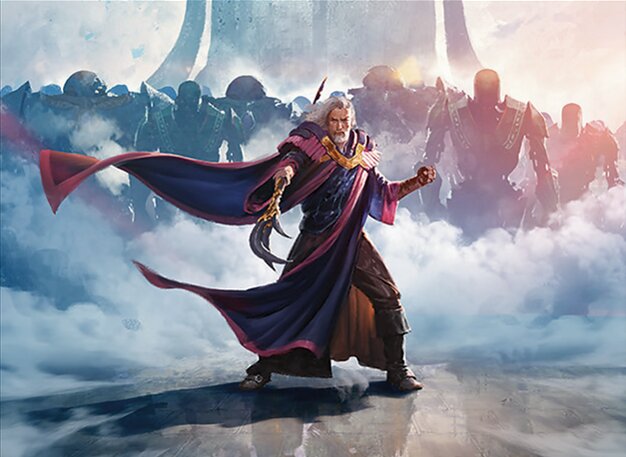
Urza, Lord High Artificer (
 ) is the strongest card on this list. His middle ability, "Tap an untapped artifact you control: Add ", belongs to Urza rather than to the artifact, so summoning sickness (a creature can't attack or pay a
 cost the turn it arrives) is irrelevant: an Ornithopter that arrived this turn taps for blue, and so does an unkicked Everflowing Chalice with no charge counters, which on its own taps for nothing. Cheap artifacts that do nothing else become free mana. The Construct token he brings grows with every one of them, and
 to shuffle and play the top card of your library for free is the mana sink that turns twelve rocks (artifacts that tap for mana) into a game.
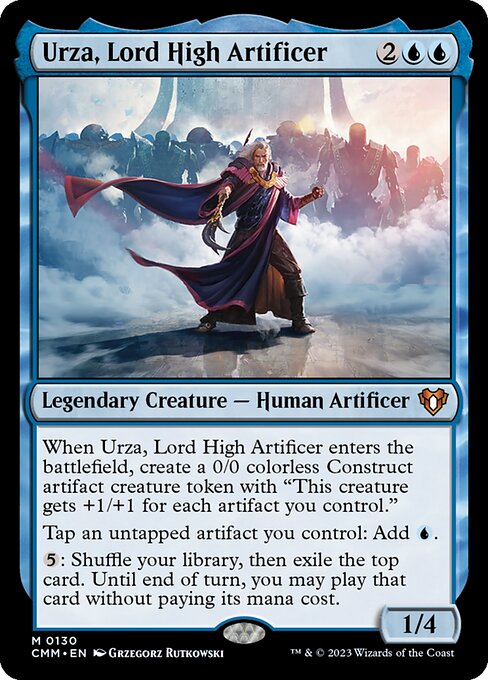
Karn, Legacy Reforged () is the colorless version, and colorless is the point. Each upkeep he adds  for every artifact you control, the mana lasts until end of turn, and it can't be spent to cast nonartifact spells. The restriction is on casting, not activating, so that mana also pays equip costs, Trading Post activations and any other ability on the table. His size is the greatest mana value among your artifacts, so a Wurmcoil Engine on the battlefield makes him a 6/6, and with seven artifacts out you cast a seven-drop like Myr Battlesphere off upkeep mana alone. Nearly every nonland card in the deck should be an artifact, since that is all his mana casts.


Bodies: commanders that make artifacts fight
Breya, Etherium Shaper (

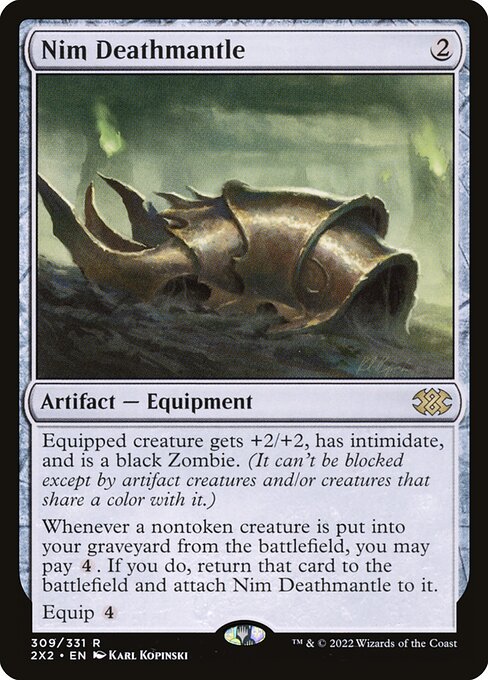
 ) arrives with two 1/1 flying Thopters, and her ability, plus sacrificing two artifacts, is removal and lifegain on a stick: 3 damage to a player or planeswalker, -4/-4 to a creature, or 5 life. Treat the Thopters as ammunition rather than attackers; every recast brings two more. Four colors gets her the six Signets and six Talismans (two-color mana rocks) that skip green. The famous loop is Nim Deathmantle plus Ashnod's Altar: sacrifice Breya to the Altar for , pay
 to the Deathmantle to bring her back with two new Thopters, sacrifice those for , and each pass nets two mana. That is infinite colorless mana, and her 3-damage mode turns it into a win. It is three cards, so the bracket rules don't single it out the way they do two-card combos, but it is the kind of thing you tell your pod about before the game.
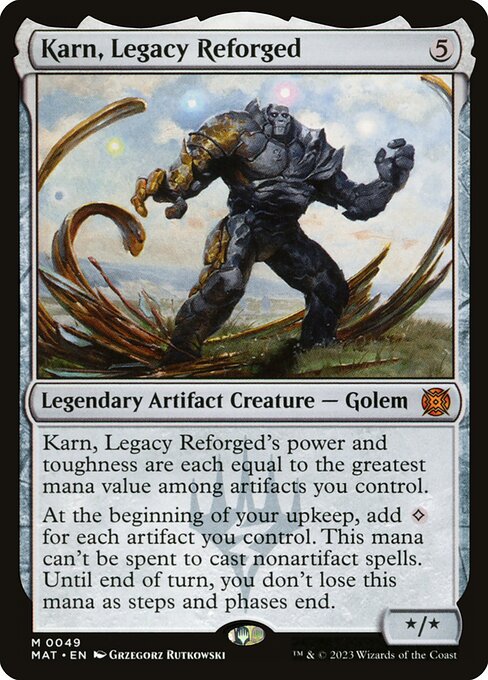
Sai, Master Thopterist () is the budget entry and the one to hand a new player. Every artifact spell you cast makes a 1/1 flying Thopter (cast, not enter: tokens and reanimated artifacts don't count), and  plus sacrificing two artifacts draws a card. Zero-cost artifacts like Ornithopter and Mishra's Bauble are a Thopter each for nothing. The play to know is defensive: when someone casts an overloaded Vandalblast (the big mode destroys every artifact they don't control), sacrifice your artifacts in pairs in response, with whatever mana you have, and draw a card for each pair before they die.
Alibou, Ancient Witness ( ) gives your other artifact creatures haste and, whenever one or more artifact creatures you control attack (Alibou counts), deals X damage to any target and scries X (look at the top X cards, bottom any you don't want), where X is the number of tapped artifacts you control. Attacking artifact creatures tap themselves, which is a start, but the number you actually want comes from your mana rocks. X is counted when the trigger resolves, so attack, and with the trigger on the stack tap every rock you haven't used, even if the mana goes unspent; each tapped Sol Ring is a point of damage, and you kept the mana open through the start of combat. A deck of Myr Battlesphere and friends gets there fast.


The graveyard: commanders that bring artifacts back
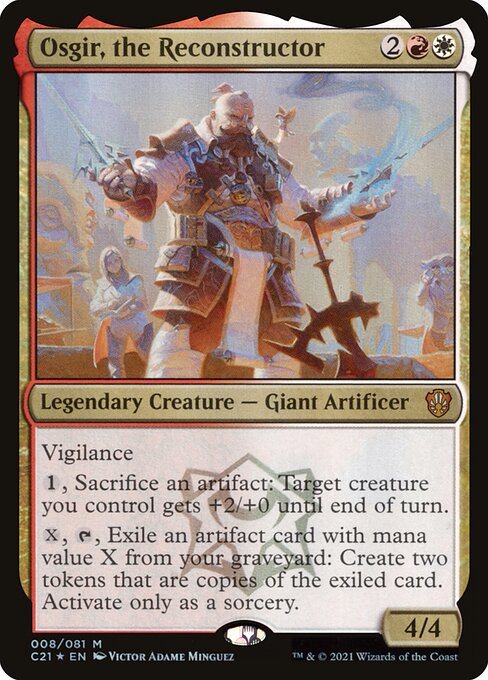
Osgir, the Reconstructor () has two abilities and both matter. and an artifact sacrifice gives a creature +2/+0, which is your way of putting artifacts into the graveyard on purpose. Then  , and exiling an artifact card with mana value X from your graveyard makes two token copies of it, main phase only. X=1 on a dead Sol Ring is two Sol Rings. X=6 on a Wurmcoil Engine is two Wurmcoils. Osgir has vigilance, so the sequence is attack first, then activate in your second main phase while he is still untapped.
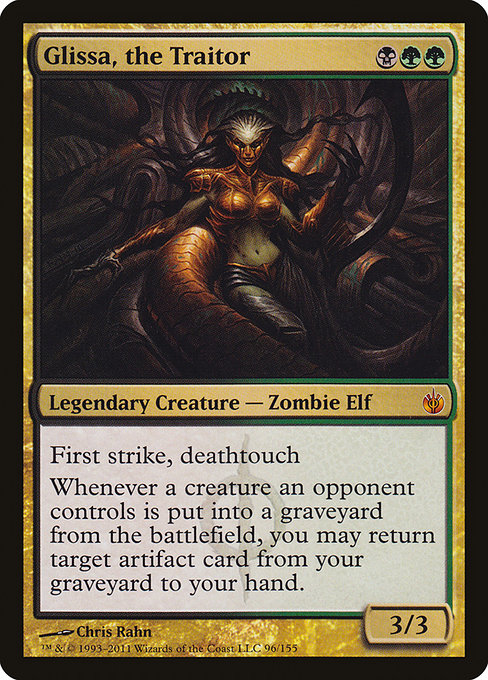
Glissa, the Traitor ( ) is a first strike, deathtouch blocker that nobody attacks into, and whenever a creature an opponent controls dies you may return an artifact card from your graveyard to your hand. Executioner's Capsule is the card to build around: , tap and sacrifice it to destroy a nonblack creature, that creature dies, Glissa returns the Capsule. Three mana per removal spell, every turn, for as long as the game lasts. Each death returns one artifact, so Mind Stone and Ichor Wellspring come back off the deaths the Capsule didn't cause: Glissa's blocks, other people's combat, board wipes.
Daretti, Scrap Savant () is a planeswalker who can be your commander, and he is a reanimation engine (he returns artifacts from the graveyard) in mono-red. +2 discards up to two cards and draws that many; -2 sacrifices an artifact to return an artifact card from your graveyard to the battlefield. The sequence is +2 to pitch a Wurmcoil Engine the turn he lands, then -2 the next turn sacrificing a Treasure token, an Ichor Wellspring (it draws a card on the way out) or a rock you no longer need. Goblin Welder is the same trick for and belongs in the 99.


Copies: commanders that multiply what you already have
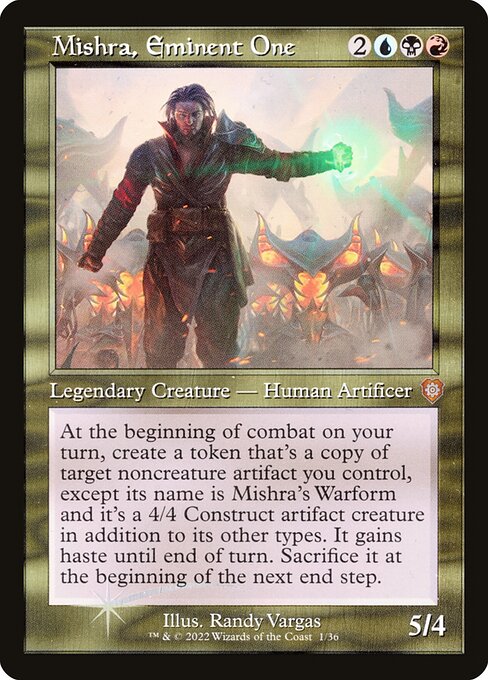
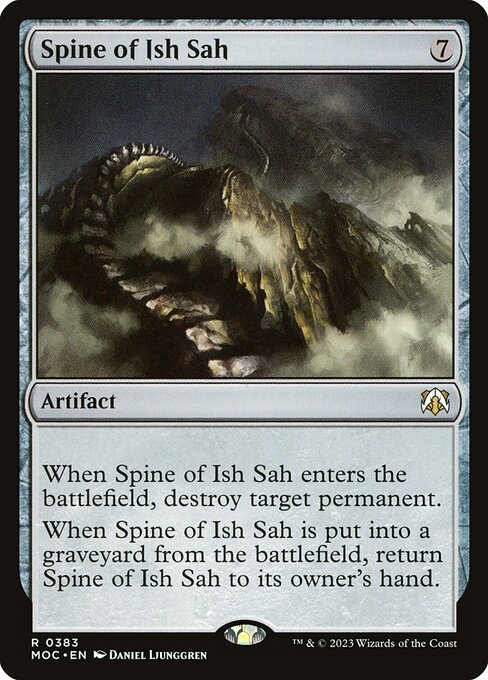
Mishra, Eminent One () makes, at the beginning of each of your combats, a token copy of a noncreature artifact you control that is also a 4/4 Construct with haste, then sacrifices it at the end step. Pick the artifact with an enters-the-battlefield trigger. Spine of Ish Sah copied every turn destroys a permanent every turn. Ichor Wellspring copied draws a card when it enters and another when the end step sacrifices it. The harshest version runs Portal to Phyrexia: the copy makes each opponent sacrifice three creatures per combat, which is a conversation to have with your pod first.
Brudiclad, Telchor Engineer () gives your creature tokens haste, makes a 2/1 Myr at each of your combats, and then lets every other token you control become a copy of one token you choose. "Every other token" includes Treasures and Clues, so the noncreature tokens you have been sitting on turn into hasty attackers the moment you have one good creature token to copy. Always copy your best creature token, never a 1/1: a Myr Battlesphere's four Myr are four more tokens to convert, and a token copy of the Battlesphere itself is the thing to convert them into.
Saheeli, the Gifted () is the other planeswalker commander here. One +1 makes a Servo, the other gives your next spell this turn affinity for artifacts (it costs less for each artifact you control), and the -7 copies every artifact you control with haste until end of turn. The second +1 is the one that matters: with seven artifacts out, Myr Battlesphere costs  and brings four more. Use the Servo mode only when you have nothing to cast.


Vehicles: commanders that crew them or bring them back
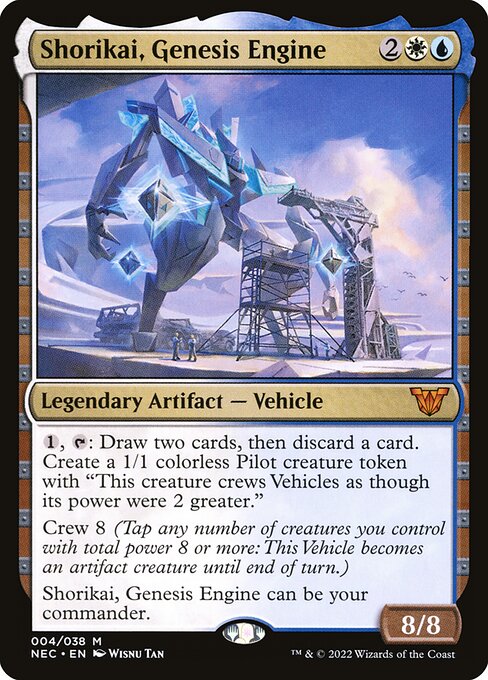
Shorikai, Genesis Engine () is a Vehicle with crew 8 (tap creatures with total power 8 to make it a creature until end of turn), and you should almost never crew it. Its real text is ", : Draw two cards, then discard a card", plus a 1/1 Pilot token each time that crews Vehicles as if it had 3 power, Shorikai included. Because it is not a creature until crewed, creature removal and most board wipes miss it. The timing detail that wins games: activate it on the end step of the player who goes right before you, not on your own turn. It untaps in your untap step either way, and you keep your mana open for interaction the whole way around the table, spending on Shorikai only once nobody needs answering.
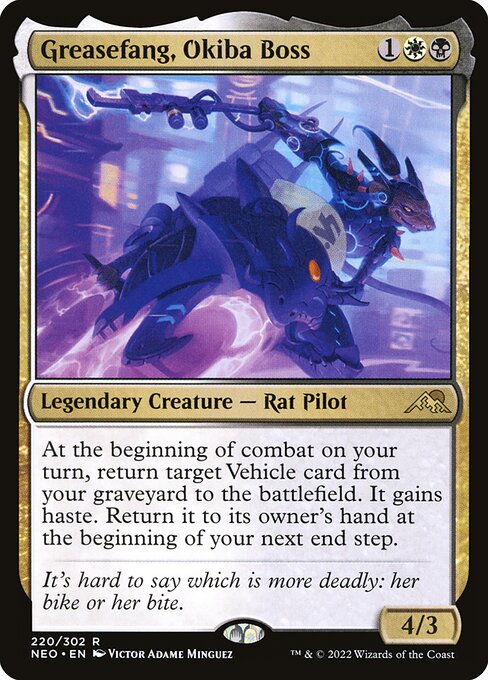
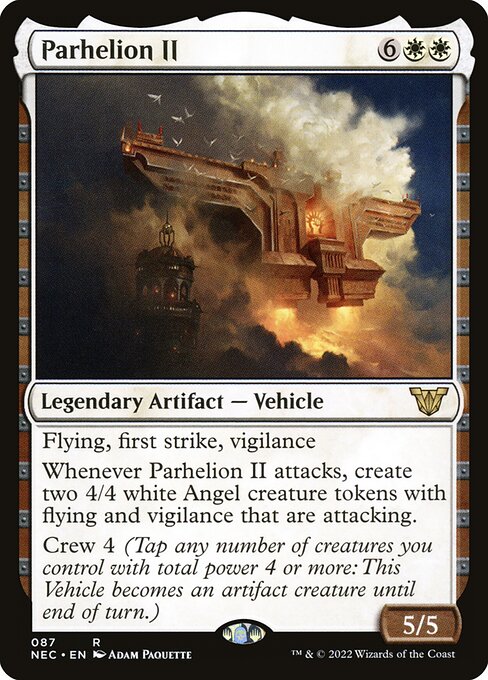
Greasefang, Okiba Boss () returns a Vehicle card from your graveyard to the battlefield at the beginning of each of your combats, gives it haste, and bounces it to your hand at your end step. Parhelion II is the whole reason: it costs  to cast and nothing to Greasefang, and when it attacks it makes two 4/4 flying, vigilant Angels that stay. Greasefang has four power, so he crews it by himself; the Angels attack, he doesn't. You need discard outlets (cards that let you discard on purpose) to put the Vehicle back in the graveyard each turn, which is what the rest of the 99 is for.
Where the brackets come in
A commander rarely sets a deck's bracket on its own. The bracket comes out of the 99: how many Game Changers you add (the official list of cards that push a deck to bracket 3 or higher, and a commander on that list counts), whether the list holds a two-card infinite combo, whether it runs mass land denial or chains extra turns, and whether it can win out of nowhere. Our brackets guide explains the five levels, and the bracket calculator takes a pasted list and reports the Game Changers, combos and land denial it found, so you can state a number that survives being checked. For the commanders that lead at each level, see our bracket 3 commanders and bracket 4 commanders lists.
Honorable mentions
Browse what other players have built around these at the public deck explorer, and when you pick one, record a few games with it before you decide it is the best; the deck rating will tell you faster than any list will.


Comments
Join the conversation.