

The Best Tokens Commanders in EDH, Ranked by How They Rebuild After a Wrath

Tokens is the archetype that loses to one card. A sweeper (a spell that destroys or exiles every creature, which most tables call a board wipe or a wrath) turns twelve 1/1s into nothing, and the player who spent four turns making them is back at zero while everyone else kept their mana rocks (artifacts that tap for mana) and enchantments. So the best tokens commanders are the ones that make the rebuild cheap, and that is what this ranking measures.
A token, for anyone new: a creature or artifact that an effect creates rather than a card you cast. It disappears for good when it dies, so you can't reanimate it, and the only way back is to make more. Every commander below is judged on one question. After the wrath, how much of the next board comes from the command zone, and what does it cost to get it back out?
Three jobs, one test
Every tokens commander does one of three jobs. A maker creates bodies by itself. A multiplier changes what every token maker in your deck does. A payoff turns a board into a kill. A doubler and a goblin factory can't be measured on one scale, so each group is ranked on its own, by the wrath question above.
Makers are ranked by the board they rebuild alone in the three turns after a recast, counting where it goes from there. Multipliers are ranked by what they multiply (every token, or only creature tokens) and by what they cost to recast. Payoffs are ranked by how small a board they make lethal.
Mana cost breaks every tie, and it matters more here than in most archetypes. Commander tax (each time you cast your commander from the command zone, it costs  more than the last time) stacks on top of the wrath problem. After two wipes a three-drop costs seven and still comes down. A six-drop costs ten and usually doesn't.
One bracket fact before the list. Game Changers are the cards on Wizards' list that keep a deck out of Brackets 1 and 2 (Bracket 3 allows up to three, Bracket 4 any number), and a single one is enough for our bracket calculator to put a deck at Bracket 3 at minimum. None of the commanders below is on that list. Where a tokens deck lands is decided by the 99 (the other ninety-nine cards), and the brackets guide covers what moves it.
Makers: commanders that rebuild by themselves
These five produce bodies with no help. Best first.
Adeline, Resplendent Cathar
Adeline, Resplendent Cathar costs 
 , has vigilance, and whenever you attack she creates a 1/1 Human token for each opponent, tapped and attacking that opponent. Her power is the number of creatures you control. In a four-player pod that is three bodies per attack, from the turn after she lands, with nothing else on the table: six Humans by the third turn after a recast, for three mana. No other commander on this list rebuilds that much that cheaply, which is why she leads it.
The line that makes her more than three bodies a turn is Cathars' Crusade. Her trigger resolves when attackers are declared, the three tokens enter at the same time, and each one triggers the Crusade separately, so every creature you control gets three +1/+1 counters before blockers are declared. The Humans hit as 4/4s on the turn they were made. Skullclamp turns a spare Human into two cards for , and Welcoming Vampire draws a card (once a turn) when they enter, which is the card flow mono-white usually lacks.
Her limit is that the damage spreads out, one token at each opponent, so she rarely kills anyone by herself. Build for that: a team pump like Mirror Entity, which sets every creature you control to X/X for  , turns each of those spread-out Humans into a real threat to the player it is pointed at.


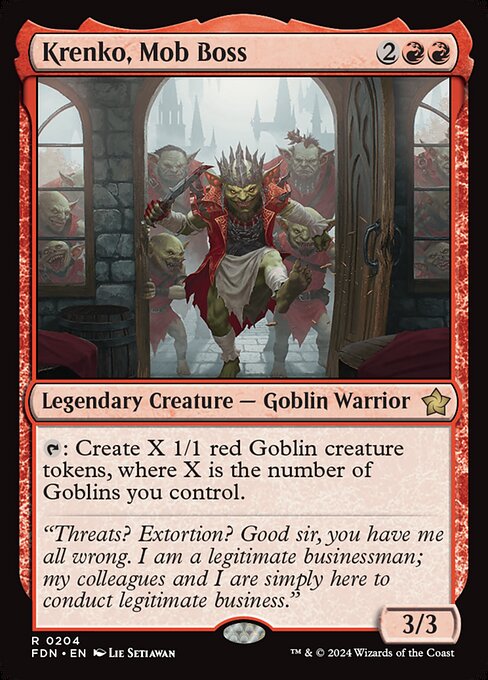
Krenko, Mob Boss
Krenko, Mob Boss ( ) taps to create a 1/1 Goblin for each Goblin you control. Alone he makes one, then two, then four, then eight. Three turns after a recast he has made three Goblins, the same count as Anim Pakal for a mana more, but his next activation makes four and the one after that eight. Nobody else on the list compounds like that on their own, and it is why he sits second despite a slow first turn. A creature can't use a tap ability the turn it arrives (summoning sickness), so a Krenko with no haste is a 3/3 that stands there while the table counts to the wrath.
That makes haste the deck's real resource. Goblin Chieftain gives it to every other Goblin, Lightning Greaves gives it to Krenko with shroud on top, and Thousand-Year Elixir lets him activate the turn he lands and untaps him once for . Play the haste enabler before you recast Krenko.
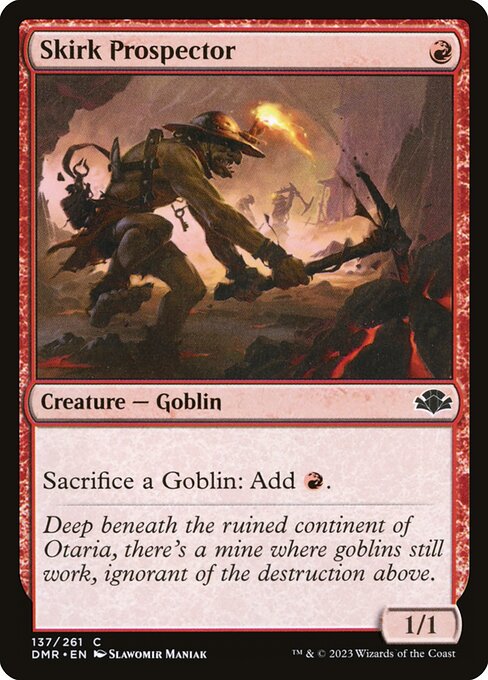
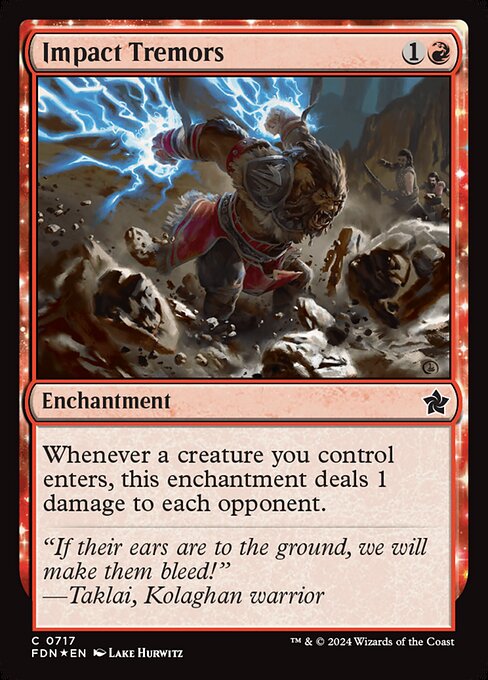
His famous loop needs Thornbite Staff and Skirk Prospector. Tap Krenko, sacrifice one Goblin to the Prospector for , the Staff untaps Krenko because a creature died, tap again. The Goblin count and the red mana both climb without limit, and Impact Tremors or Goblin Bombardment ends the game from there. If you want to know which of these loops a list actually contains before you shuffle it, paste it into the Combo Finder.


Ghired, Conclave Exile
Ghired, Conclave Exile costs  , creates a 4/4 Rhino with trample when he enters, and populates whenever he attacks, with the new token entering tapped and attacking. The card's own reminder text defines populate: create a token that's a copy of a creature token you control. That is why the recast is a real rebuild. Ghired brings the first token with him and copies it on each swing, so three turns after a recast you have three 4/4 tramplers: fewer bodies than Adeline, more power than anyone else here.
Populate copies your best token, and the Rhino is only the floor. One Armada Wurm leaves a 5/5 trampling Wurm token behind, and from then on every Ghired attack adds another one. Hold Rootborn Defenses for the sweeper: populate plus indestructible at instant speed, so a destroy wrath like Wrath of God turns into one more Wurm and a board that survives it.
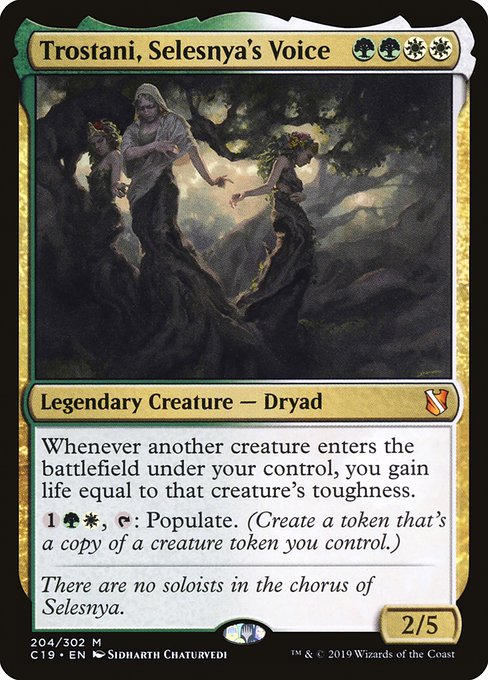
Trostani, Selesnya's Voice was the populate commander before Ghired existed and still belongs in his 99 ( and a tap to populate at instant speed, plus life equal to the toughness of each creature that enters). She no longer leads the deck because she makes no token of her own, which is exactly what the wrath question punishes.


Anim Pakal, Thousandth Moon
Anim Pakal, Thousandth Moon () triggers whenever you attack with one or more non-Gnome creatures: she gets a +1/+1 counter, then creates a 1/1 Gnome artifact creature token, tapped and attacking, for each +1/+1 counter on her. First attack one Gnome, second attack two, third attack three. She lands fourth because that growth is linear where Krenko's doubles, and a wrath takes the counters with her, so every rebuild restarts at one Gnome where Adeline's restarts at three.
Read the trigger carefully, because it is the best thing about her. It says "whenever you attack with" non-Gnome creatures, not "whenever Anim Pakal attacks". A single 1/1 flier swinging alone grows her and makes Gnomes while she stays home out of combat. Players who send her into a board of 3/3s every turn to get the trigger are losing her for nothing.
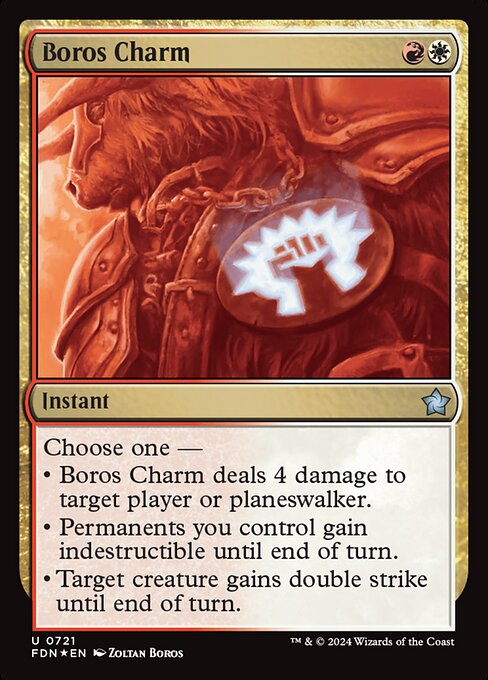
Cathars' Crusade breaks the linear growth, because the counters it puts on every creature land on her too. Each Gnome that enters adds a counter to Anim Pakal, so the Gnome count runs 1, 3, 7, 15 instead of 1, 2, 3, 4. Impact Tremors pings on every swing since the Gnomes enter attacking, and Boros Charm in response to a destroy wrath keeps her and the counters. The Gnomes are artifacts too, which matters at tables that sweep artifacts.

The Locust God
The Locust God costs 
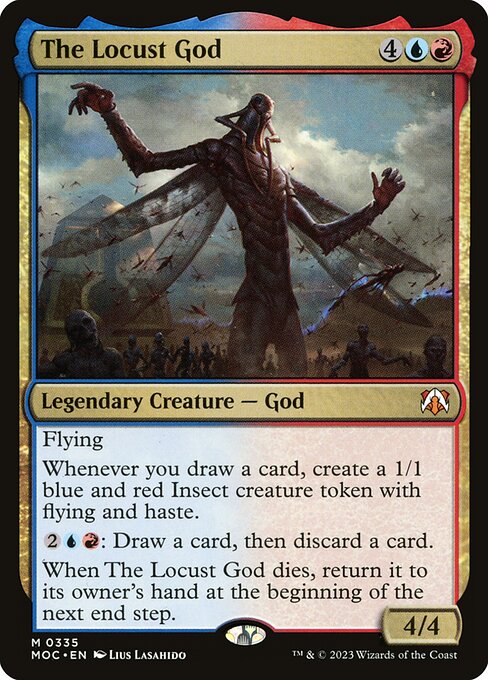
 , the most on this list, and alone it rebuilds the least for the mana: one Insect per draw step, plus one for every you spend to loot (draw a card, then discard one). It still makes the cut because it is the one commander a wrath can't tax. When it dies it returns to your hand at the beginning of the next end step, and casting it from your hand costs six every time, with no tax. Every card you draw makes a 1/1 Insect with flying and haste. Farewell exiles it instead of killing it, so that one still hurts.
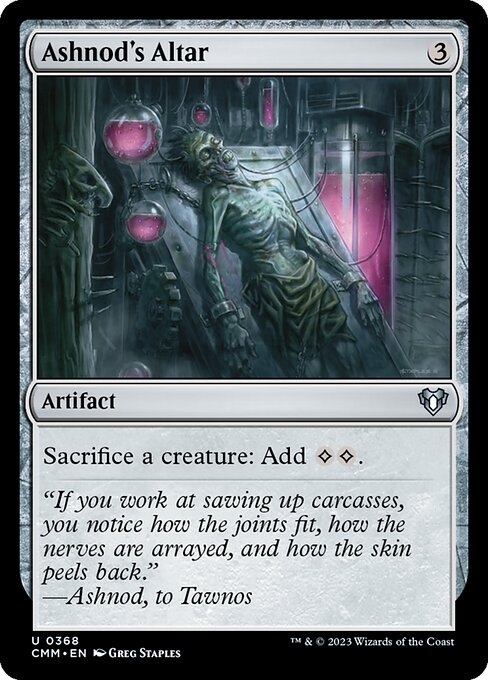
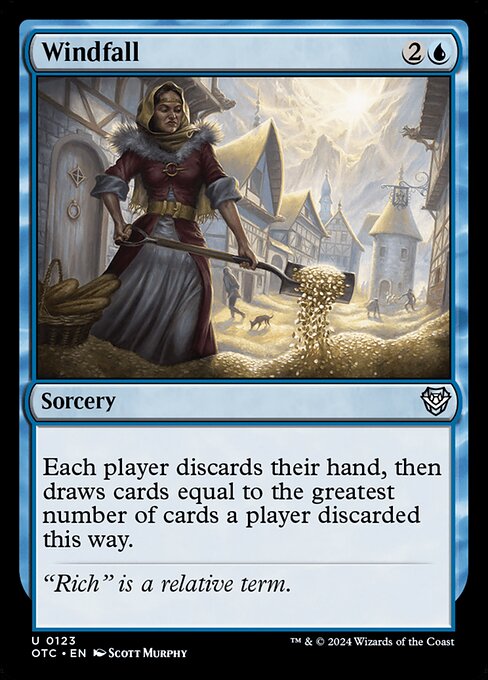
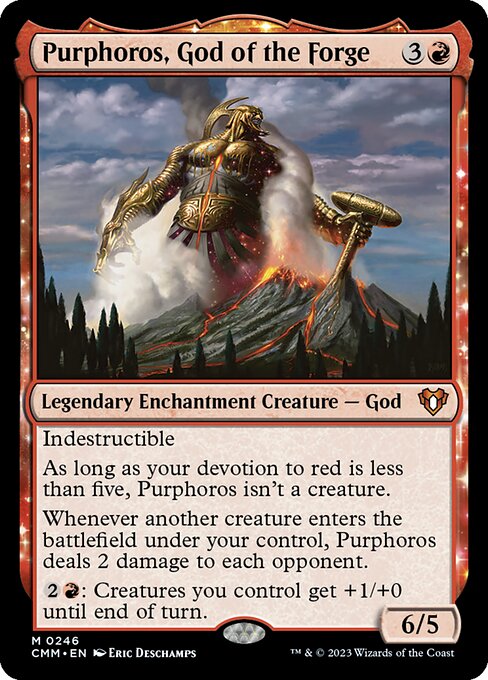
Skullclamp is absurd here. Equip it to an Insect for , the Insect dies to the -1 toughness, you draw two cards and get two new Insects. Each is two cards and a net extra flier. Add Ashnod's Altar and one of the new Insects pays for the next equip with mana to spare, so you can draw as deep as you like and finish with Purphoros, God of the Forge or a hasty air force. Wheel of Fortune is seven Insects, and Windfall is as many as the biggest hand at the table.
Be careful with Kindred Discovery naming Insect. Every Insect that enters draws a card, every draw makes an Insect, and the ability is not optional. Unless Laboratory Maniac or Purphoros is on the battlefield, the loop draws you into an empty library and you lose. With either one it wins, Purphoros by dealing 2 to each opponent per Insect long before the library runs out. Know which you are holding before you cast it.
Multipliers: the doubler you never have to draw
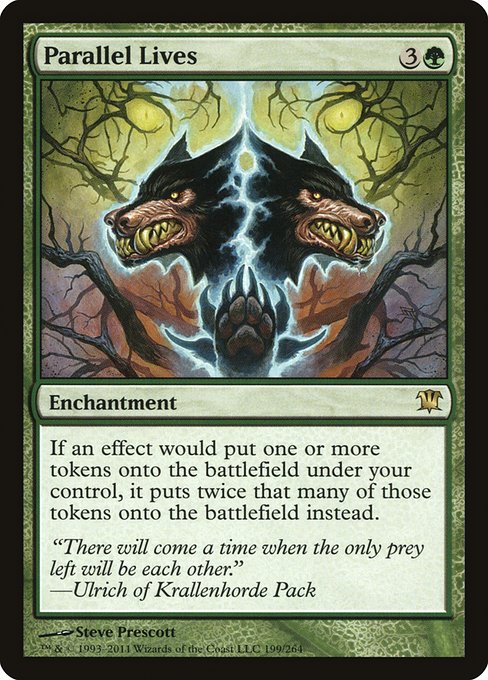
Parallel Lives, Anointed Procession and Doubling Season do nothing on their own, cost four or five, and show up in maybe a third of your games. In the command zone the same effect is there every game and comes back after every wrath. These five are ranked by what they multiply and by what they cost to put back out.


Chatterfang, Squirrel General
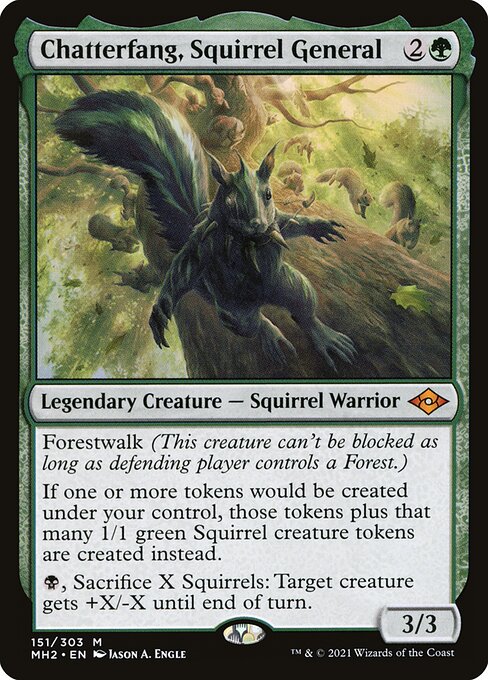
Chatterfang, Squirrel General costs , but the  in his ability makes him a black-green commander. Whenever tokens would be created under your control, you get those tokens plus that many 1/1 Squirrels, and that applies to every token type: Treasure, Clue, Food, each one arrives with a Squirrel. Then, for , sacrificing X Squirrels gives a target creature +X/-X until end of turn. That is a sacrifice outlet (a way to sacrifice your own creatures whenever you want, here Squirrels only) and removal in the same line of text, and it is why he leads the multipliers: he does the payoff job for the same three mana.
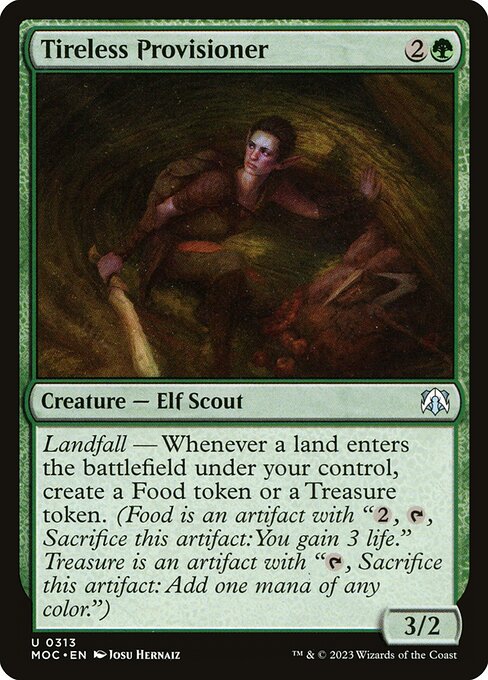
Pitiless Plunderer turns that into a loop. Sacrifice two Squirrels to Chatterfang, the Plunderer makes a Treasure for each one, each Treasure comes with a new Squirrel, and one Treasure pays the for the next activation. Every pass nets a Treasure and gives the targeted creature another -2 toughness, so it is unlimited mana and every creature on the table dead, one at a time. Zulaport Cutthroat turns the Squirrel deaths into a drain. Tireless Provisioner and Deep Forest Hermit feed him without a loop: a Squirrel per land drop, and four Squirrels that come with four more.
The timing that matters: he adds Squirrels only while he is on the battlefield, so the time to loop is in response to the wrath. With the sweeper on the stack, two Squirrels and run the Plunderer loop as long as you want, and Treasure is an artifact, so a creature wrath leaves the whole pile there to recast him with. Farewell can take the artifacts too. Chatterfang also sits at number five in our aristocrats commander ranking (aristocrats decks win by sacrificing their own creatures), and that post covers that side of him in more depth.



Mondrak, Glory Dominus
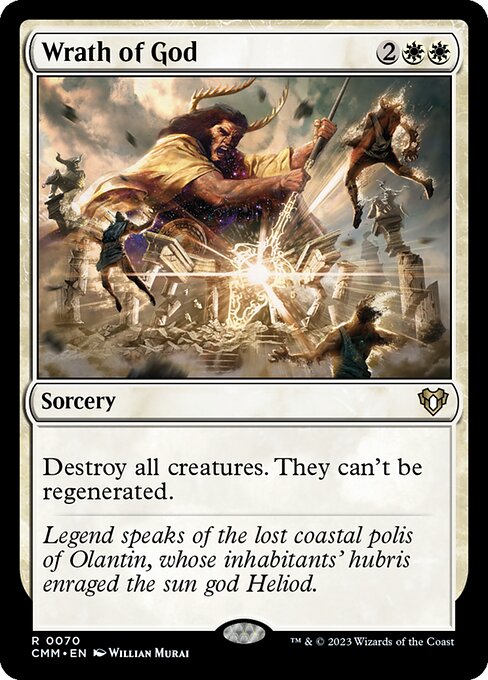
Mondrak, Glory Dominus () doubles every token created under your control, creature or not, on a 4/4 body. What puts him this high is the second ability:  and sacrificing two other artifacts or creatures puts an indestructible counter on him, and can be paid with or 2 life. Two Treasures or two spare tokens, and the doubler is still standing when Wrath of God resolves. He is the only multiplier here that passes the wrath test by refusing to die.
That counter also unlocks your own sweeper. Put it on Mondrak first, then cast Martial Coup for X=5: ten Soldiers for you, every other creature destroyed, Mondrak untouched. Secure the Wastes at the end of the turn before yours is 2X Warriors ready to attack, and with Anointed Procession alongside him, 4X.
The obvious comparison is Ojer Taq, Deepest Foundation: six mana, triples creature tokens only, and when it dies it comes back as a land that only transforms back after you attack with three creatures. The bigger number comes with a slower rebuild and no help with Treasure. Mondrak's counter does nothing against Farewell, which exiles. Farewell is a Game Changer, so you won't meet it at Bracket 1 or 2 tables, but from Bracket 3 up it is the wrath to plan for.


Adrix and Nev, Twincasters
Adrix and Nev, Twincasters () is the same doubling text as Mondrak with ward instead of a counter: any spell or ability an opponent aims at them is countered unless that player pays . Ward answers spot removal and does nothing against sweepers, which is why they rank below Mondrak. What they have over him is the color pair with the best scaling token makers in the format and the counterspells to protect a finished board.
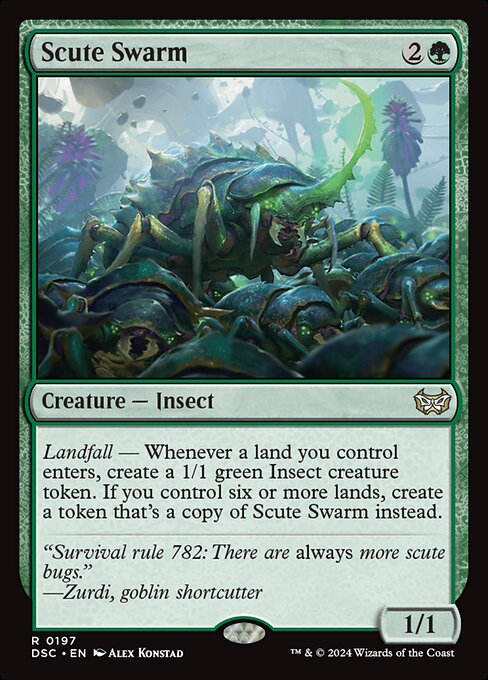
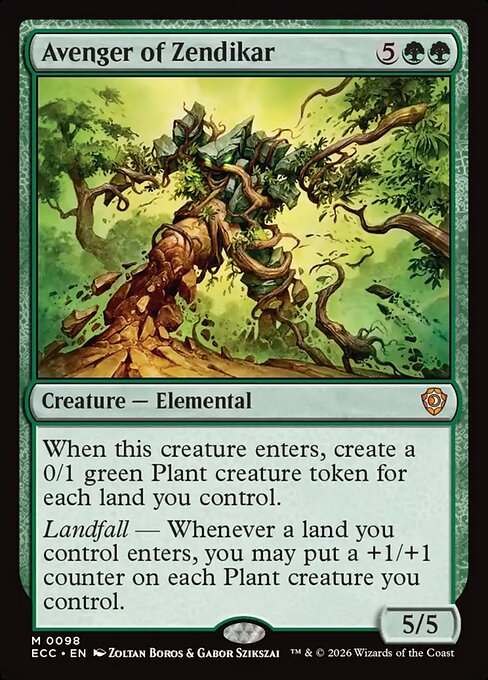
Scute Swarm is the card to build around. With six or more lands, each land you play makes a copy of the Swarm, and each copy triggers on the next land. Adrix and Nev double every batch, so one Swarm becomes three, then nine, then twenty-seven, one land drop at a time. Avenger of Zendikar makes a Plant per land and then grows them on every land drop, and Tireless Provisioner doubled is two Treasure per land, which is how the deck casts its eight-drops.
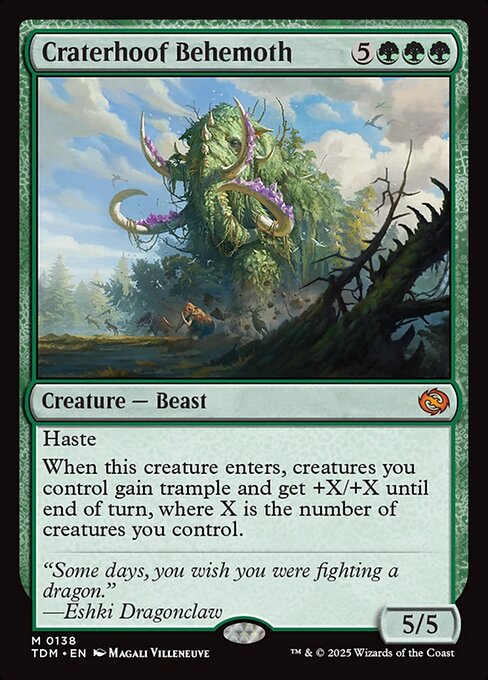
What goes wrong is a board of two hundred 1/1s with no evasion and no way through. Craterhoof Behemoth is the clean finish. The cheaper ones are Beastmaster Ascension, which gives everything +5/+5 once it has seven quest counters (one attack with seven creatures fills it), and Triumph of the Hordes, which gives +1/+1, trample and infect for the turn, so every token is a 2/2 dealing poison and any five of them connecting is ten poison counters and a loss for that player. Without one of them the deck hands the table a turn to find the wrath.


Jinnie Fay, Jetmir's Second
Jinnie Fay, Jetmir's Second (
 ) is a converter rather than a doubler. Whenever you would create tokens of any kind, you may instead create that many 2/2 green Cats with haste or that many 3/1 green Dogs with vigilance. Every Treasure, Clue, Food and Map in your deck becomes an attacker, so Tireless Tracker and Smothering Tithe (a Game Changer) are token makers here, and Idol of Oblivion draws a card on every turn you made one. She ranks below the three doublers because she multiplies nothing and taking the Cat costs you the Treasure's mana.
Her loop is Requiem Angel with Goblin Bombardment. Sacrifice a Cat for one damage, the Angel makes a Spirit because a non-Spirit creature died, Jinnie Fay makes it a hasty Cat instead, and the Cat is not a Spirit, so sacrifice it and the Angel triggers again. One damage per pass, no upper limit, all of it in her colors.
The choice she gives you is the skill in the deck, and the rule is simple. On an opponent's turn, always take the Dog: haste is wasted on a token that could attack on your turn anyway, and a 3/1 with vigilance blocks now and attacks later. On your own turn, take the Cat only when a hasty attacker matters this combat, and the Dog otherwise.


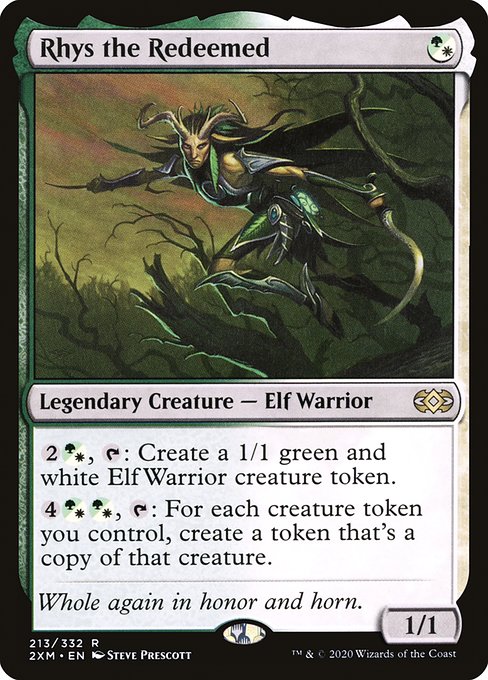
Rhys the Redeemed
Rhys the Redeemed costs , one mana, and does both jobs slowly: and a tap makes a 1/1 Elf Warrior, and and a tap creates a copy of every creature token you control. He is last among the multipliers because the copy ability is six mana, once a turn, and taps him, so he is a mana sink and the deck has to bring its own engine. He is on the list because his tax never matters. His third cast costs five, the same as a first Ghired.
The play that wins games with him: both abilities work at instant speed, so activate the copy at the end of the turn before yours. The copies have been under your control since the start of your turn and can attack, and they were never exposed to the sorcery-speed wraths (castable only in their owner's main phase) the table was holding that turn. The same timing applies to Second Harvest, which copies every token you control for .
Copies don't keep +1/+1 counters, so Avenger of Zendikar's Plants copy as 0/1s. Copy tokens that are big on their own, like the Wurm from Armada Wurm, or Saprolings under Tendershoot Dryad, which gives every Saproling +2/+2 once you control ten permanents.


Payoffs: commanders that turn a board into a kill
A payoff commander makes no tokens, so on the wrath question it scores zero by itself. These two make the list because they make a small board lethal every turn, which a one-shot like Craterhoof Behemoth can't, and that shortens every rebuild. You don't need twelve tokens back. Jetmir needs nine creatures of any kind, and Neyali needs one token to point at each opponent.
Jetmir, Nexus of Revels
Jetmir, Nexus of Revels () gives your creatures +1/+0 and vigilance at three creatures, another +1/+0 and trample at six, and another +1/+0 and double strike at nine. At nine, every 1/1 token is a 4/1 vigilant trampler that hits twice, which is eight damage per token. Ten tokens and Jetmir is eighty trample damage, spread however you like.
The thresholds count creatures, not tokens, so mana dorks (creatures that tap for mana) and utility creatures count toward nine. Vigilance at the first tier is the quiet reason the deck works: your attackers are also your blockers, and the crack-back (the counterattack after you tap out to swing) is where tokens decks usually die.
Because he rebuilds nothing himself, the 99 has to do it at instant speed. Grand Crescendo makes X Citizens and gives your creatures indestructible, so it is both the rebuild and the answer to a destroy wrath. Secure the Wastes at the end of the turn before yours gets you to nine with every token able to attack when you untap, and Finale of Glory, the sorcery-speed top end, is twenty bodies for X=10 with the Angels flying.


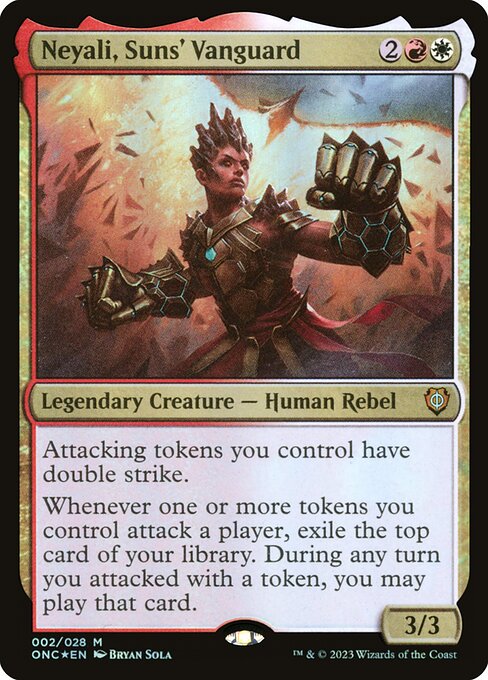
Neyali, Suns' Vanguard
Neyali, Suns' Vanguard () gives attacking tokens double strike, and whenever one or more of your tokens attack a player, you exile the top card of your library and may play it during any turn you attacked with a token. That trigger is per player, so tokens split across three opponents exile three cards, and the exiled cards don't expire, so a slow start banks cards for later. It is impulse draw (playing cards from exile instead of from your hand), and she fixes the two things Boros tokens lack, damage per body and card flow, for four mana.
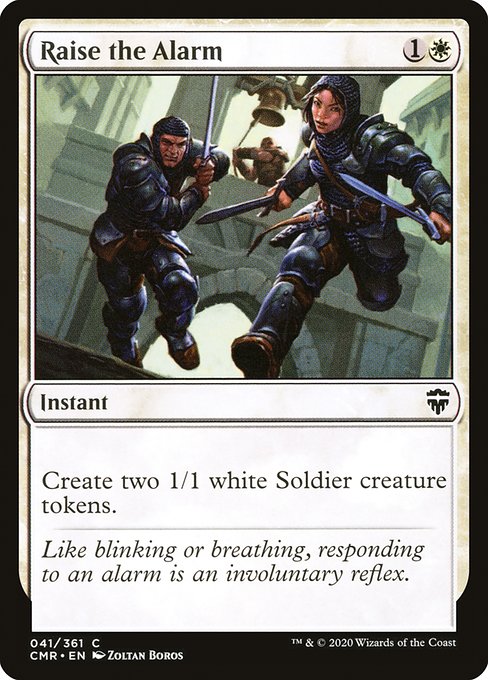
Her play rule follows from the trigger: declare at least one token attacker at every opponent, every combat, even a lone 1/1 into an empty board. Tokens that enter attacking, like the Gnomes from Anim Pakal, Thousandth Moon or the Soldiers from Hero of Bladehold, get double strike but never trigger the exile, because they were never declared as attackers. Raise the Alarm at the end of an opponent's turn is two double strikers that do both.
She ranks below Jetmir because double strike kills blockers without pushing damage through them, where Jetmir's trample does, so a table with fat blockers slows her down. Hold Boros Charm for the turn you commit: indestructible for the swing, or double strike on Neyali herself.

Two habits that lose tokens games
The first is casting the second token maker. Once the board threatens lethal next turn, the pod's incentive is to find a wrath, and they usually do. The maker still in your hand is your rebuild, and it is worth more there than as four extra 1/1s on a board that was already going to win or get swept. Instant-speed makers like Secure the Wastes, Grand Crescendo and Raise the Alarm exist so you can wait until the end of the turn before yours, which dodges sorcery-speed wipes and still gives you a full attack.
The second is protecting against the wrong wrath. Heroic Intervention and Flawless Maneuver beat destroy effects and do nothing against Farewell, which exiles, or an overloaded Cyclonic Rift (cast for its overload cost, it returns every nonland permanent its caster doesn't control to hand, and a bounced token stops existing). Teferi's Protection and Clever Concealment phase your permanents out (they are treated as though they don't exist until your next turn, so nothing can touch them) and answer all of those. Concealment has convoke, so your tokens can tap to pay for it. Farewell, Cyclonic Rift and Teferi's Protection are all Game Changers, so the higher the bracket, the more of these you will face.
And a mulligan rule: a seven with a maker that costs three or less and three lands is a keep. A seven with two payoffs, two doublers and no maker is a mulligan, even with perfect lands, because every card in it is waiting for a token that isn't coming.
Which one to build
If your pod wraths every game, build Adeline, three mana and three bodies the turn after she lands, or Mondrak, whose counter keeps the doubler through destroy wraths. If your pod races, Jetmir or Neyali, because they turn the first token maker you draw into a clock. If you want the deck to be able to combo at a higher-power table, Chatterfang or Krenko, and run the finished list through the bracket calculator before the first game so the number you tell the table is the number the 99 actually produces.
Whichever you pick, record the games. A tokens deck feels like it is winning every time the board gets big, and the win rate after twenty games is often a different story from the one the board tells. Deck ELO settles it either way.



Comments
Join the conversation.