

The Best Landfall Commanders in EDH, Ranked by What One Land Drop Buys You

Landfall is the ability word on cards that read "whenever a land you control enters". It was born on Zendikar and it has quietly become one of the deepest archetypes in Commander, because the resource it rewards is the one every deck already has to play. The best landfall commanders are the ones that turn that free, every-turn action into something the other three players have to answer.
This list ranks them by one question: what does a single land drop buy you? A card, a body, mana or damage, and how much of each. Commanders that also hand you extra land drops rank above ones that only reward the drops you were making anyway. Each entry also says which bracket a normal build of it lands in. Brackets are the Commander power-level tiers, 1 to 5, that the format now uses to match decks before a game; our Commander brackets explained guide walks through them. And each entry names a line of play or a trap you only learn by piloting the deck.
Every land that enters counts, however it got there
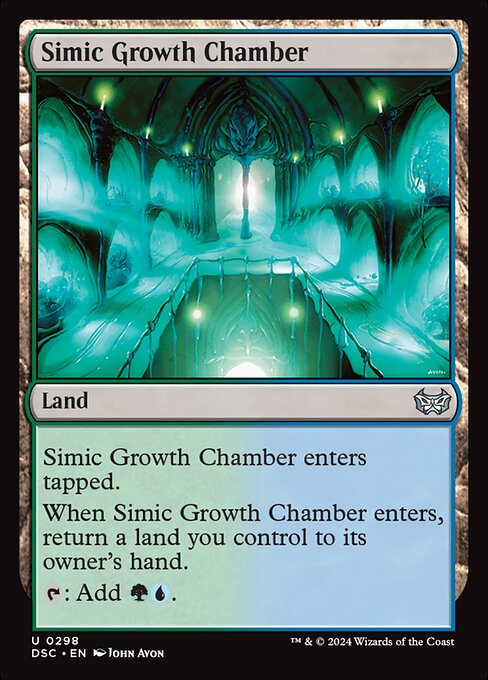
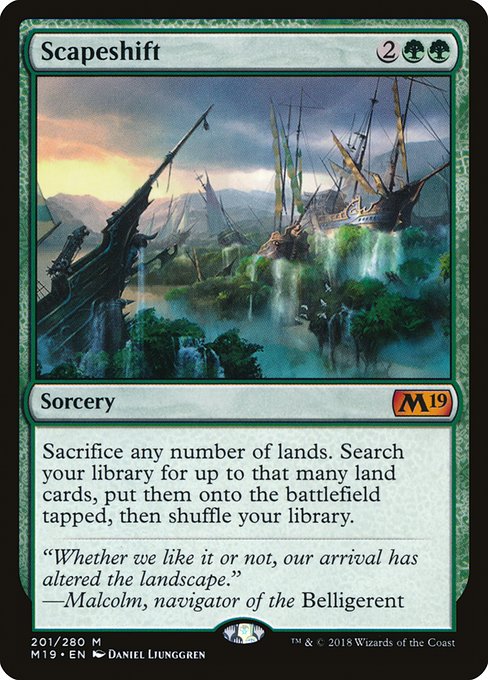
The thing new landfall players miss is that the trigger does not care how the land arrived. A fetch land, meaning a land you sacrifice to search for another one, is two triggers: Evolving Wilds triggers once when it enters and once more when the basic it finds enters. Harrow sacrifices a land and puts two basics in, so it is two triggers at instant speed. Scapeshift is one trigger for every land it finds, up to the number you sacrificed. A bounce land like Simic Growth Chamber returns a land to your hand when it enters, which means you have a land to play again next turn without drawing one.
Build every deck below around that fact. Thirty-eight to forty lands with eight fetches and a bounce land or two is the normal skeleton. Our post on how many lands to run in Commander covers the maths for the rest of the format, and landfall decks sit at or above the top of that range.


1. Aesi, Tyrant of Gyre Strait
Aesi, Tyrant of Gyre Strait costs 

 , gives you an additional land drop each turn, and may draw you a card whenever a land you control enters. That is the whole engine in one card: the extra drop is a card, the card is often a land, and the land is another card. Nothing else on this list refuels itself so completely without help.
One land drop buys you: a card, and up to two a turn with her extra drop.
Bracket fit: 2 or 3. A budget list on basic lands is a 2. Add fetch lands, Simic Growth Chamber and Ramunap Excavator and it is a bracket 3 deck that out-draws the table, and it only climbs further when you add the tutors (cards that search your library for a specific card) and infinite loops of a combo build.
The line: cast Aesi precombat and keep your land drops for after she resolves. The turn she lands, two land plays are two cards, and if she gets countered you still have a land to play. The mistake is ramping her out on turn four with an empty hand and no land left to drop, which gives the table a free turn to deal with a six-mana 5/5 that has done nothing.
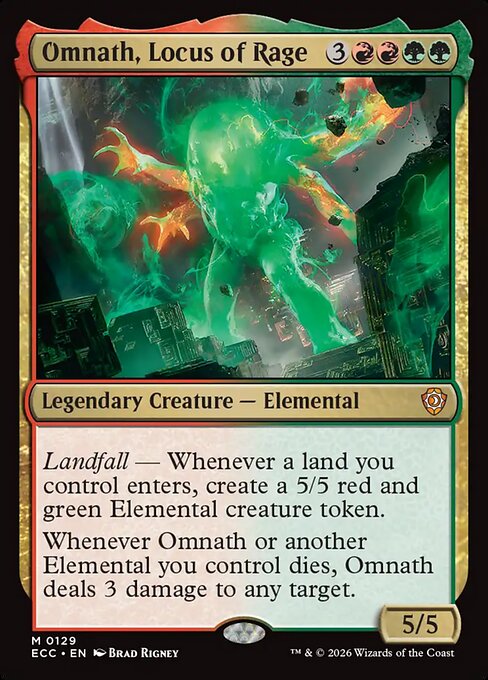
2. Omnath, Locus of Rage
Omnath, Locus of Rage makes a 5/5 Elemental token every time a land enters under your control, and whenever Omnath or another Elemental you control dies, Omnath deals 3 damage to any target. Seven mana is a lot, which is why he is not first, but no other commander turns a basic Forest into a 5/5 and then charges a fee when it dies.
One land drop buys you: a 5/5 and three damage held in reserve.
Bracket fit: 3. The deck is big and slow. Goblin Bombardment turns the death trigger into a kill condition without touching the Game Changers, the official list of cards strong enough that running them moves a deck up the brackets.
The line: in a four-player pod, a board wipe (a spell that kills every creature) is your best card, even when an opponent casts it. If Omnath dies at the same time as six Elementals, all seven death triggers fire, because the ability looks back at what was on the battlefield. That is 21 damage you aim after the wipe resolves. Hold Roiling Regrowth or Harrow for the removal spell aimed at Omnath: with him still on the battlefield, cracking two basics in at instant speed makes two 5/5s in response.


3. Omnath, Locus of Creation
Omnath, Locus of Creation draws a card on entry, then ladders its landfall: the first time it resolves each turn you gain 4 life, the second adds 
 , and the third deals 4 damage to each opponent and each planeswalker you don't control. In a pod of three opponents the third resolution is 12 damage, every turn you can find three of them.
One land drop buys you: whatever rung of the ladder it lands on. The first is a sip of life, the third is 12 damage across the table.
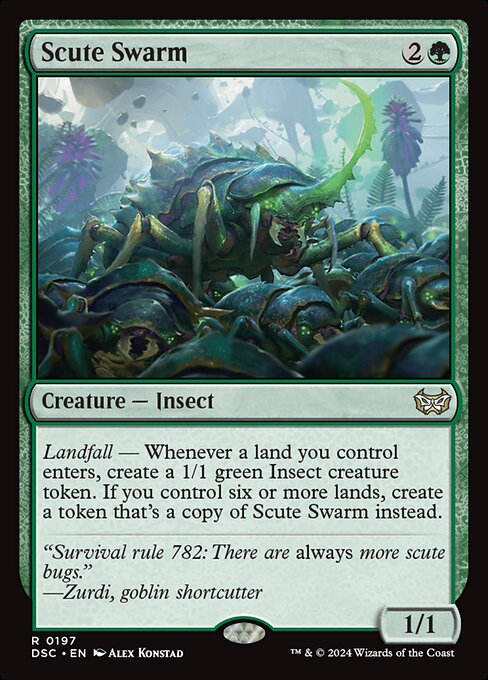
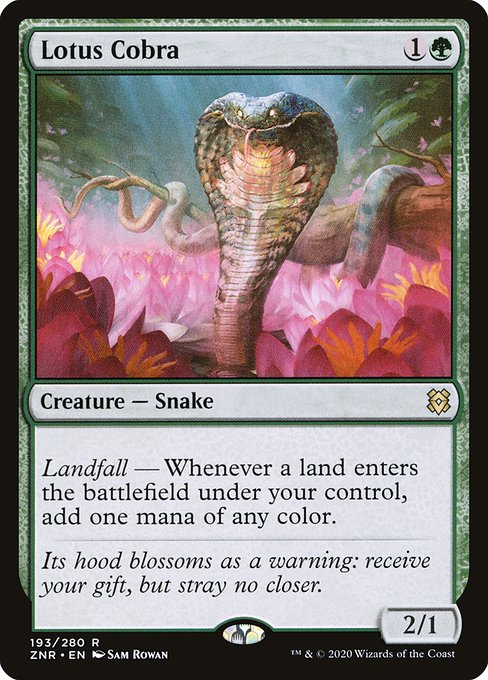
Bracket fit: 3 or 4. The four-colour mana base is where the money goes. A fetch-land list with Scute Swarm and Lotus Cobra is a bracket 3 deck; add tutors and fast mana (cheap cards that make extra mana early, like Mana Vault or Chrome Mox) and it is a bracket 4 deck.
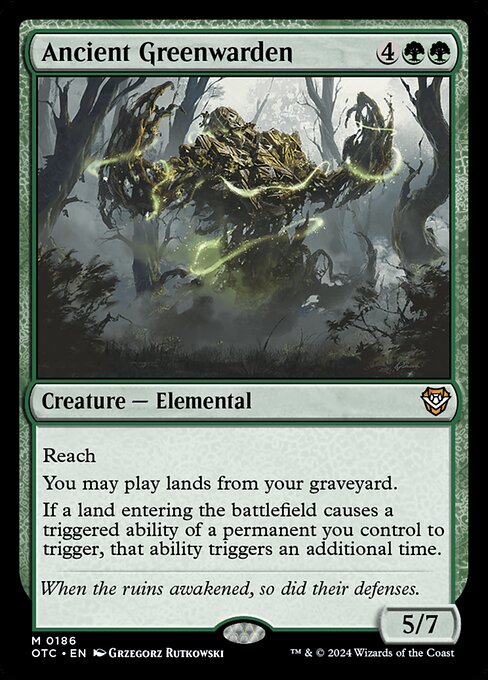
The line: count resolutions, not lands. A fetch land is the first two, and the third has to come from somewhere real. A bounce land does not supply it, because returning a land to your hand gives you no extra drop to play it with. The real sources are an extra-drop card such as Azusa, Lost but Seeking or Exploration, a Harrow, or a fetch land you deliberately left uncracked last turn. With Ancient Greenwarden on the table, each land resolves the ability twice, so one fetch land runs the whole ladder by itself. The mana from the second resolution empties at the end of the phase, so do all of this in your first main phase with the spell you want to cast already chosen.
4. Moraug, Fury of Akoum
Moraug, Fury of Akoum is mono-red landfall with a different payoff: whenever a land enters under your control during your main phase, there is an additional combat phase after that phase, and your creatures untap at the start of it. Each creature you control also gets +1/+0 for each time it has attacked this turn, so every extra combat hits harder than the last.
One land drop buys you: a whole extra combat.
Bracket fit: 3. It is a creature deck that kills one player at a time, with no infinite loops required.
The line: attack first, then play the land. A land that enters during your first main phase puts the extra combat before your regular one, and Moraug only untaps your team at the start of the extra combat, so whatever attacked in it is still tapped when the regular combat arrives. Play the land in your second main phase instead: the extra combat comes right after it with a fresh untap, so one land is two full attacks and a cracked fetch land is three, each bigger than the last. Nothing follows those extra combats except your end step, so every land you want to use has to enter during that second main phase, and a land that enters in the middle of combat does nothing at all, because the trigger checks that it is your main phase.
Mulligan hands without a two-drop creature: Moraug wants something already on the table when he arrives on six.
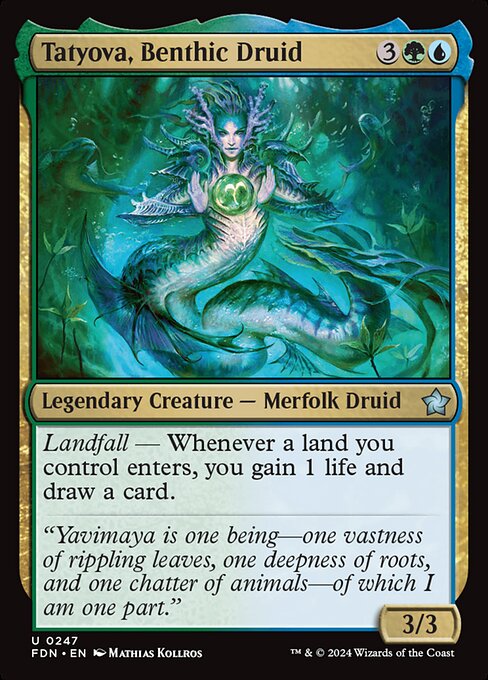
5. Tatyova, Benthic Druid
Tatyova, Benthic Druid is Aesi for five mana without the extra land drop: whenever a land enters under your control, you gain 1 life and draw a card. She is a 3/3 that dies to everything, which is the real cost.
One land drop buys you: a card and a point of life.
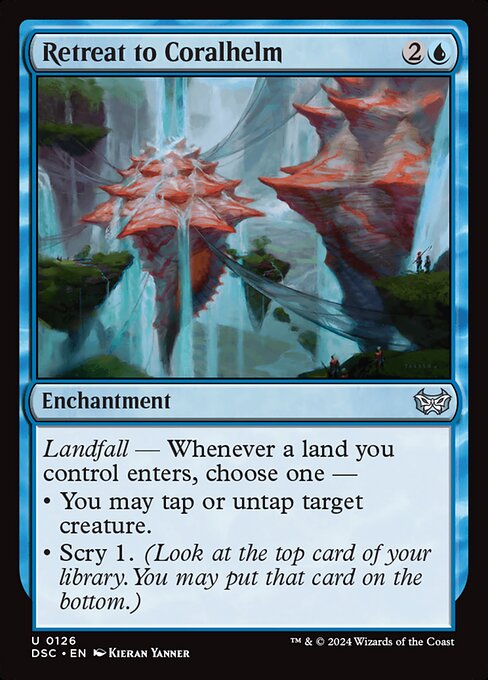
Bracket fit: 2, or 3 if you include the loop. Retreat to Coralhelm untaps a creature whenever a land enters; with Sakura-Tribe Scout or Walking Atlas putting Simic Growth Chamber onto the battlefield and the Chamber returning itself to hand, you get infinite landfall, which with Tatyova is your whole library. That loop is the line between a bracket 2 Tatyova and a bracket 3 one. Leave it out for a table playing preconstructed decks.
The line: Tatyova's draw is not optional, so the loop has to stop with cards still in your library or it ends with you losing to an empty one. Count before you start, and have the finisher on the table already, because drawing the deck is not a win by itself: Lotus Cobra turns the same loop into as much mana as you have cards left to draw, and Rampaging Baloths turns it into that many 4/4s.


6. Lord Windgrace
Lord Windgrace is the planeswalker commander for Jund (black, red and green) lands. His +2 discards a card and draws one, and draws an extra card if the discard was a land; his -3 returns up to two land cards from your graveyard to the battlefield. Every land you pitch is an extra card now and a landfall trigger later, when the -3 returns it.
One land drop buys you: nothing directly, but his -3 puts two lands onto the battlefield on demand. That is two landfall triggers for the Rampaging Baloths and Tireless Tracker in the 99 (the ninety-nine cards that are not your commander). Splendid Reclamation returns every land card in your graveyard at once, and with Crucible of Worlds letting you play lands from your graveyard, one fetch land is two triggers every turn for the rest of the game.
Bracket fit: 3. The deck is a value engine with a lot of removal, and it does not need mass land destruction to work, so leave that at home and the bracket holds.
The line: he arrives on five and the table attacks him, not you. Plus two on the first turn, pitching a land, is a two-for-one that leaves him at seven loyalty. Using the -3 the turn he enters leaves him at two, and in a pod he does not survive that.
7. Nissa, Resurgent Animist
Nissa, Resurgent Animist costs  and adds one mana of any colour whenever a land you control enters. The second time that resolves in a turn, she reveals cards from the top of your library until an Elf or Elemental and puts it in your hand. She is the cheapest commander here that both ramps and digs.
One land drop buys you: a mana, and the second drop of the turn buys a creature.
Bracket fit: 3. A fetch land or an extra land drop each turn with her out is two extra mana and a free creature every turn from turn four onward, which outpaces a bracket 2 table even with no Game Changers in the list.
The trap: the dig stops at the first Elf or Elemental, so a list full of Snakes and Beasts finds nothing. Build the payoffs as Elementals: Avenger of Zendikar, Titania, Protector of Argoth, Lumra, Bellow of the Woods, Multani, Yavimaya's Avatar and Ancient Greenwarden all count, and a mana Elf is never a bad hit. The mana from the first trigger empties at the end of the phase, so play the land when you have something to cast.
8. Tannuk, Memorial Ensign
Tannuk, Memorial Ensign is the newest commander in this top ten and the most underrated. For  you get a commander whose landfall deals 1 damage to each opponent, and whose second trigger each turn draws you a card. Three opponents means every land is three damage, a fetch land is six, and the card comes along for free.
One land drop buys you: three damage, then a card.
Bracket fit: 2 or 3. On basic lands it is a bracket 2 burn deck built out of lands; fetch lands and Valakut Exploration push it to 3. Tunneling Geopede is a second copy of the commander's ping, and Valakut Exploration exiles the top card of your library on each landfall and lets you play it, then burns each opponent at your end step for every card you left unplayed. Nothing in a normal build touches the Game Changer list.
The line: the second trigger is the draw, so a turn with one land drop is a turn without a card. Harrow on an opponent's end step is two triggers on their turn: six damage, a card, and a land in your graveyard for Ramunap Excavator to replay on yours. Hold Sakura-Tribe Elder for your own turn, where the basic it finds can be the second trigger after your land drop instead of a lonely first one.
9. Phylath, World Sculptor
Phylath, World Sculptor creates a 0/1 Plant token for each basic land you control when it enters, and its landfall puts four +1/+1 counters on a Plant. Each land drop is a 4/5 that was a 0/1 a moment ago.
One land drop buys you: four power on one body.
Bracket fit: 2. Six mana, a go-wide plan with no built-in reach, and a payoff that stacks counters on one creature at a time: this is the right landfall commander for a pod of preconstructed decks.
The trap: it counts basic lands. A mana base of duals and utility lands gives you two Plants and a sad face. Run thirty basics, and let Avenger of Zendikar share the Plant type: Phylath's landfall can pump the Avenger's Plants too.
10. Obuun, Mul Daya Ancestor
Obuun, Mul Daya Ancestor does two things for : at the beginning of combat on your turn, up to one land you control becomes an X/X Elemental creature with trample and haste until end of turn, where X is Obuun's power; and whenever a land enters under your control, put a +1/+1 counter on target creature. Point the counters at Obuun and the land you animate grows with him.
One land drop buys you: a +1/+1 counter, wherever you want it.
Bracket fit: 2. It is a counters deck with a Naya (red, green and white) mana base and no combo finish, and better lands do not change that.
The trap: the animated land is still a land, and a land that dies in combat is a land you no longer have. Swing it into open boards, or hold Heroic Intervention, and animate a basic you can afford to lose rather than the dual that fixes your colours.


Two cheap counters commanders that nearly made it
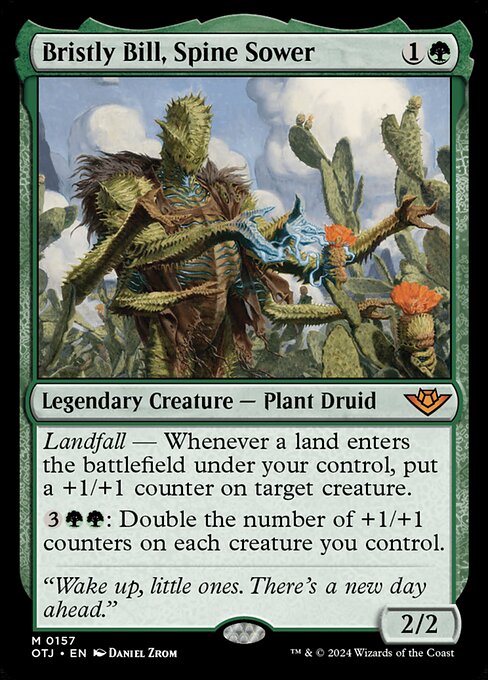
Bristly Bill, Spine Sower costs , puts a +1/+1 counter on a creature whenever a land enters under your control, and for  doubles the counters on every creature you control. It is the bracket 2 commander for the player who likes maths, and it comes down a turn before anything else here. It misses the top ten because a two-mana 2/2 with no protection spends a lot of the game in the command zone.
Toph, Earthbending Master gives you an experience counter per landfall and earthbends X whenever you attack, turning a land into a 0/0 creature with haste and X +1/+1 counters. The earthbent land returns to the battlefield tapped if it dies or is exiled, so you can attack with lands without the Obuun risk. Bracket 2, and a fun one.
The four engines that make every one of these better
Ashaya, Soul of the Wild is the best card in the archetype that is not a commander on this list. Nontoken creatures you control are Forest lands in addition to their other types, so every creature spell you cast is a land entering, and every landfall trigger in your deck fires on a Lotus Cobra. Ashaya in the command zone is a real option for a mono-green build, but she is better in the 99 of an Aesi or Nissa deck where the landfall payoffs are already in the colours.
Extra land drops. Azusa, Lost but Seeking, Exploration, Oracle of Mul Daya and Dryad of the Ilysian Grove all give you more drops, and the drops are only triggers if you have lands in hand, which is why the commanders that draw cards, Aesi, Tatyova and Gitrog, are the ones that use them best.
Trigger doublers. Yarok, the Desecrated and Ancient Greenwarden make your landfall abilities trigger an additional time whenever a land enters. Yarok is a commander in his own right for a Sultai (black, green and blue) build, and Greenwarden lets you play lands from your graveyard on top of the doubling.
The 99's own landfall. Scute Swarm copies itself once you control six lands, Rampaging Baloths makes 4/4s, Felidar Retreat makes Cats or pumps the team, and Tireless Tracker turns land drops into Clues, artifacts you pay and sacrifice to draw a card. Any commander above runs the ones in its colours.

Where they land in the brackets
Landfall is unusual in that the same commander often fits two brackets depending on one or two cards, which is why the entries above name the card that moves the needle. Grouped by the build a normal pod will see:
Before you tell your pod a number, paste the list into the Commander Bracket Calculator. It counts the Game Changers and flags the loops, and the permalink it gives you settles the argument faster than a description of your deck does.
Which one to actually build
If you want the deck that is good in every pod, build Aesi: she is the one commander here that replaces herself the turn she lands, as long as you kept a land in hand. If your group casts a lot of board wipes, build Omnath, Locus of Rage and let them. If you want a cheap three-mana commander, mono-green Nissa or red-green Tannuk will surprise a table that has not seen them. Moraug is for the player who would rather attack four times than draw four cards.
Whichever you pick, browse the landfall lists other players have made public in the deck explorer and copy one to your account. Then record the games it plays. A landfall deck's win rate against your actual pod is the only ranking that matters, and after a dozen recorded games the deck's ELO rating will tell you whether the commander you chose was the right one.




Comments
Join the conversation.