

Piloting Hoo'se Turn is it?: An Abigale, Eloquent First-Year Guide

Hoo'se Turn is it? is an Abigale, Eloquent First-Year Commander deck built around one idea: her enter-the-battlefield trigger makes a creature lose every ability it has, and you decide whether that's a punishment or a gift. Point it at an opponent's commander and their deck stops working. Point it at one of my own oversized creatures with a drawback and the drawback disappears. This guide covers how to run that loop, what the first four turns look like, and the traps I've already walked into.
Hoo'se Turn is it? (EDH)
- 1 Arcane Signet
- 1 Conjurer's Closet
- 1 Orzhov Signet
- 1 Panharmonicon
- 1 Sol Ring
- 1 Talisman of Hierarchy
- 1 Thought Vessel
- 1 Sword of Hearth and Home
- 1 Relic Golem
- 1 Lupine Prototype
- 13 Plains
- 12 Swamp
- 1 Woolly Razorback
- 1 Desecration Demon
- 1 Rot-Curse Rakshasa
- 1 Nyxathid
- 1 Charming Prince
- 1 Yathan Tombguard
- 1 Disciple of Bolas
- 1 Shakedown Heavy
- 1 Massacre Wurm
- 1 Claim Jumper
- 1 Hunted Bonebrute
- 1 Gray Merchant of Asphodel
- 1 Rotting Regisaur
- 1 Waning Wurm
- 1 Airbender Ascension
- 1 Black Market Connections
- 1 Duelist's Heritage
- 1 Smothering Tithe
- 1 Teleportation Circle
- 1 Darksteel Mutation
- 1 Kaya's Ghostform
- 1 Master of the Feast
- 1 Acrobatic Maneuver
- 1 Akroma's Will
- 1 Anguished Unmaking
- 1 Cloudshift
- 1 Deadly Rollick
- 1 Despark
- 1 Ephemerate
- 1 Flicker of Fate
- 1 Galadriel's Dismissal
- 1 Ghostway
- 1 Inkshield
- 1 Not Dead After All
- 1 Parting Gust
- 1 Personify
- 1 Scrollshift
- 1 Swords to Plowshares
- 1 Bleachbone Verge
- 1 Caves of Koilos
- 1 Command Tower
- 1 Fetid Heath
- 1 Isolated Chapel
- 1 Marsh Flats
- 1 Prismatic Vista
- 1 Vault of Champions
- 1 Verdant Catacombs
- 1 Godless Shrine
- 1 Traxos, Scourge of Kroog
- 1 Kalakscion, Hunger Tyrant
- 1 Yargle, Glutton of Urborg
- 1 Egon, God of Death // Throne of Death
- 1 Loran of the Third Path
- 1 Haliya, Guided by Light
- 1 Far Traveler
- 1 Urborg, Tomb of Yawgmoth
- 1 Phyrexian Soulgorger
- 1 Avatar's Wrath
- 1 Farewell
- 1 Helping Hand
- 1 Morningtide's Light
- 1 Reanimate
- 1 Toxic Deluge
- 1 Unearth
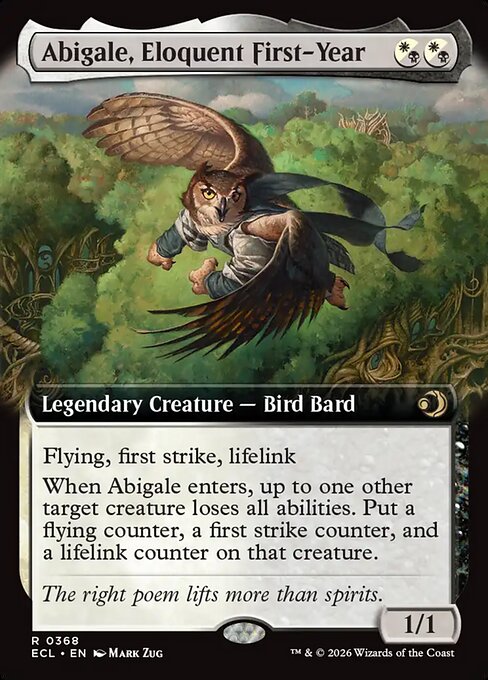
- 1 Abigale, Eloquent First-Year
How Abigale, Eloquent First-Year Actually Works
Abigale, Eloquent First-Year costs  , which means either color pays for her, and she comes as a 1/1 with flying, first strike, and lifelink. When she enters, up to one other target creature loses all abilities and gets a flying counter, a first strike counter, and a lifelink counter. The official ruling matters for this deck: the ability loss does not wear off. It sticks even after Abigale leaves the battlefield, and the target keeps any ability it gains afterward. Those three counters are how the "gift" half of the loop works.
The deck runs in Orzhov because that's where the best drawback creatures live. The plan, in my own words from the deck page: board control. Abigale switches off the opposing commander while turning my cheap, oversized bodies into clean threats that swing for a lot in the air.
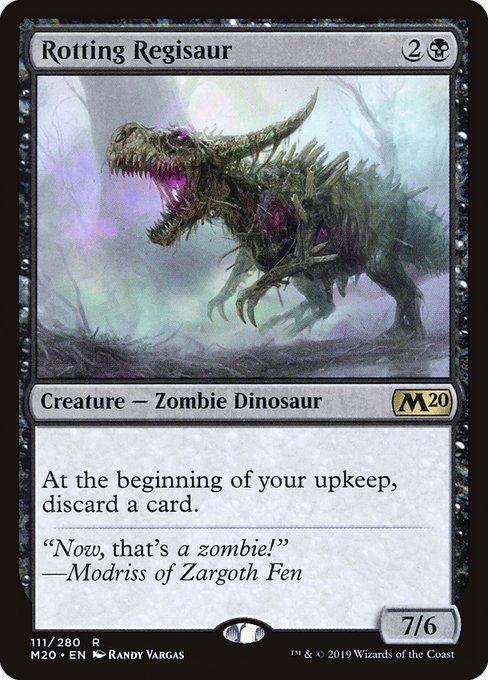
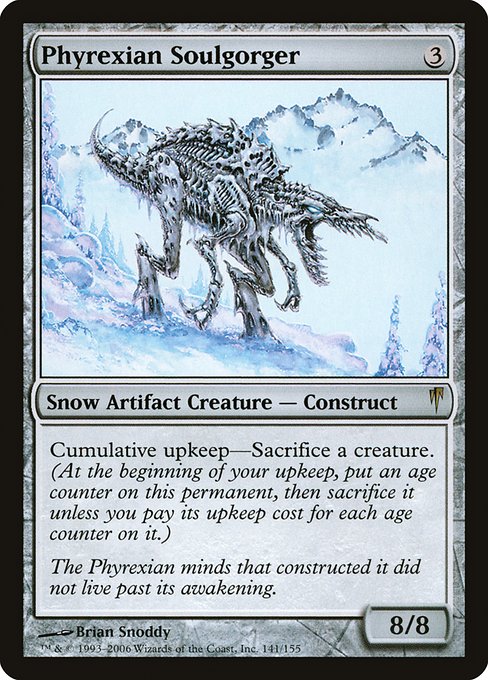
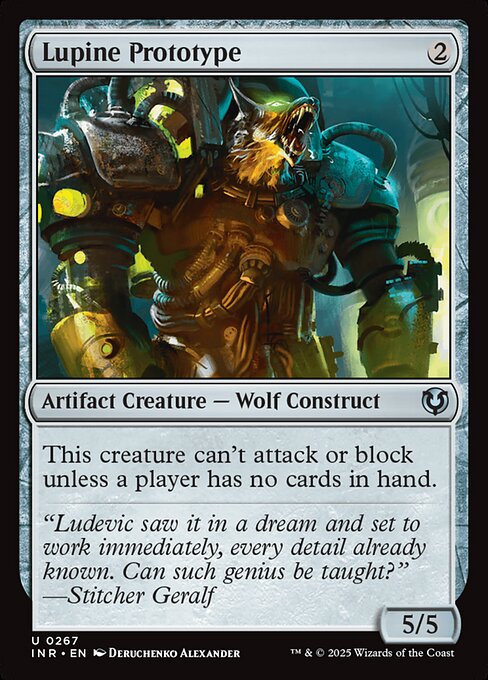
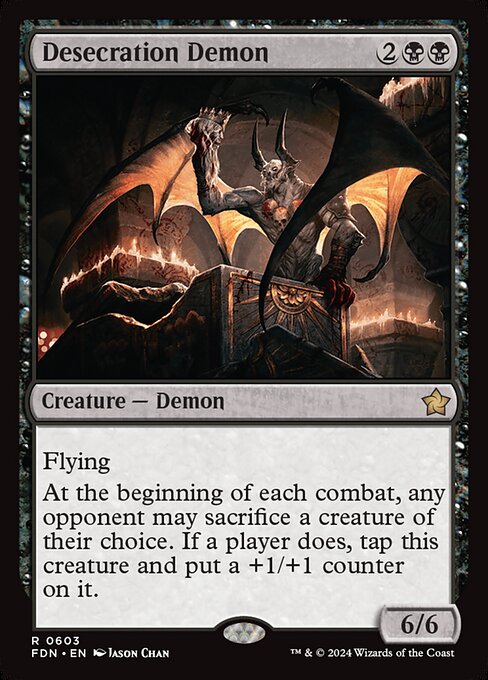
I tag eighteen creatures in this list as Stompy targets. They share one trait: far more stats than their mana cost should allow, held back by text that Abigale erases. Rotting Regisaur is a 7/6 for three that normally makes you discard every upkeep. Phyrexian Soulgorger is an 8/8 for three that eats a creature each turn through cumulative upkeep. Lupine Prototype is a 5/5 for two that can't attack or block while you have cards in hand. Desecration Demon is a 6/6 flier that opponents can tap down by feeding it a creature. Strip any of them and you have a flying, first-striking, lifelinking wall of stats for two or three mana.
The Core Loop: Strip, Flicker, Repeat
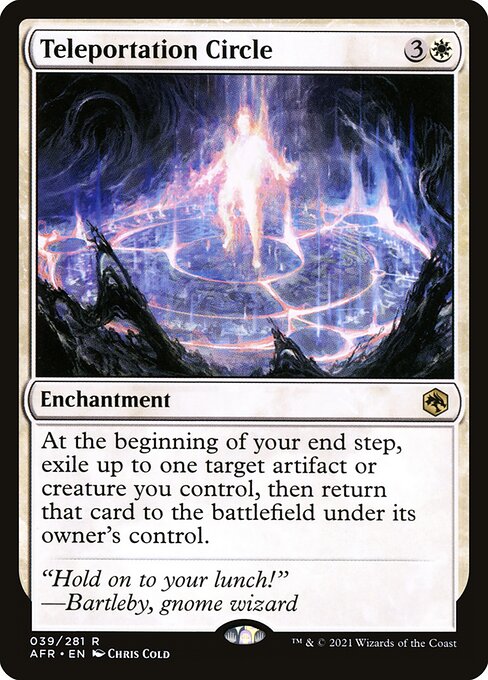
Abigale only triggers once per entry, so the engine is getting her to enter more than once. The flicker package is Ephemerate, Cloudshift, Teleportation Circle, and Conjurer's Closet, and Panharmonicon doubles the trigger so a single cast handles two creatures. That's the real payoff: one Abigale entry with Panharmonicon out can turn off an opposing commander and unlock a Regisaur in the same stack.
She also comes back from the graveyard cheaply. Reanimate, Unearth, and Helping Hand all return her, and since she costs two, recasting from the command zone stays affordable even after a couple of deaths. Treat her as a spell you cast repeatedly, not a body you protect at all costs.
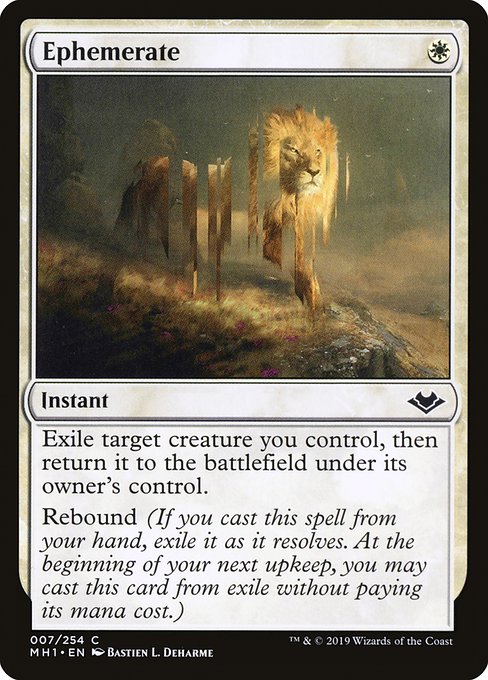

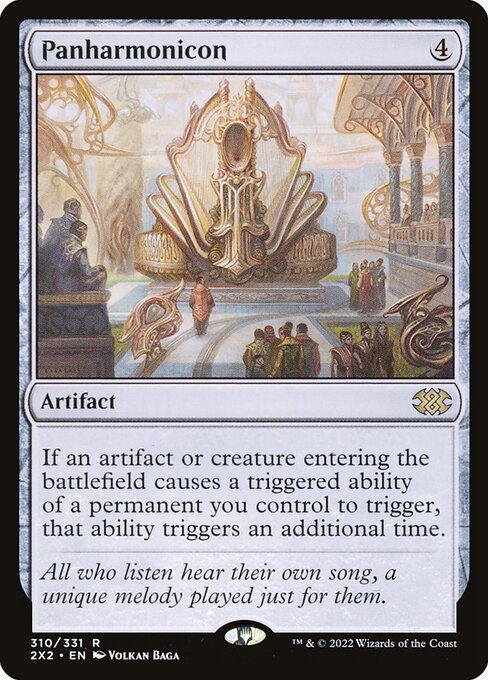
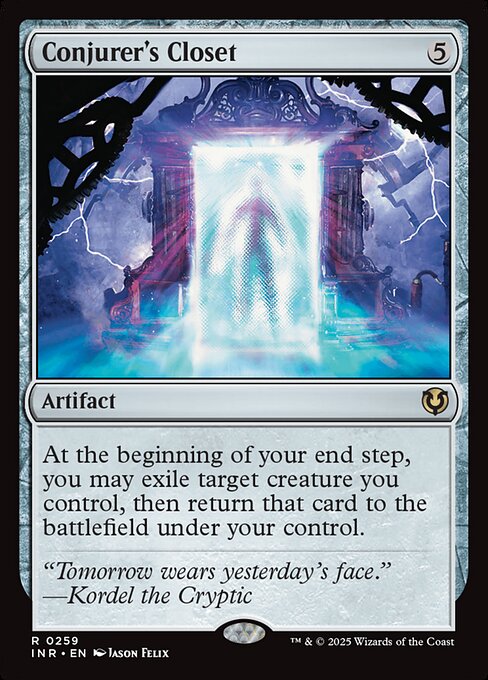
The other ETB cards ride the same engine. Gray Merchant of Asphodel drains harder every time it re-enters, and it's the closest thing this deck has to a reach finisher when combat stalls.
What to Do on Turns One Through Four
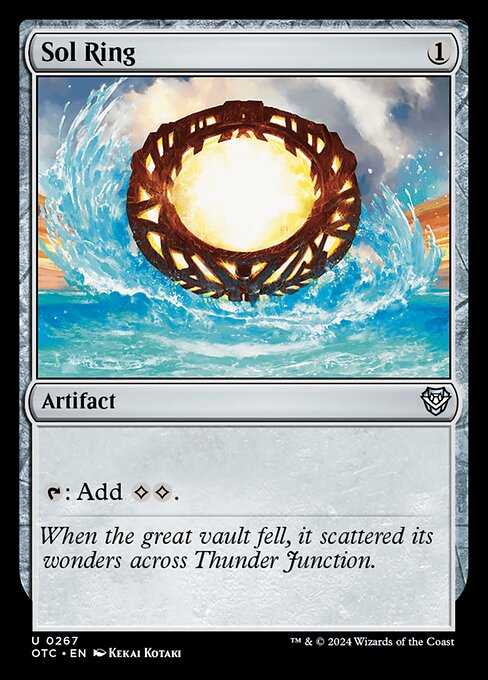
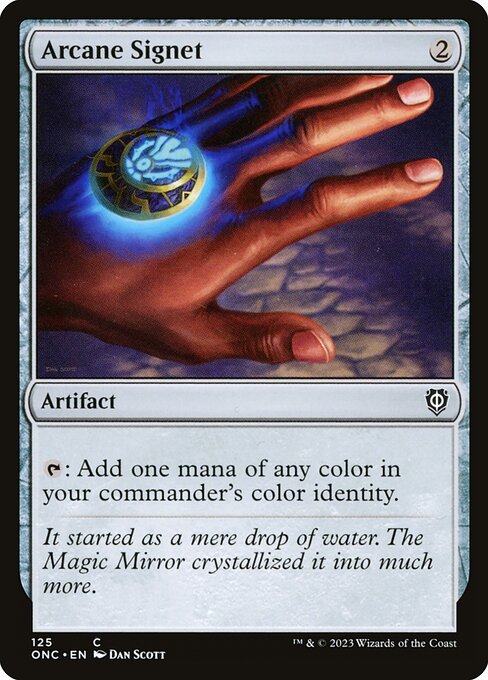
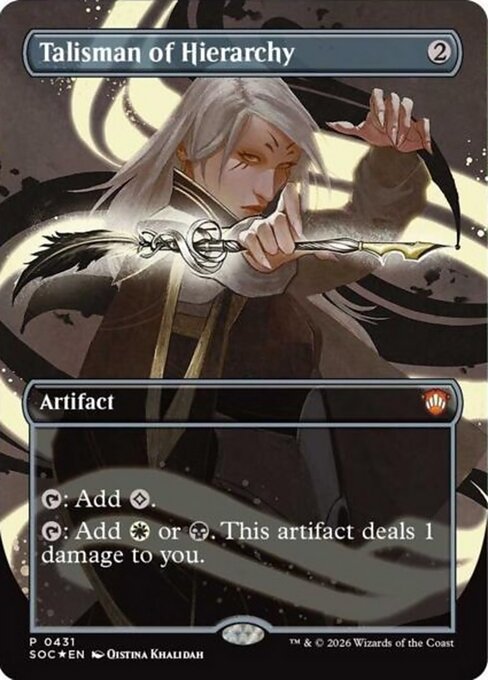
The measured curve tells you the plan: 36 lands, an average mana value of 2.88, and 22 cards at three mana. This deck wants to be developing every single turn, and it has the rocks to do it, with Sol Ring, Arcane Signet, Orzhov Signet, and Talisman of Hierarchy among eight ramp pieces.
- Turn one: land, a one-drop rock if you have it. Swords to Plowshares in hand is a reason to keep almost any seven.
- Turn two: either a second rock or a Stompy target like Lupine Prototype. Do not lead with Abigale here unless there's already a drawback creature on your side to fix. Her trigger with no target is wasted tempo.
- Turn three: this is the Regisaur and Soulgorger turn. Play the big body first, then cast Abigale onto it next turn.
- Turn four: Abigale, targeting whatever gives the best return. Early in the game that's usually your own creature. Once an opponent's commander shows up and starts generating value, it becomes the priority.
The sequencing point that took me a loss to learn: your drawback creature has to survive one full turn cycle before Abigale fixes it. A Soulgorger cast on turn three costs you a creature on turn four's upkeep unless Abigale has already resolved. Count that cost before you commit.


Three Traps That Cost Me Real Games
This deck is 0-3 in recorded play, so I have material here. Every one of these mistakes is documented.
Trap one: the lock is not a lock on the commander. Abigale's effect is permanent on the object she targets, but a commander that dies and is recast from the command zone is a brand-new object with all its abilities back. In my March game, Adam said Abigale completely kneecapped his commander, and it worked exactly as designed. He still didn't win the game, but neither did I. Turning off one commander doesn't beat the other two players, and it hands that commander three evasion counters if it gets pointed back at you. Use it as a tempo play, then follow it with removal, not as a win condition.
Trap two: don't get cute in combat. My own note from that same game is three words: "I should have blocked." A 7/6 with first strike and lifelink is an excellent blocker, and this deck's creatures are mostly bigger than what's attacking. If you have a keyword-loaded Stompy target back, block with it. The lifelink swings the race more than one extra attack.
Trap three: don't assume a stalled opponent is out. A week later I lost to a Raggadragga deck that never cast its commander and never found red mana, and I wrote the sour comment to prove it. Threat assessment in this deck is harder than usual because you've deliberately crippled one player's most visible threat. That player is still drawing cards. The pod's threat assessment guide covers the framework; the short version is that removal should go where the resources are, not where Abigale already went.
The Cards That Actually Close Games
The finishers are the stripped bodies themselves. Two or three fliers in the 6-to-8 power range with first strike and lifelink end games fast, and Duelist's Heritage on top of that is a two-turn clock for a single opponent. When combat is clogged, the deck resets it: Toxic Deluge and Farewell both wipe, and Massacre Wurm doubles as a Stompy target and a one-sided sweep against go-wide boards.

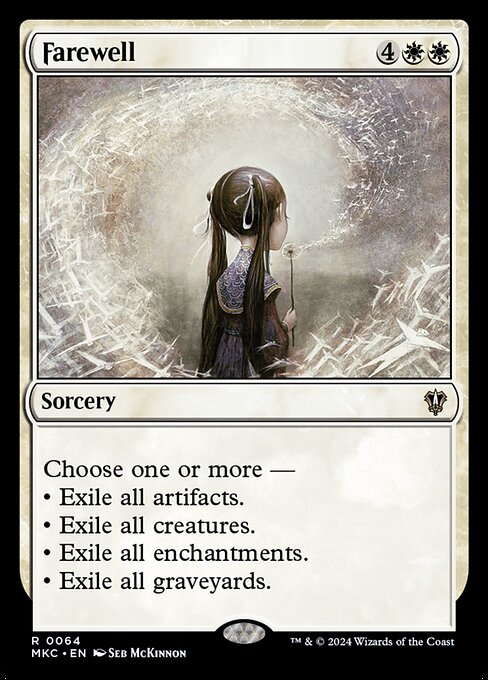


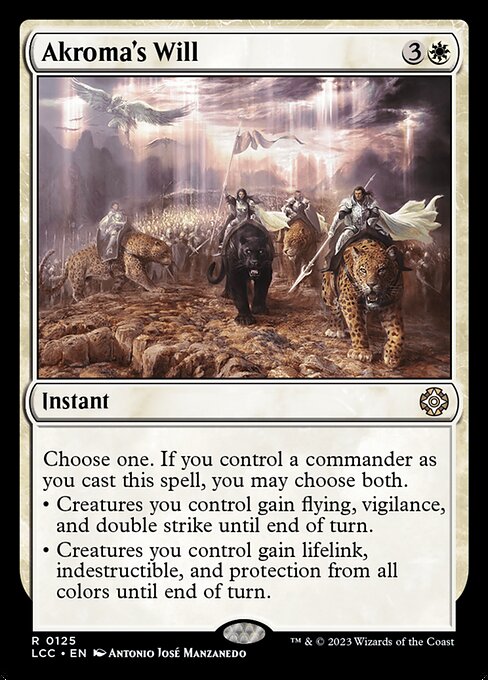
The protection suite is the part beginners underrate. Akroma's Will, Kaya's Ghostform, and Ghostway keep the board alive through a wrath, and in a four-player pod you should expect one. Holding two mana for Ghostform on your key stripped creature is usually better than casting one more three-drop. There's a longer breakdown of that trade-off in our post on protecting boards from wipes.
Is Hoo'se Turn is it? Actually Good?
Not yet, and I'm not going to pretend otherwise. Three games, three losses, an ELO of 971. The engine works; the pilot has been losing on blocks, on targets, and on treating a neutralized commander as a beaten player. All three are fixable, which is why I'm writing this instead of taking the deck apart.
If you want a sense of where a build like this sits before you sleeve it, run the list through the Commander Bracket Calculator and compare its interaction and ramp counts against your pod's usual decks. Then record the games. The record is the only honest review this deck is going to get, and right now it's telling me the truth.




Comments
Join the conversation.