

Eleven Spellslinger Commanders, Ranked by What One Spell Is Worth in EDH
A spellslinger deck is one whose commander pays you for casting instants and sorceries. The 99 fills up with cantrips (one-mana spells that replace themselves, like Opt), counterspells, burn and draw, and the commander turns each of them into something more. Every list of the best spellslinger commanders is secretly answering an exchange-rate question: what does one spell buy you once the commander is on the table? That is how this ranking is ordered, with one tiebreak: what is left when the commander dies. The commander is the engine, engines eat removal, and a rate that exists only while a 2/2 survives is worth less than one that keeps paying after a wrath (a board wipe).
We ran the same kind of test on tokens commanders and aristocrats commanders. Brackets come up only where a card's status is a fact. Game Changers are the cards on Wizards' list of high-impact staples, and any one of them keeps a deck out of brackets 1 and 2; a card is called one below only if it is on the list our Commander Bracket Calculator reads. No commander here gets a bracket of its own, because the 99 decides that. Each entry states its rate first, then the line of play that gets you there, then what breaks it.
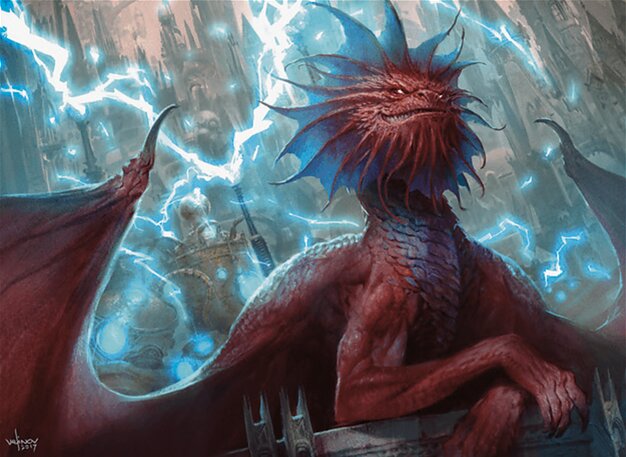
1. Niv-Mizzet, Parun
The rate: a card and 1 damage per instant or sorcery, and it doesn't have to be your spell.
Niv-Mizzet, Parun costs 
 for a 5/5 flyer that can't be countered. Whenever any player casts an instant or sorcery, you draw a card; whenever you draw a card, Niv deals 1 damage to any target. In a four-player pod that first clause is the whole argument. Three opponents casting their own removal, ramp and draw spells feed you a card each, every one of those cards is a ping, and you spent nothing.
The deck's real problem is keeping the dragon on the table. He is six mana with three pips (colored mana symbols) of each color, and a creature every wrath and every Swords to Plowshares is aimed at. Give him Swiftfoot Boots; Lightning Greaves grants shroud, which stops you targeting him too, and your best cards target him. Curiosity on Niv turns every ping into a draw and every draw into a ping. Each ping costs a card from your library, so the loop deals about as much damage as you have cards left: at a full four-player table that is one or two players dead, and you stop drawing before you deck yourself. Paste the list into the Combo Finder and it flags that pair, and Ophidian Eye.
Breaks when: a sorcery-speed wrath resolves the turn after you tapped out for him. Hold your counterspell for the wrath. If nothing needs countering by the last end step, spend the mana on an instant instead, which draws and pings like any other.
2. Kess, Dissident Mage
The rate: a second cast of your best instant or sorcery, once per turn, out of the graveyard.
Kess, Dissident Mage is 
 for a 3/4 flyer, and once during each of your turns you may cast an instant or sorcery from your graveyard; a spell cast that way is exiled instead of going back to the yard. Grixis (blue, black and red) has the format's best spells to cast twice. Demonic Tutor finds two cards over two turns, and it is a Game Changer, so one copy puts a list at bracket 3 or higher by the published rules. A wheel like Windfall (every player discards their hand and draws a new one) refills your hand twice.
The trap in the text is "during each of your turns". Kess never casts from the graveyard on an opponent's turn, so a Counterspell in the yard stops nothing they do on theirs. On your own turn it keeps its normal timing, so the same Counterspell can protect your big spell in response to their answer. Unless you are holding it for that, make the graveyard cast the last spell of your turn: cantrips from hand first, because each one grows the yard and might draw something better than anything in it.
Underworld Breach turns Kess from a value deck into a combo deck. For one turn, every nonland card in your graveyard can be cast again for its mana cost plus exiling three other cards from your graveyard, with no once-per-turn limit, and Breach is sacrificed at the end step. It is a Game Changer too, so Breach plus Demonic Tutor is already two of the three a bracket 3 list is allowed. Breaks when: graveyard exile like Bojuka Bog empties the yard, or she dies, since she is the only recursion most lists run.
3. Kalamax, the Stormsire
The rate: a copy of your first instant each turn, on every player's turn, and a +1/+1 counter for every copy.
Kalamax, the Stormsire ( , 4/4) copies your first instant spell each turn if he is tapped, and whenever you copy an instant spell he gets a +1/+1 counter. "Each turn" means every turn, not only yours, so in a four-player pod a tapped Kalamax copies up to four instants a round.
The line of play is to attack with him every turn, even when 4 damage changes nothing, because attacking is what taps him and he stays tapped through all three opponents' turns until your untap step. On your own turn, don't cast an instant before combat. The trigger looks at the whole turn: an instant cast while he is untapped uses up "first instant", and the one you cast after attacking gets no copy. Cast your instants in the second main phase, or tap him with Springleaf Drum in the first; tapping him as a cost to cast the spell counts.
Other copies feed him as well. Twincast or Reverberate on a spell Kalamax already copied is a third resolution of that spell and one more counter, and a Dig Through Time that resolves twice is four cards. Breaks when: attacking is suicidal and you have no other tap outlet, at which point he is a 4/4 with no ability that matters, and sorceries never did anything for him.
4. Kykar, Wind's Fury
The rate: a 1/1 flying Spirit per noncreature spell, or the moment you need it.
Kykar, Wind's Fury ( , 3/3 flyer) creates a 1/1 white Spirit with flying whenever you cast a noncreature spell, and you can sacrifice a Spirit for . Noncreature is wider than instant or sorcery: an Arcane Signet makes a Spirit. The sacrifice clause is what puts him seven places above Talrand. Every Spirit is a red ritual (a one-shot burst of mana) you banked earlier, so a cantrip is mana-neutral if your next spell needs red.
Spirits are flying chump blockers and a real clock, and Purphoros, God of the Forge turns each one into 2 damage to each opponent as it enters, so a storm turn (many spells in one turn) of ten spells is 20 damage to each opponent, which finishes a table the Spirits have already been attacking. Jeska's Will is the red card every Kykar deck wants: with a commander on the battlefield you get both modes, for each card in an opponent's hand plus the top three cards of your library to play this turn, and it is a Game Changer.
Breaks when: a wrath takes Kykar and the Spirits together. Cash the Spirits in response only if you can spend the red mana right then, because it empties as the step ends.
5. Mizzix of the Izmagnus
The rate: a permanent off every instant and sorcery you cast from then on.
Mizzix of the Izmagnus ( , 2/2) gives you an experience counter whenever you cast an instant or sorcery with mana value greater than the number of experience counters you have, and your instants and sorceries cost less per counter. Experience counters belong to the player. When Mizzix dies the counters stay, and the discount is back the moment you recast him. That is the most durable rate on this list.
Climb the ladder in order: with zero counters any one-mana spell earns the first, then you need a two-drop for the second and a three-drop for the third. Only generic mana is reduced, so Counterspell stays forever, while a four-counter Mizzix makes Dig Through Time cost before you exile a single card to delve (paying generic mana by exiling cards from your graveyard). X spells get the reduction on the whole generic part: Epic Experiment for X=8 with six counters costs .
Breaks when: the body dies, repeatedly. A 2/2 for four that defines the deck draws every removal spell, his discount doesn't apply to himself, and the commander tax (an extra each time you recast him) adds up.
6. Vivi Ornitier
The rate: a +1/+1 counter, 1 damage to each opponent, and more mana next turn.
Vivi Ornitier (, 0/3) gets a +1/+1 counter and deals 1 damage to each opponent whenever you cast a noncreature spell, and once each turn, during your turn only,  : add mana in any mix of and equal to his power. He is the only commander here that makes mana by himself, with nothing else on the table (Kykar's Spirits are gone once cashed, and Galazeth needs artifacts to tap), which is why a three-mana 0/3 is this high. Three cantrips on turn four make him a 3/6 that produces three mana on turn five without tapping a thing.
Order matters more with Vivi than with anyone else on this page. The mana ability is once per turn and X is his power at the moment you activate it, so tap your lands first, grow him with the cheap spells, then activate for the expensive one. We built a bracket 3 Vivi Ornitier deck around exactly that order of operations, with the full list and the mulligan guide.
Breaks when: he dies with the counters on him. He is cheap to recast, but the engine restarts at power 0, so the instant to hold up is a cheap protection spell for him.
7. Elsha of the Infinite
The rate: the next card of your library, which you can also cast, at instant speed.
Elsha of the Infinite (, 3/3 with prowess, so she gets +1/+1 for the turn whenever you cast a noncreature spell) lets you look at the top card of your library any time and cast noncreature spells from the top of it as though they had flash. The rate is one extra card per spell for as long as the top card is castable, so the deck is built to keep it that way: very few creatures, and the cheap sorting spells, Brainstorm, Ponder and Preordain, that move a land off the top.
The line every Elsha pilot should know is Sensei's Divining Top, which is legal in Commander. Tap Top to draw a card and put Top on top of your library; cast Top from the top for ; tap it again. Every spare is a card, at instant speed. The flash clause is the other half: at the last opponent's end step, cast a sorcery off the top, then the next card, and untap into your turn with a full hand.
Breaks when: a land or a creature sits on top with no sorting spell in hand (she casts only noncreature spells from there and never plays lands), and when she dies, because without her a Jeskai (blue, red and white) pile of cantrips has no payoff at all.
8. Galazeth Prismari
The rate: every artifact you control taps for a mana you can spend on an instant or sorcery, and your Treasures stop being one-shot.
Galazeth Prismari (, 3/4 flyer) enters with a Treasure, and artifacts you control gain " : Add one mana of any color. Spend this mana only to cast an instant or sorcery spell." A Treasure keeps its own sacrifice ability, but you no longer need it: tap it for Galazeth's mana instead and it stays on the table as a rock (an artifact that taps for mana) for your spells. Clues, Food and Blood tokens tap for spell mana too.
So build around the spells that leave artifacts behind. Big Score and Unexpected Windfall each discard a card, then draw two and make two Treasures, which under Galazeth is a four-mana rummage (discard one, draw two) that pays two mana back every round from then on. Storm-Kiln Artist makes a Treasure for each instant or sorcery you cast or copy, so every spell is a rock.
Breaks when: Galazeth leaves. The Treasures are still Treasures, so the mana survives and only the engine goes, but the restricted mana only ever casts instants and sorceries, so don't plan a turn around spending it on a rock or a creature.
9. Veyran, Voice of Duality
The rate: zero on her own; double on every trigger your permanents get from casting or copying instants and sorceries.
Veyran, Voice of Duality (, 2/2) has magecraft (an ability that triggers whenever you cast or copy an instant or sorcery) that gives her +1/+1 until end of turn, and she makes any triggered ability of a permanent you control that fires because you cast or copied an instant or sorcery trigger an additional time. That includes her own magecraft, so each spell is +2/+2. With Archmage Emeritus every spell draws two cards; with Storm-Kiln Artist every spell is two Treasures; with Guttersnipe every spell is 4 damage to each opponent.
She is ninth because the engine lives in the 99. Veyran on an empty board is a 2/2 that gets bigger when you cast things, and a wrath costs a Veyran deck its commander and its payoffs together, while a Niv or Kess deck, whose 99 is mostly spells, loses only the commander. Line of play: Veyran on three, a payoff on four, and hold the cantrips on turns two and three, because every one you cast before a payoff is a trigger you never doubled.
Breaks when: the payoffs die. She also copies nothing herself. Casting Twincast triggers every payoff twice, and its copy triggers the magecraft ones (Archmage Emeritus, Storm-Kiln Artist, Veyran herself) twice more; Guttersnipe counts casts only.
10. Feather, the Redeemed
The rate: any instant or sorcery that targets your own creature comes back to your hand at the next end step.
Feather, the Redeemed (, 3/4 flyer) exiles an instant or sorcery that targets a creature you control as it resolves, instead of putting it in the graveyard, and returns it to your hand at the beginning of the next end step. The cards this wants are the one-mana cantrips nobody plays anywhere else. Defiant Strike becomes : draw a card, every turn, forever. Reckless Rage deals 4 to their creature and 2 to yours, and because it targets your creature it comes back too, so it is repeatable removal for ; Feather's four toughness takes the 2.
Feather is the cheapest engine here to build; the key cards are commons and uncommons. The rules detail that bites: a spell that is countered, or whose only target was removed in response, goes to the graveyard and does not return. When an opponent has removal or bounce open, aim the cantrip at a creature other than Feather: if they answer her in response, the spell still resolves and still comes back. Zada, Hedron Grinder in the 99 copies a spell that targets only Zada once for each other creature you control, and because the original targeted a creature you control, it still returns.
Breaks when: you have no creature to target. She is the main target, but a Feather deck with no second body is a deck where one removal spell turns off every cantrip in hand.
11. Talrand, Sky Summoner
The rate: a 2/2 flying Drake per instant or sorcery. That is all of it, and that is the appeal.
Talrand, Sky Summoner (, 2/2) is mono-blue, so there is no land base to buy, and the deck is the format's cheapest cards: cantrips and counterspells. The exchange rate is the plainest on this page and it survives his death in a way most of the list doesn't: the Drakes stay when Talrand goes, and six spells across two turns is 12 power in the air.
Cast the instants on opponents' end steps so the Drakes are untapped and ready to attack on your turn, and let the counterspells be the removal: countering their bomb and getting a 2/2 flyer for it is the trade this deck exists to make. Murmuring Mystic in the 99 adds a 1/1 Bird per spell on top. The ceiling is low, because the commander never draws a card or discounts a spell himself, which is why he is last among the eleven, and why he is the one to build first if you have never piloted a spells deck.
Left off, and why
- Narset, Enlightened Master. On paper the best rate on the page: whenever she attacks, exile the top four cards of your library and cast the noncreature spells among them for free, and those spells are cast, so prowess and magecraft trigger off them. She is left off because the rate is paid for attacking, not for casting. The 99 that makes her work is extra turns and extra combats so she can swing again, and a cantrip in the exiled four is a wasted hit, which makes a Narset deck an extra-turns deck in a spellslinger's robe. Hexproof keeps her off the removal spells, and a six-mana recast with the tax growing is still what a wrath costs you.
- Melek, Izzet Paragon. You play with the top card of your library revealed, you may cast instants and sorceries from the top, and a spell cast from there is copied. Elsha of the Infinite does the same job one mana cheaper, at flash speed and for every noncreature spell, and she is seventh. Melek's copy applies only to spells cast from the library, so the cards in your hand get nothing, and the revealed top card tells the table what you are about to do.
- Zada, Hedron Grinder. An instant or sorcery that targets only Zada is copied once for each other creature you control that it could target, so a Expedite with nine other creatures out is ten cards. The number that moves that rate is creatures, not spells: a Zada deck is thirty cheap bodies and a handful of one-mana cantrips that target, a go-wide creature deck with a spells engine bolted on, and with Zada gone every cantrip is one for one. He is on our most fun commanders for casual playgroups list, which is the right one for him.
- Y'shtola, Night's Blessed. Her trigger wants noncreature spells with mana value 3 or greater: each one deals 2 damage to each opponent and gains you 2 life, and at each end step you draw a card if a player lost 4 or more life that turn. The mana value floor rules out the cantrips a spells deck runs on, and what fills her 99 instead is three-mana-plus removal, enchantments and wraths, so she is a drain-and-control commander that happens to count spells. We covered her properly in the Y'shtola deep dive.
- Krark, the Thumbless. Every instant or sorcery you cast flips a coin: win and it is copied, lose and the spell goes back to your hand before it resolves, so you keep the card and lose the mana. That averages out to a good deal over a game and a bad one on the turn you need a Counterspell to actually resolve. The version that is genuinely strong pairs him with Sakashima of a Thousand Faces entering as a copy of him so that every spell flips twice, and that is two commanders and a different ranking.
- Baral, Chief of Compliance. Instants and sorceries cost less, and whenever a spell or ability you control counters a spell you may draw a card and discard a card. The discount is Mizzix's rate after a single experience counter, except it lives on a two-mana body and leaves when he does, and the loot pays you for stopping other people's spells rather than for casting yours. That is a mono-blue control commander. Talrand gets the mono-blue slot here because his Drakes are still there after the wrath.
- Jhoira, Weatherlight Captain. She draws a card whenever you cast a historic spell: an artifact, a legendary or a Saga. She ends up on spellslinger lists because the deck storms off, but the spells that pay her are artifacts, so a cantrip does nothing and a Sol Ring draws a card. That is an artifact commanders conversation.
The Game Changers in a spells deck
Most of the cards that move a spellslinger list up a bracket are cards this archetype wants anyway. On the Game Changer list the calculator reads: Rhystic Study, Mystical Tutor, Force of Will, Fierce Guardianship, Cyclonic Rift, Jeska's Will, Underworld Breach, Demonic Tutor, Narset, Parter of Veils and Thassa's Oracle. One of them makes a deck at least bracket 3 by the published rules; a fourth makes it bracket 4. Not on the list, whatever their reputations: Mana Drain, Sensei's Divining Top, Expropriate and Deflecting Swat.
So the honest answer to "which bracket does my Kess deck fit" is to paste the 99 into the Commander Bracket Calculator and read the Game Changer count and the two-card combos it finds; the brackets themselves are explained in our bracket guide. Then record a few games with the deck. Its ELO after ten games is the number that says whether the rate actually cashes.


Comments
Join the conversation.