

Isshin, Two Heavens as One Commander Deck: Attack With Everything, Trigger It Twice
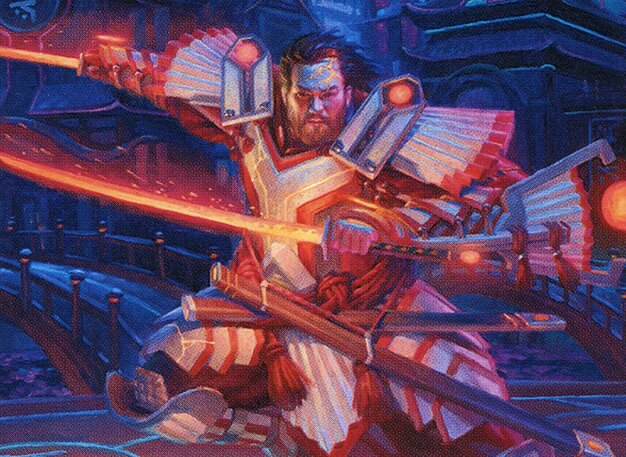
Isshin, Two Heavens as One costs 

 for a 3/4 with one line of rules text, and that line is the whole deck. This Isshin, Two Heavens as One commander deck is a bracket 3 build in Mardu (red, white and black) that attacks with everything every turn, so every attack trigger in the list, from Hero of Bladehold's Soldiers to Hellrider's damage, fires twice. We started from the average Isshin list, found it trying to run two plans that cannot both be on, and made eleven swaps to commit to one of them.
Brackets are the official 1 to 5 power tiers for Commander decks, and Game Changers are the cards on the official list that push a deck up those tiers; a bracket 3 deck may run up to three of them. This one audits at bracket 3 with a single Game Changer, Jeska's Will. The list and the swaps are below, and so is the part that decides whether the extra combats are real: how to keep your team untapped through them.
What the text actually says
Isshin's current Oracle text (the official, up-to-date rules wording) reads: "If a creature attacking causes a triggered ability of a permanent you control to trigger, that ability triggers an additional time." A triggered ability is anything a card phrases as "when," "whenever" or "at." Read the wording slowly, because it is broader than most players assume. The ability does not have to belong to the attacking creature, and the attacking creature does not even have to be yours. The ability can sit on an enchantment, an artifact or a creature that stayed home. The only requirement is that a creature attacking is what set it off.
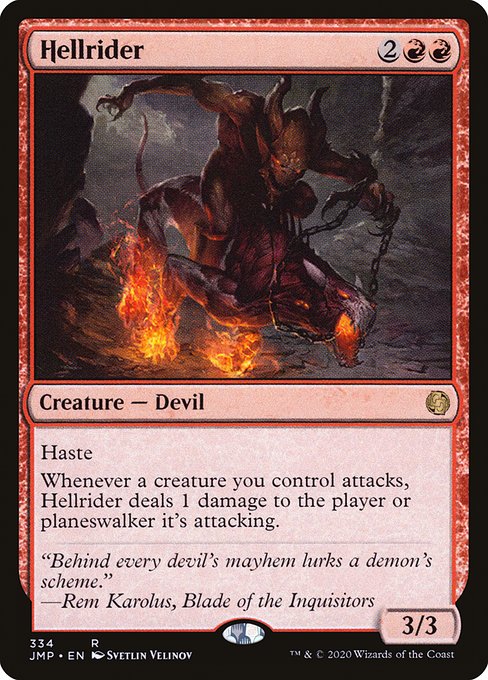
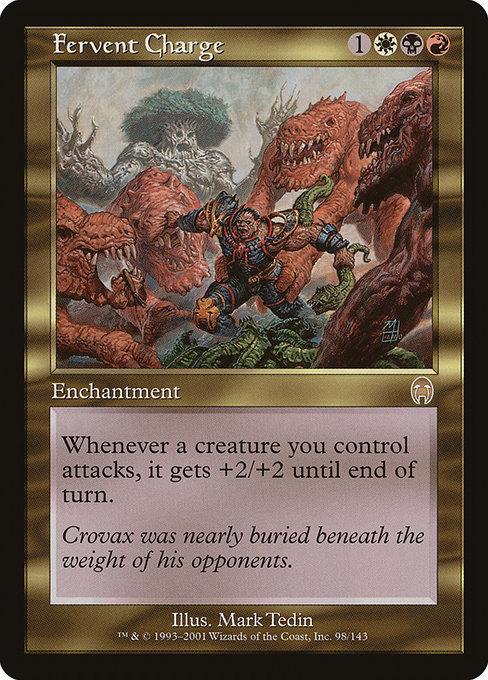
That is why Hellrider is in the deck even though it never has to attack. Its "whenever a creature you control attacks" trigger belongs to a permanent you control and is caused by a creature attacking, so with Isshin out Hellrider deals 2 damage to the defending player for every attacker you declare. Ten declared attackers is 20 damage spread across the table before blockers are chosen. Fervent Charge works the same way: its +2/+2 becomes +4/+4 on every attacker. Within Range makes each opponent lose life equal to the number of creatures attacking them, twice.
Two things the text does not cover. Combat damage triggers are not attack triggers, so Professional Face-Breaker makes one Treasure (a token you sacrifice for one mana of any color) for each player your creatures hit in a combat damage step, and Isshin leaves that alone. And tokens that enter the battlefield tapped and attacking were never declared as attackers, so the Soldiers from Hero of Bladehold do not trigger Hellrider or Brutal Hordechief. They do count for Within Range, because that card counts attackers as it resolves. Stack your triggers so the token makers resolve first and Within Range resolves after them.
Windcrag Siege on its Mardu mode is Isshin's sentence printed on a  enchantment. With both out, every attack trigger happens three times. Krenko, Tin Street Kingpin attacking into that puts on a counter and makes two Goblins, then three, then four: nine Goblins from a 1/2.



Two plans, one deck: why the average list stalls
The average Isshin list is a wide token deck with a Neon Dynasty Samurai package stapled on. Adeline, Resplendent Cathar, Hero of Bladehold, Krenko, Tin Street Kingpin, Anim Pakal, Thousandth Moon, Mardu Ascendancy and both Zurgos want you to attack with as many bodies as you have. Raiyuu, Storm's Edge, Heiko Yamazaki, the General and Selfless Samurai trigger when a Samurai or Warrior you control "attacks alone." Those two conditions cannot both be true in the same combat.
In practice the Samurai cards sit on the table doing nothing, because the turn you would attack alone with Isshin is a turn you are already losing. We cut all three. Raiyuu's extra combat is the only real loss, and the replacements cover it several times over. If the wide half is what you like, our ranking of the best tokens commanders covers how each of them rebuilds after a wrath (a spell that destroys every creature), which is the question this deck has to answer too.
Eleven swaps and the reason for each
Every card below changed from the average list. The cut card is named first.
- Cut Heiko Yamazaki, the General, add Hellrider. Heiko lets you cast an artifact from your graveyard when a Samurai or Warrior attacks alone. Our artifacts are mostly mana rocks and we never attack alone. Hellrider is covered above: 2 damage for every declared attacker, before blocks.
- Cut Selfless Samurai, add Combat Celebrant. Celebrant may be exerted as it attacks (an exerted creature skips your next untap step), and when you do, your other creatures untap and there is an additional combat phase after this one. That "when you do" is a reflexive trigger, an ability that fires off something you just chose to do, and Isshin doubles it: two extra combats from a
 creature. Both untaps happen in the first combat, though, which is why this deck needs the card in swap six.
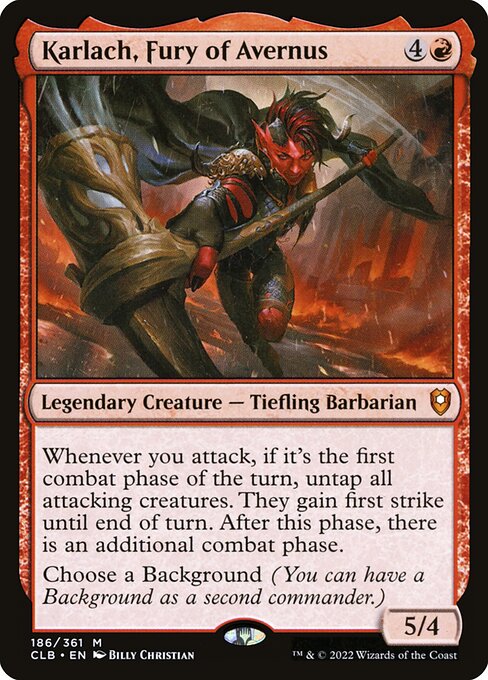
- Cut Raiyuu, Storm's Edge, add Karlach, Fury of Avernus. Raiyuu's extra combat needs a Samurai or Warrior attacking alone. Karlach's needs you to attack, full stop: untap all attacking creatures, give them first strike, add a combat. Both of Isshin's instances of the trigger check for the first combat phase, both see it, and both resolve. Karlach alone is two extra combats, and they stack with Celebrant's.
- Cut Read the Bones, add Laelia, the Blade Reforged. Read the Bones is for scry 2, draw 2, lose 2 life. Laelia is for a hasty attacker that exiles the top card of your library to play this turn, twice per attack with Isshin, and she gets a +1/+1 counter every time cards leave your library for exile. Etali, Primal Storm, Tectonic Giant and Professional Face-Breaker all grow her.
- Cut Farewell, add Deflecting Swat. Our board is how we win. A six-mana sorcery that exiles every creature mostly resets the game for the players we are racing. Blasphemous Act stays as the emergency button because it costs after a big combat. Swat is free while Isshin is out and sends the Swords to Plowshares aimed at him at somebody else's creature instead.
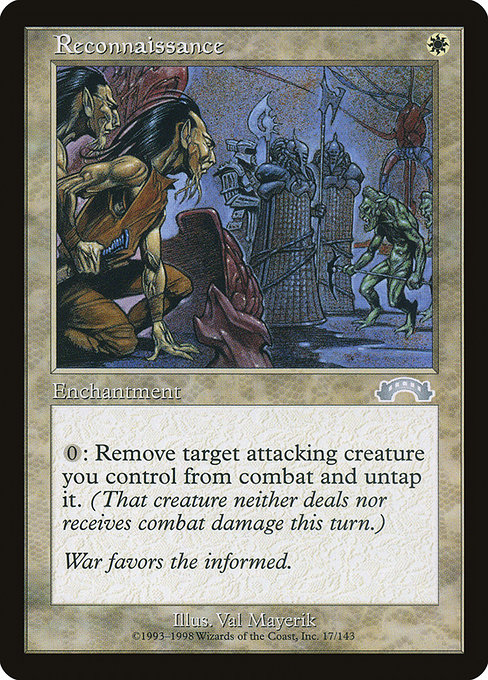
- Cut Evolving Wilds, add Reconnaissance. A tapped land is a real cost in a deck whose first three turns want to be rock, Isshin, four-drop, and the average list runs 38 lands, more than a deck with this many rocks needs. Reconnaissance costs and reads: "
 : Remove target attacking creature you control from combat and untap it." Attack with everything, collect every trigger, then pull back anything that would die to its blocker. It is also what untaps the team between extra combats. More on it below, because it is the best card in the deck that average lists leave out.
- Cut Fellwar Stone, add Professional Face-Breaker. Eight rocks on top of 38 lands was too much mana and too little to spend it on. Face-Breaker is a 2/3 with menace (it can't be blocked except by two or more creatures) that makes a Treasure for each player your creatures connect with, once per combat damage step, and sacrifices a Treasure to exile the top card of your library to play this turn. On a Celebrant turn that is at least three Treasures, each one worth a mana or a card.
- Cut All-Out Assault, add Iroas, God of Victory. All-Out Assault gives the team +1/+1 and deathtouch for , and if you cast it in a main phase you get one additional combat and main phase that turn, with your creatures untapping when you next attack. That extra combat happens once. Deathtouch on 1/1 tokens means they trade with blockers. Iroas costs , prevents all damage that would be dealt to your attacking creatures and gives them menace, in every combat for the rest of the game, so the tokens do not die at all and blocking any one of them costs two bodies. It is indestructible, and until your devotion to red and white reaches seven (devotion is the count of those mana symbols among the permanents you control) it is not a creature, so creature removal cannot touch it.
- Cut Despark, add Anguished Unmaking. Despark only exiles a permanent with mana value 4 or greater. The cards that stop an attack deck cold are cheaper than that: Ghostly Prison and Propaganda are three mana, Blind Obedience is two. Unmaking exiles any nonland permanent for 3 life, and Brutal Hordechief and Arabella, Abandoned Doll pay the life back on the next attack.
- Cut Night's Whisper, add Breena, the Demagogue. Breena is a flier. Whenever a player attacks one of your opponents who has more life than another of your opponents, the attacking player draws a card and you put two +1/+1 counters on a creature you control. When you attack, Isshin doubles it: two cards and four counters. Isshin cares about a creature attacking, not one of yours, so when two opponents fight each other the trigger doubles too: the attacker draws two cards and you still put four counters on your team. Players notice, and attacks start going anywhere but at you.
- Cut Terramorphic Expanse, add Jeska's Will. The second tapped fetch (a land you sacrifice to find a basic, which enters tapped) goes, leaving 36 lands plus seven rocks, Sword of the Animist, Curse of Opulence and two Treasure makers. Jeska's Will with a commander in play does both modes: add for each card in an opponent's hand, and exile the top three cards of your library to play this turn. On turn four that is routinely Etali, Primal Storm or Aurelia, the Warleader two turns early. It is the deck's one Game Changer.




A turn with everything out
Picture turn seven. You have Isshin, Hero of Bladehold, Krenko, Tin Street Kingpin, Anim Pakal, Thousandth Moon, Thundering Raiju, Adriana, Captain of the Guard, Within Range, Reconnaissance and Rising of the Day on the table, and you just cast Combat Celebrant, which has haste from Rising of the Day. Attack all three opponents rather than piling onto one. Adriana gives your creatures melee, which means each attacker gets +1/+1 for each opponent you attacked this combat, and Isshin doubles every one of those melee triggers. Three opponents attacked is +6/+6 on every creature you declared as an attacker. Tokens that enter attacking get none of it, for the same reason they skip Hellrider.
Every attack trigger goes on the stack at once, and because they are all yours, you pick the order they resolve in. Pumps before Krenko, always: his Goblin count is his power at the moment his trigger resolves. So resolve Hero's two triggers first (four Soldiers that enter attacking) and Anim Pakal's two (one Gnome, then two, also attacking), then both battle cry triggers (each other attacking creature gets +1/+0, so +2/+0 in total, and the new tokens get it too), then the melee triggers. Krenko started as a 2/2 under Rising of the Day and is now a 10/8. His first trigger puts a counter on him and makes eleven Goblins, his second makes twelve: 23 Goblins, not attacking, but hasty and ready for the next combat. Now let the two Within Range triggers resolve, counting the Soldiers and Gnomes. Then Thundering Raiju, whose damage equals the number of your other modified creatures (modified means carrying a counter, an Equipment or an Aura), so it wants Krenko and Anim Pakal to have their counters already. Last, Celebrant's two exert triggers: both untaps happen now, and two extra combat phases are queued.
Here is the catch that costs new Isshin players a win. Celebrant's second untap does nothing, because the team was already untapped by the first. So in the second combat everything attacks again and gets tapped again, and without help almost nothing is untapped for the third (the hasty Goblins Krenko made in the second combat are the exception). The help is Reconnaissance. In the end of combat step of the second combat, after damage has been dealt, activate it for once per creature: each attacker leaves combat and untaps. The third combat is then a full attack, and you do the same thing at the end of it so your whole team can block. Tori D'Avenant, Fury Rider untaps your other white attackers the same way, and Hero of Bladehold makes four more Soldiers in every combat she attacks in.
Karlach, Fury of Avernus stacks with all of this. Both her triggers resolve in the first combat too, so Celebrant plus Karlach is four extra combats with the same Reconnaissance routine between them. Aurelia, the Warleader is the one to hold back: keep her home in the first combat and attack with her in the second, so her "first time each turn" trigger untaps your whole team for you and adds two combats of its own. Caesar, Legion's Emperor triggers twice every combat, so he gets two sacrifices and two sets of modes each time; feed him Soldier tokens, and on a wide board take the damage mode, which hits one opponent for the number of creature tokens you control. Zurgo Stormrender draws you a card each time one of those attacking tokens leaves the battlefield.
Sun Titan is quieter but just as good here. Its attack trigger fires twice, so a single swing brings back Reconnaissance and a dead Krenko, or Mardu Ascendancy and Curse of Opulence, in the same combat.
Keeping Isshin alive
Isshin is the card every opponent is holding an answer for. Lightning Greaves gives him shroud and haste for an equip cost of , and Swiftfoot Boots do the same job with hexproof for . Shroud stops your own spells and abilities from targeting him as well, while hexproof only stops your opponents', which matters when you want to put a Raiju counter on him. Deflecting Swat redirects the removal spell itself. Boros Charm and Unbreakable Formation make the team indestructible, which turns our own Blasphemous Act into a one-sided wipe for plus the protection spell after a big combat.
The sequencing call that matters most: do not run Isshin into three open mana on turn three if the white or blue player has been holding cards. Lead with a three-drop engine like Krenko or Captain Lannery Storm and let Isshin come down a turn later with Greaves already on the table. A turn-four Isshin that lives is worth far more than a turn-three Isshin that eats the Swords.
The decklist
The full list is below: 36 lands, 7 mana rocks, 3 pieces of Equipment, 8 enchantments, 11 removal and protection spells, Jeska's Will, and 32 creatures plus Iroas. Nearly every creature does something when it attacks.
Isshin, Two Heavens as One Bracket 3 (EDH)
- 1 Arcane Signet
- 1 Boros Signet
- 1 Orzhov Signet
- 1 Rakdos Signet
- 1 Sol Ring
- 1 Talisman of Conviction
- 1 Talisman of Hierarchy
- 1 Lightning Greaves
- 1 Swiftfoot Boots
- 8 Mountain
- 7 Plains
- 6 Swamp
- 1 Bone-Cairn Butcher
- 1 Hellrider
- 1 Ainok Strike Leader
- 1 Hammers of Moradin
- 1 Tectonic Giant
- 1 Sun Titan
- 1 Hero of Bladehold
- 1 Skyknight Vanguard
- 1 Audacious Thief
- 1 Hanweir Garrison
- 1 Combat Celebrant
- 1 Mardu Siegebreaker
- 1 Professional Face-Breaker
- 1 Brutal Hordechief
- 1 Thundering Raiju
- 1 Fervent Charge
- 1 Firebender Ascension
- 1 Mardu Ascendancy
- 1 Reconnaissance
- 1 Rising of the Day
- 1 Windcrag Siege
- 1 Within Range
- 1 Curse of Opulence
- 1 Anguished Unmaking
- 1 Boros Charm
- 1 Chaos Warp
- 1 Crackling Doom
- 1 Deflecting Swat
- 1 Path to Exile
- 1 Swords to Plowshares
- 1 Terminate
- 1 Unbreakable Formation
- 1 Battlefield Forge
- 1 Caves of Koilos
- 1 Clifftop Retreat
- 1 Command Tower
- 1 Dragonskull Summit
- 1 Exotic Orchard
- 1 Isolated Chapel
- 1 Nomad Outpost
- 1 Path of Ancestry
- 1 Rogue's Passage
- 1 Shattered Landscape
- 1 Temple of Silence
- 1 Temple of Triumph
- 1 Wind-Scarred Crag
- 1 Smoldering Marsh
- 1 Sword of the Animist
- 1 Arabella, Abandoned Doll
- 1 Aurelia, the Law Above
- 1 Aurelia, the Warleader
- 1 Breena, the Demagogue
- 1 Etali, Primal Storm
- 1 Krenko, Tin Street Kingpin
- 1 Adeline, Resplendent Cathar
- 1 Adriana, Captain of the Guard
- 1 Tori D'Avenant, Fury Rider
- 1 Captain Lannery Storm
- 1 Anim Pakal, Thousandth Moon
- 1 Caesar, Legion's Emperor
- 1 Alesha, Who Laughs at Fate
- 1 Zurgo Stormrender
- 1 Zurgo, Thunder's Decree
- 1 Laelia, the Blade Reforged
- 1 Karlach, Fury of Avernus
- 1 Iroas, God of Victory
- 1 Blasphemous Act
- 1 Jeska's Will
- 1 Ruinous Ultimatum
- 1 Isshin, Two Heavens as One
The deck page is Isshin, Two Heavens as One Bracket 3, and the bracket audit comes back at bracket 3: one Game Changer (Jeska's Will), no extra-turn spells, no mass land denial and no two-card infinite combos. If you change the list, run it back through the Commander Bracket Calculator. Cutting Jeska's Will drops the audit to bracket 2 under the published rules, even though the deck plays exactly the same way.
Mulligans, traps and the Reconnaissance trick
- Keep seven-card hands with two or three lands and either a rock or a two-drop. Your first mulligan in a four-player pod is free (you draw seven again without putting a card on the bottom), so ship any hand with no play before turn three, however pretty the five-drops are.
- Mobilize tokens (the tapped, attacking 1/1 Warriors from Bone-Cairn Butcher, Zurgo Stormrender and Zurgo, Thunder's Decree) are sacrificed at the next end step. While Zurgo, Thunder's Decree is on the battlefield your Warrior tokens cannot be sacrificed during your end step, so they all stay. With Isshin doubling mobilize, that is four permanent Warriors per attack from Butcher alone.
- Mardu Siegebreaker exiles one of your other creatures when it enters and, whenever it attacks, you create a tapped copy of that card attacking each opponent, sacrificed at your next end step. Isshin doubles that trigger, so you get two copies per opponent, six in all. The copies enter attacking, so their own attack triggers do not fire in the combat they arrive in: copying Hero of Bladehold gets you six 3/4 bodies and no Soldiers that combat. On a Celebrant turn with Rising of the Day out, let Celebrant's untap resolve after the copies arrive and they attack again in the second combat, six Heroes making 24 Soldiers. On a normal turn, copy Sun Titan instead, whose enters-the-battlefield trigger returns a permanent with mana value 3 or less from your graveyard, up to six times. Or copy Hellrider on a Celebrant turn: the real one is in exile, but every later combat has six Hellrider copies each dealing 2 per declared attacker.
- Reconnaissance, use one: after blockers are declared, remove any attacker that is about to die from combat. Its attack trigger already happened, so you lose only that creature's damage.
- Reconnaissance, use two: in the end of combat step, after damage has been dealt, remove and untap every attacker one at a time. Between extra combats this is what makes the next attack a full one, and after the last combat it means your whole team is untapped on your opponents' turns. This is the difference between an aggro deck that gets punished for swinging and one that never has to hold anything back.
If you build this, register it to your league on Nerd Leagues and record the games. Deck ELO will show inside a month whether the list is winning, and if it is not, Karlach is the first card to look at. Here is how deck registration works.


Comments
Join the conversation.