

Niv-Mizzet, Ghost Counsel Commander Deck: Trade Every Point of Life for a Card

This Niv-Mizzet, Ghost Counsel commander deck is an Orzhov (white and black) bracket 3 build with one rule behind every card choice: life is the currency and the commander is the exchange. Every point of life you gain can be traded for a card, so the deck gains life in small, frequent amounts and spends it on cards faster than three opponents can take it back.
Niv-Mizzet, Ghost Counsel is the Orzhov legend from the Reality Fracture Commander release, and he placed third in our ranking of the new Reality Fracture commanders. That post covers where he stands against the set's other legends. This one is the deck.
Two abilities, one exchange rate
He costs 

 and flies. Whenever you gain life, you may pay that much life, and if you do, you draw that many cards. The payment is all or nothing: gain 3 and you either pay 3 for three cards or keep the life. His tap ability makes each opponent lose 1 life and you gain 1, which at a four-player table is three points of drain and a card for no mana, every turn he untaps.
Two rules details shape the list. Each lifegain event is its own trigger, so ten separate one-point gains are ten separate decisions, while one seven-point gain is a single yes or no for seven cards. The deck leans on the first kind for steady draws and saves the second kind for the finish. And because the life arrives before the trigger resolves, you can pay unless your total drops below the amount gained between the gain and the trigger resolving: an opponent drains you in response, or a lifelink blocker connects in the same combat damage step that unblocked attackers hit you. That is the one time you cannot pay; choosing not to is a separate decision, covered below.
The decklist
Niv-Mizzet, Ghost Counsel Bracket 3 (EDH)
- 1 Arcane Signet
- 1 Commander's Sphere
- 1 Fellwar Stone
- 1 Orzhov Signet
- 1 Sol Ring
- 1 Staff of the Storyteller
- 1 Talisman of Hierarchy
- 1 Swiftfoot Boots
- 16 Plains
- 16 Swamp
- 1 Archangel of Thune
- 1 Stirring Hopesinger
- 1 Dauthi Voidwalker
- 1 Tragedy Feaster
- 1 Purging Stormbrood // Absorb Essence
- 1 Emptiness
- 1 Metamorphosis Fanatic
- 1 Soul Warden
- 1 Zulaport Cutthroat
- 1 Leech Collector // Bloodletting
- 1 Attended Healer
- 1 Suture Priest
- 1 Crypt Ghast
- 1 Qarsi Revenant
- 1 Marauding Blight-Priest
- 1 Cliffhaven Vampire
- 1 Authority of the Consuls
- 1 Blind Obedience
- 1 Corroding Dragonstorm
- 1 Leyline of Hope
- 1 Life Insurance
- 1 Monologue Tax
- 1 Nowhere to Run
- 1 Skrelv's Hive
- 1 Sheltered by Ghosts
- 1 Funeral Room // Awakening Hall
- 1 Unholy Annex // Ritual Chamber
- 1 Enduring Tenacity
- 1 Chant of Vitu-Ghazi
- 1 Despark
- 1 Flawless Maneuver
- 1 Grand Crescendo
- 1 Inkshield
- 1 Live or Die
- 1 Secure the Wastes
- 1 Swords to Plowshares
- 1 Utter End
- 1 Withering Torment
- 1 Caves of Koilos
- 1 Command Tower
- 1 Fetid Heath
- 1 Shattered Sanctum
- 1 Bolas's Citadel
- 1 Ob Nixilis, the Ascended
- 1 Moseo, Vein's New Dean
- 1 Bofur, Reliable Guardian // Concerted Care
- 1 Belladonna Took
- 1 Rosie Cotton of South Lane
- 1 Aunt May
- 1 Syr Konrad, the Grim
- 1 Songbird, Sonic Screamer
- 1 Gwenom, Remorseless
- 1 Vito, Thorn of the Dusk Rose
- 1 Daxos, Blessed by the Sun
- 1 Athreos, Shroud-Veiled
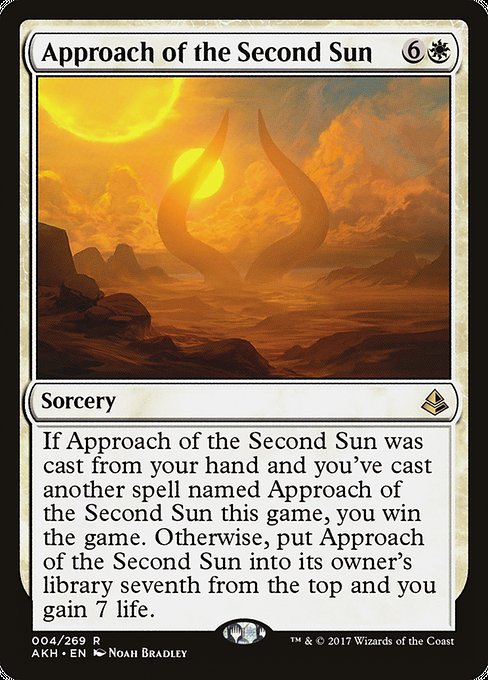
- 1 Approach of the Second Sun
- 1 Austere Command
- 1 Reanimate
- 1 Winds of Abandon
- 1 Niv-Mizzet, Ghost Counsel
The list lives at Niv-Mizzet, Ghost Counsel Bracket 3, and its bracket audit returns bracket 3 with one Game Changer, Bolas's Citadel. Game Changers are the cards on Wizards' official list: brackets 1 and 2 allow none, bracket 3 allows up to three. No tutors (cards that search your library for a card), no extra turns, no mass land destruction and no two-card infinite combos. The audit also flags one free spell, Flawless Maneuver, which costs nothing while you control your commander. If the bracket system is new to you, our Commander brackets guide explains what each number means.
How it wins
The clean kill is Approach of the Second Sun. On its own it is a seven-mana sorcery that goes seventh from the top of your library and gains you 7 life, and it wins the game if you cast it again from your hand later. With Niv on the battlefield, gaining 7 lets you pay 7 and draw 7, and the seventh card you draw is Approach. Cast it, draw it back, and win with the second cast on your next turn, or on the same turn if you reach fourteen mana, which Crypt Ghast doubling the Swamps you have out makes less far-fetched than it sounds.
The slower kill is the drain package. Marauding Blight-Priest, Cliffhaven Vampire, Enduring Tenacity and Vito, Thorn of the Dusk Rose each turn a lifegain event into life loss for opponents. With the Blight-Priest and the Vampire out, one Niv tap is nine points of life loss spread across the table before you have spent a mana. Ob Nixilis, the Ascended closes from the air with a 4/4 Angel at every end step on which you gained life, and since Soul Warden pays you when an opponent's creature enters, that includes their end steps.
Sequencing the first six turns
Turns one to three are mana rocks (artifacts that tap for mana) and the cheap lifegain pieces: Soul Warden, Aunt May, Suture Priest, Daxos, Blessed by the Sun and the enchantment Authority of the Consuls. None of them draws cards yet, but they bank life and set up the engine. The deck runs six rocks (Sol Ring, Arcane Signet, Talisman of Hierarchy, Orzhov Signet, Fellwar Stone, Commander's Sphere) plus Crypt Ghast because the commander costs six, and a Niv on turn five instead of turn seven is the difference between drawing into answers and dying to the first board wipe.
The commander turn is the one to plan around. Cast Swiftfoot Boots the turn before. Then cast Niv, equip for  , and tap him right away: three points of drain, 1 life gained, pay it, draw a card. Without haste he sits through a full table turn doing nothing while the removal that was waiting for him arrives. The Boots also give hexproof (opponents cannot target him), which a six-mana commander needs more than any other protection. A hasty Niv on turn five takes seven mana: five lands plus Sol Ring, or five lands and two of the two-mana rocks.
From there the exchange starts. Extort, the keyword on Life Insurance, Blind Obedience and Crypt Ghast, triggers whenever you cast a spell, and when the trigger resolves you may pay  to make each opponent lose 1 life while you gain that much. In a four-player pod that is 3 life per extort trigger, which with Niv is three cards for one mana. With two extort permanents out, every two-mana spell is really a four-mana spell that draws six. That is the deck's card advantage, and it is why the list runs so many cheap spells.
Mulligan a hand with two cards costing six or more and no rock. Keep any hand with three lands, a rock and one of the one- or two-mana lifegain creatures.
The cards that make it work

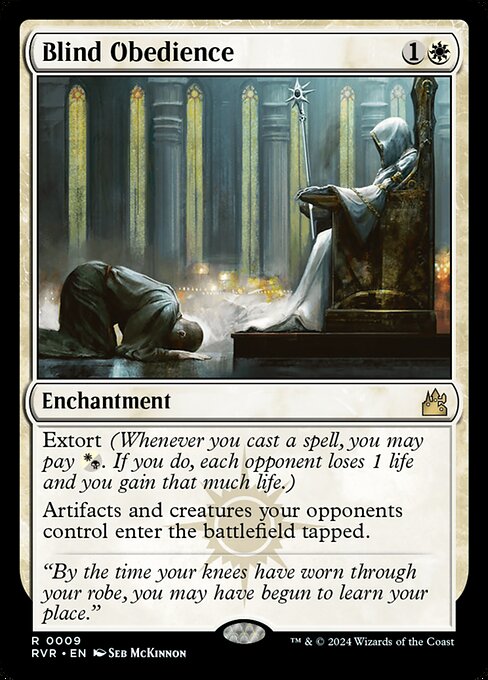



Soul Warden is the best card in the deck after the commander. She gains you 1 life whenever another creature enters the battlefield under any player's control, tokens included, so with Niv out every creature that lands at the table is a card for you. Authority of the Consuls does the same for opposing creatures only. Both Authority and Blind Obedience make your opponents' creatures enter tapped, and a creature stays tapped until its controller's next untap step, so on your turn every creature an opponent has played since their own last untap step is still tapped, along with anything that attacked without vigilance. Ob Nixilis, the Ascended, whose enters ability destroys all tapped creatures your opponents control, sweeps all of them: a one-sided answer to their newest threats.
Bolas's Citadel is the Game Changer, and it is here because it spends the same currency. You cast spells off the top of your library paying life equal to their mana value, and extort, Niv's tap and the lifegain creatures keep refunding that life. Niv and the Citadel pull in different directions, since one draws the top card and the other casts it, so with both out the Niv draw becomes a way to skip a top card you cannot afford.
Corroding Dragonstorm is a two-mana drain that returns to your hand whenever a Dragon enters under your control, and Niv is a Spirit Dragon, while Purging Stormbrood // Absorb Essence is a Dragon too. Every time either one enters (Niv from your hand or back from the command zone), the Dragonstorm comes back for another : each opponent loses 2 and you gain 2, you surveil 2 (look at the top two cards of your library and put any you do not want into the graveyard), and then Niv's trigger resolves, so you pay 2 to draw the two cards you chose to keep. Unholy Annex // Ritual Chamber draws a card at your end step and, while you control a Demon, drains each opponent for 2 as well; without a Demon it costs you 2 life a turn instead. The deck has two Demon sources: Tragedy Feaster, whose own clause (sacrifice a permanent at your end step unless you gained life this turn) is covered by the Niv tap, and the 6/6 flier the Ritual Chamber door makes when you unlock it.
Belladonna Took, Rosie Cotton of South Lane and Staff of the Storyteller make the token half of the list pay off. Belladonna's first token each turn gains 1 life, the second draws a card and the third puts a counter on each creature you control, so Secure the Wastes or Grand Crescendo at instant speed does all three at once. Archangel of Thune turns every one of those small gains into a counter on each creature you control, which is how a deck full of 1/1 tokens ends up attacking for twenty.
What we changed from the average list, and why
The starting point was the average bracket 3 list for this commander. Thirteen of the fourteen swaps below fix ramp, protection, cheap interaction and cards that had nothing to do with the plan. The fourteenth is the one that moved the audit, which came back one bracket short before it.
- Out In Garruk's Wake, in Winds of Abandon. A nine-mana board wipe that spares your own creatures is never cast on time in a deck whose engine already costs six. Winds paid at its overload cost of
 exiles every creature you do not control, and the basic lands it hands out matter less than the board it clears.
- Out Emeria Angel, in Marauding Blight-Priest. With 36 lands and no extra land drops the Angel was a four-mana 3/3 with a slow trigger. The Blight-Priest turns every lifegain event, Niv's tap included, into a point of drain on each opponent.
- Out Ogre Slumlord, in Vito, Thorn of the Dusk Rose. The Slumlord was five mana for a Rat whenever a nontoken creature died, in a deck whose creatures mostly stay put. Vito costs and is a second Enduring Tenacity, turning every gain into drain. His activated ability also gives the team lifelink (damage they deal gains you that much life) for one big swing, and since each lifelink attacker that connects is its own Niv trigger, you choose creature by creature how many cards to take.
- Out Samwise the Stouthearted, in Soul Warden. Samwise returned one permanent card that went from the battlefield to your graveyard this turn. Soul Warden pays you for every creature that enters under anyone's control for the rest of the game.
- Out Frodo, Sauron's Bane, in Blind Obedience. The Ring theme was two cards deep, and Frodo's win needs the Ring to have tempted you four times (a Lord of the Rings mechanic that only two cards in the list used). Extort on a two-mana enchantment that also taxes haste is the better use of the slot.
- Out Jhoira, Weatherlight Corsair, in Crypt Ghast. Jhoira was a six-mana steal effect with no connection to the plan. Crypt Ghast doubles the mana from sixteen Swamps and carries extort.
- Out Black Cat, Cunning Thief, in Cliffhaven Vampire. Black Cat was a five-mana, one-time steal of two cards from one opponent's library. The Vampire is a four-mana flier that drains every opponent on every gain for the rest of the game.
- Out Grievous Wound, in Authority of the Consuls. Grievous Wound stops one player gaining life and halves their total whenever they are dealt damage, but nearly all of this deck's reach is life loss rather than damage, so the half-life clause rarely fired. Authority costs one mana, taxes haste, and pays you a life, which is a card, for every creature your opponents put onto the battlefield.
- Out Leyline of the Void, in Swiftfoot Boots. Dauthi Voidwalker already covers graveyards. The commander needed haste and hexproof far more than the deck needed a second graveyard lock.
- Out Let's Play a Game, in Swords to Plowshares. A four-mana sorcery that wants delirium (four card types in your graveyard) out, a one-mana instant in. Cheap removal was the thinnest part of the list.
- Out Varragoth, Bloodsky Sire, in Talisman of Hierarchy. A tutor that only works when a three-mana deathtouch body attacks, in a deck that rarely attacks with it. The slot became ramp.
- Out Serra's Emissary, in Archangel of Thune. A seven-mana protection piece out, a five-mana lifegain payoff in.
- Out Fix What's Broken, in Orzhov Signet. Niche mass reanimation out, a second new rock in, for the same reason as the Talisman.
- Out Zombify, in Bolas's Citadel. Zombify was one of seven reanimation effects; the list keeps Reanimate, Live or Die, Emptiness, Metamorphosis Fanatic, Moseo, Vein's New Dean and Funeral Room // Awakening Hall. The Citadel is the one Game Changer this deck has a real use for, and it is the card that moved the audit up one bracket, to 3.
Two traps that lose games
The first is paying when you should not. Niv's trigger is optional, and the deck's weakness is that every card you draw this way is a life point your opponents did not have to take from you. Above 25 life, pay almost every trigger. Below 15, pay only for triggers that find you an answer or the finish, and never pay 7 for Approach when it leaves you in range of one attack. Leyline of Hope adds 1 to every gain and gives your creatures +2/+2 while you are at 47 life or more (7 above the starting 40), so once you are near that line, declining a trigger is a pump spell.
The second is the library. Two spells with one extort permanent out, plus a Niv tap, is seven cards in a turn, and a 99-card deck does not survive many turns like that. Chant of Vitu-Ghazi can gain 30 life in a single combat, and 30 life is a trigger you decline unless you have counted your library. Only Approach and the Omen half of Purging Stormbrood // Absorb Essence put a card back into your library, so count.
Where it sits, and how to move it
The audit says cutting Bolas's Citadel drops this deck to Core, the bracket below, with everything else unchanged. Moving up is just as simple, with three cards we left out on purpose: Necropotence is the same life-for-cards idea without the gain step, Smothering Tithe fixes the ramp, and Demonic Tutor finds Approach on demand. Each is a Game Changer, and all three next to the Citadel is the point where the table stops being a bracket 3 table.
If you copy the list and build it, record the games: your copy of the deck gets its own rating and record on its page, which is the test this list has not yet passed. If you swap cards first, run your version through the Combo Finder before the first game, because all four drain pieces (Marauding Blight-Priest, Cliffhaven Vampire, Enduring Tenacity and Vito, Thorn of the Dusk Rose) go infinite with Exquisite Blood, and the audit will list that as a two-card combo your pod should hear about before the game. The Reality Fracture Commander set page has the rest of the release.
Keep Reading

Three Life Before Combat: The Frodo, Adventurous Hobbit Commander Deck Plan
November 20, 2026
Betor, Ancestor's Voice Commander Deck: A Bracket 3 Abzan Build That Pays Life on Purpose
November 10, 2026
Comments
Join the conversation.