

Sixteen Graveyard Commanders for EDH, Sorted by Price: The Best Graveyard Commanders Cost Under $2

A graveyard commander is one whose plan runs through the graveyard: it casts cards from there, returns them from there, counts what is in there, or fills it on purpose. The format has more of them than of almost any other archetype, and the odd thing about the best graveyard commanders is their price. Thirteen of the sixteen below cost less than three dollars, because nearly every good one has been reprinted in a precon or on The List, the sheet of reprints that turns up in boosters. The two that cost real money are not stronger; they are scarcer.
Prices are the cheapest regular printing in our card data on the day of writing, rounded, and they move. Each entry gives what the card does, one line of play, and what you give up. Brackets come up only as what our calculator does with a finished list, never as a label on a card.
Under $2: where the best ones live

Muldrotha, the Gravetide (under a dollar)
Muldrotha, the Gravetide costs 


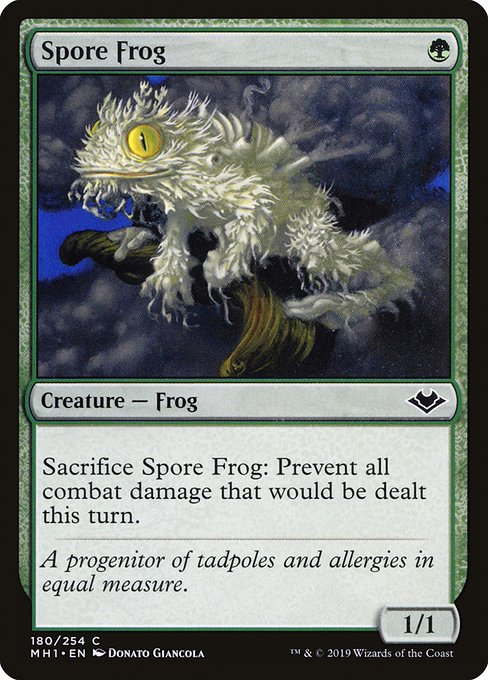
 and lets you, during each of your turns, play a land and cast one permanent spell of each permanent type from your graveyard. The line of play is cheap permanents that put themselves in the graveyard: Sakura-Tribe Elder as the creature for the turn, fetching a basic and going straight back, a cracked fetch land replayed from the graveyard as the land drop, and Animate Dead as the enchantment, reanimating whatever you milled. Spore Frog takes the creature slot on the turns you need it, and since it prevents all combat damage for the turn it is sacrificed, it shuts off one opponent's combat a round. What you give up is speed. Muldrotha is six mana and does nothing the turn it lands. Keep one of each permanent type in the graveyard rather than dumping everything, because a single Bojuka Bog on an overfilled graveyard is the game.
Karador, Ghost Chieftain (about 30 cents)
Karador, Ghost Chieftain is printed at eight mana and costs  less for each creature card in your graveyard, so once five creature cards are there it is a three-mana 3/4 that lets you cast one creature spell from your graveyard once during each of your turns. The line is a repeatable edict: cast Fleshbag Marauder from the graveyard on each of your turns, each player sacrifices a creature of their choice, and you sacrifice the Marauder itself, which puts it right back where Karador can reach it. What you give up is the first three turns. Karador needs creature cards in the graveyard before it does anything, so the deck spends its early turns milling itself with cards like Satyr Wayfinder and Stitcher's Supplier.
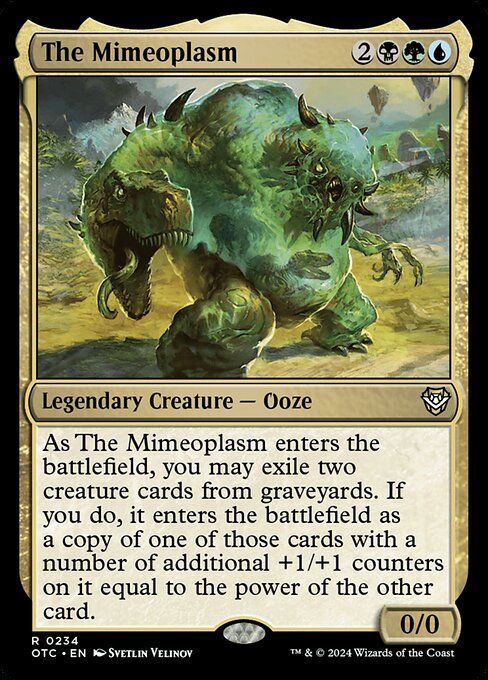
The Mimeoplasm (about 30 cents)
The Mimeoplasm enters as a copy of a creature card you exile from any graveyard, with +1/+1 counters equal to the power of a second creature card you exile. The line everyone learns first is still the best one: copy Blighted Agent, an unblockable 1/1 with infect, and take the counters from the biggest thing in any graveyard, say a Lord of Extinction whose power is the number of cards in all graveyards. Ten poison counters kill a player regardless of life total, and nothing blocks it. What you give up is independence: the Mimeoplasm needs two good creature cards in graveyards to be anything. One trap is written on the card you copy. Never copy Phage the Untouchable: she makes you lose the game if she enters without being cast from your hand, and a Mimeoplasm copy of her enters exactly that way. We built one ourselves in our Mimeoplasm self-mill deck.
Sidisi, Brood Tyrant (about a dollar)
Sidisi, Brood Tyrant mills three whenever it enters or attacks, and whenever one or more creature cards go from your library to your graveyard you get a 2/2 Zombie. The line is Altar of Dementia: sacrifice a creature to mill yourself for its power, make a Zombie when a creature card lands, sacrifice that Zombie to mill again. Each mill makes at most one Zombie, so the chain does not grow the board; what it does is empty the library on purpose, which is why the Sidisi decks that win carry Thassa's Oracle or Laboratory Maniac and treat the empty library as the goal. What you give up is every other way to win.
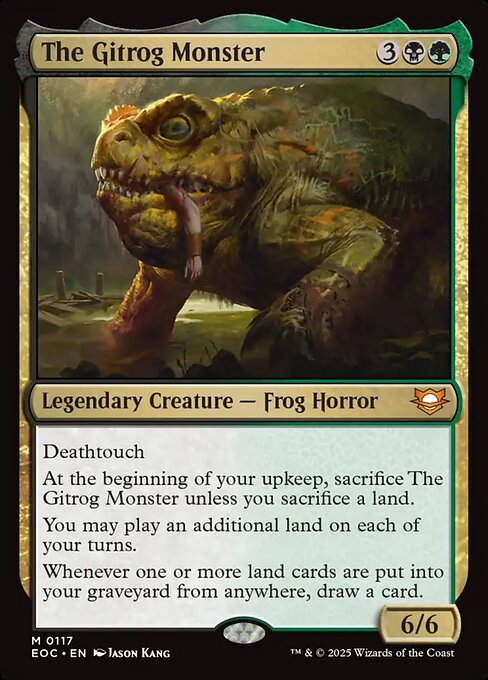
The Gitrog Monster (about 50 cents)
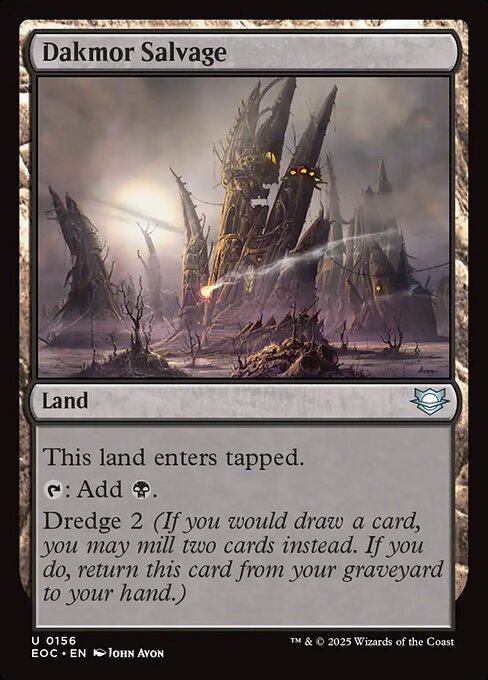
The Gitrog Monster draws you a card whenever one or more land cards go to your graveyard from anywhere, lets you play an extra land each turn, and makes you sacrifice a land each upkeep or sacrifice the Frog. The line that made it famous is Dakmor Salvage, a land with dredge 2: when you would draw a card, you may mill two instead and return Dakmor from your graveyard to your hand. Discard Dakmor to a free outlet, Gitrog draws, dredge it back instead of drawing, and pitch it again; any land among the milled cards is a bonus Gitrog draw. With a free discard outlet that runs through the whole library, and the win is whichever finisher the list keeps for the end. What you give up is a commander that eats itself. Miss the upkeep sacrifice and Gitrog is gone, so the deck cannot run out of lands in play, and the real cost of a fifty-cent commander is the fetch lands its 99 wants.
Chainer, Nightmare Adept (about 80 cents)
Chainer, Nightmare Adept lets you discard a card once each turn to cast a creature spell from your graveyard this turn, and any nontoken creature you did not cast from hand gains haste until your next turn. The line is Bone Miser: discard a land to Chainer, Bone Miser adds , and that mana helps cast the creature you are recasting, which attacks immediately. What you give up is card count. Every Chainer activation costs a card from hand as well as the creature's mana, so without Bone Miser or a draw engine the deck empties its hand by turn five and plays off the top.
Winter, Cynical Opportunist (under 50 cents)
Winter, Cynical Opportunist costs  , mills three whenever it attacks, and at your end step, if you can exile cards from your graveyard with four or more card types among them, you put a permanent card from among the exiled cards onto the battlefield with a finality counter, which means it is exiled instead of dying. The line is attack, mill, then at end step exile a land, an instant, an artifact and the biggest creature you milled, and the creature enters for free. Ulamog, the Ceaseless Hunger on turn five off a four-mana commander (cast on four, attack on five) is the ceiling. What you give up is predictability: a graveyard with three card types in it does nothing at all.
Grist, the Hunger Tide (about 40 cents)
Grist, the Hunger Tide is a planeswalker that counts as a 1/1 Insect creature anywhere except the battlefield, which is what makes it a legal commander. Its +1 makes a 1/1 Insect token and mills a card, and if the milled card is an Insect it gains loyalty and does it again. Its -5 makes each opponent lose life equal to the creature cards in your graveyard. The line is the +1 every turn in a deck with twenty Insects, so the board and the graveyard grow together, and the -5 is the finisher once the tokens and the rest of the deck have worn life totals down, because it counts only the creature cards in your graveyard. What you give up is a commander that dies to combat damage like any planeswalker, so the Insect tokens spend most of the game blocking rather than attacking.
Tasigur, the Golden Fang (20 cents)
Tasigur, the Golden Fang has delve, so each card you exile from your graveyard while casting it pays for , and a Tasigur on turn three for a single is normal. Its ability,  , mills two and then returns a nonland card of an opponent's choice from your graveyard to your hand; the hybrid symbols put green and blue in its color identity. The line is a graveyard you keep deliberately small: if the only nonland cards in it are two good ones, the opponent's choice is still a good card, and every activation is a real draw for four mana. What you give up is control over what comes back.
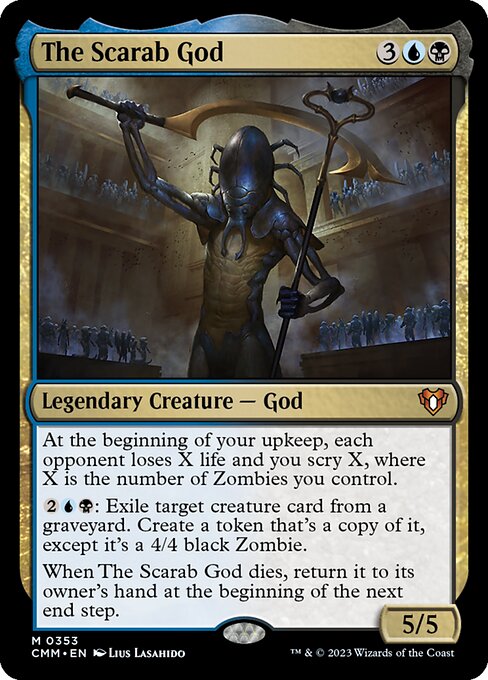
The Scarab God (about $2 for the cheapest printing, about $3 for the newest Commander one)
The Scarab God makes each opponent lose life equal to the number of Zombies you control at your upkeep, and you scry that many; for it exiles a creature card from any graveyard and makes a 4/4 black Zombie token copy of it. The line is the opponents' graveyards: every removal spell they cast on each other is a 4/4 for you with the dead creature's text, and every token raises the upkeep life loss. What you give up is tempo. When it dies, let it go to the graveyard rather than the command zone; it comes back to your hand and you pay its five mana again, with no commander tax (the extra each time you recast from the command zone). Decks that win with it hold four mana and activate at the end of the turn before yours.
Two to ten dollars: four that cost a little more


Meren of Clan Nel Toth (about $2)
Meren of Clan Nel Toth gives you an experience counter whenever another creature you control dies, and at your end step returns a creature card from your graveyard to the battlefield if its mana value is at most your experience, or to your hand if not. The line starts once Meren is out, usually turn four, or turn three off a land from Sakura-Tribe Elder. Sacrifice the Elder with Meren on the battlefield and you get the first experience counter and the Elder back in hand at end step; at two counters it returns to the battlefield instead. From there Viscera Seer turns every creature into an experience counter, and Spore Frog coming back each end step shuts off the biggest attacker's combat once a round. What you give up is tempo: the return happens at your end step, so a creature lost on turn four is useful again on turn five. The two-dollar price is demand; it has a precon printing.
Kroxa, Titan of Death's Hunger (about $2.50)
Kroxa, Titan of Death's Hunger costs  and sacrifices itself on entering unless it escaped, but it still triggers: each opponent discards a card, and each one who did not discard a nonland card loses 3 life. Escape costs plus five other cards exiled from your graveyard, and a Kroxa that escaped is a 6/6 that triggers again on every attack. The line is a black-red deck that discards and mills itself on purpose so Kroxa escapes every other turn; the cast from the command zone is a one-card discard for each opponent, and 3 life lost by any opponent who discarded a land or had nothing to discard. When it sacrifices itself, leave it in the graveyard rather than sending it back to the command zone, so it can escape, and an escape cast pays no commander tax. Every escape eats five cards, so the deck needs to refill the graveyard faster than Kroxa empties it, and a Rest in Peace shuts the whole thing down.
Hogaak, Arisen Necropolis (about $3)
Hogaak, Arisen Necropolis cannot be paid for with mana at all. Its seven-mana cost is paid with convoke and delve: tap creatures, exile cards from your graveyard, and the two hybrid  pips have to come from tapping black or green creatures. It can be cast from your graveyard, so killing it only means you pay again. The line is an 8/8 trampler on turn three off three cheap creatures and four cards milled. What you give up is the ability to do anything else: a Hogaak deck that is not casting Hogaak is a pile of 1/1s. The three-dollar price comes from its history in other formats; in Commander the deck is a glass cannon.
Teval, the Balanced Scale (about $6)
Teval, the Balanced Scale is a four-mana 4/4 flier that mills three whenever it attacks and then returns a land card from your graveyard to the battlefield tapped, and whenever one or more cards leave your graveyard you get a 2/2 Zombie Druid. The line is the attack trigger itself: mill three, return the land, and the land leaving the graveyard makes a Zombie, so every attack is a free land and a free body. What you give up is that the land half needs Teval to attack, and a 4/4 flier in a format of 5/5 dragons does not attack safely for long. Our Teval deck post has the list, where cracked fetch lands come back on Teval's attack and make a Zombie as they leave the graveyard.
Worth the money: two that cost real cash


The Wise Mothman (about $13)
The Wise Mothman gives every player a rad counter when it enters or attacks, and whenever one or more nonland cards are milled, by any player, puts a +1/+1 counter on each of up to that many target creatures. Rad counters make a player mill that many cards at the start of their precombat main phase, and for each nonland card milled they lose 1 life and shed a rad counter, so every opponent's rad mill on their own turn pumps your team before your next turn comes around. The line is a deck where every mill effect is also a pump spell: Stitcher's Supplier mills three on entering and dying, and each nonland card among them is a counter. What you give up is thirteen dollars for a 3/3 flier whose milling also feeds the other graveyard decks at the table. The price comes from two scarce printings, the Fallout precon and a Secret Lair. Our Wise Mothman deck post has the list and its audit.
Sheoldred, Whispering One (about $11)
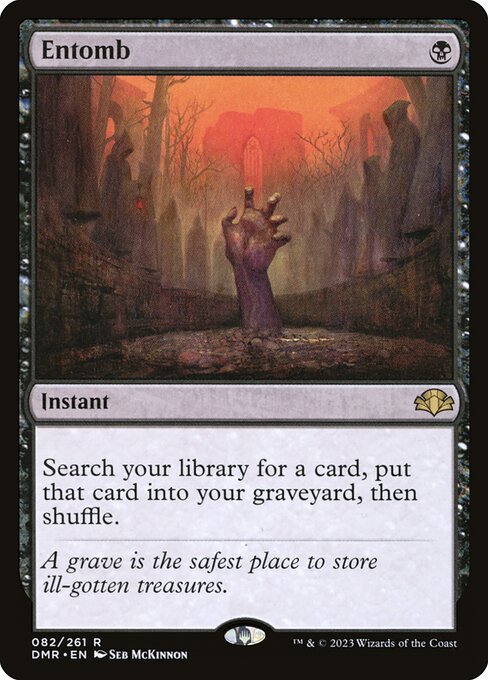
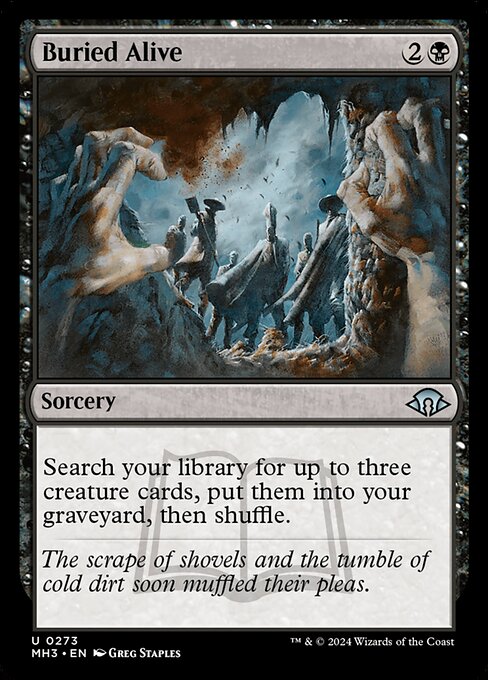
Sheoldred, Whispering One returns a creature card from your graveyard to the battlefield at your upkeep and makes each opponent sacrifice a creature at theirs, and she has swampwalk. The line is a reanimator deck where she is the top of the curve rather than the engine: Entomb or Buried Alive puts the 99's biggest creatures in the graveyard, Reanimate or Animate Dead returns one on turn two or three, and Sheoldred, cast for  from the command zone, returns another every upkeep while the table loses a creature each. If she dies, leave her in the graveyard so Animate Dead can bring her back for two mana. What you give up is seven mana for the honest cast, and eleven dollars for a List printing (the Jumpstart copy is more than double). Compare the reanimator commanders for Bracket 4 decks, which are built to cheat her kind of card into play rather than to lead with it.
What the cheap tier gives up
Nothing in the command zone. Muldrotha, Karador and the Mimeoplasm are still among the best at under a dollar, and Meren at about two. The cost of a graveyard deck sits in the 99 instead: a Meren or Karador deck that wants to win in a turn wants Mikaeus, the Unhallowed and Triskelion: Mikaeus gives Triskelion undying, which returns a creature that died with no +1/+1 counters on it, so Triskelion shoots itself dead with its own counters, comes back with fresh ones, and the spare pings go at faces.
Left off, and why
Syr Konrad, the Grim pings opponents whenever creatures die or creature cards change zones through graveyards, but he is better as a card in a Meren or Sidisi deck than as the commander of one. Titania, Protector of Argoth and The Necrobloom are lands commanders that use the graveyard as a side resource rather than the plan. Grolnok, the Omnivore mills into exile, so its graveyard is a hallway. Lurrus of the Dream-Den recasts only permanents with mana value two or less. Varina, Lich Queen and Hashaton, Scarab's Fist are discard and Zombie commanders whose graveyard interaction is incidental. Korvold, Fae-Cursed King and Yawgmoth, Thran Physician fill the graveyard and never look at it; they belong on our aristocrats list.
Game Changers the graveyard decks keep reaching for
Our Commander Bracket Calculator reads a finished list and places it: a two-card infinite combo or one to three Game Changers puts a deck at Bracket 3, and four or more Game Changers, mass land denial or a lock combo pushes it to Bracket 4. Game Changers are the cards on the official list the bracket system uses. The ones graveyard decks reach for most are Survival of the Fittest, which discards a creature card into the graveyard as the cost of tutoring another, Demonic Tutor and Vampiric Tutor for the reanimation target, Bolas's Citadel in Muldrotha and Meren lists that can pay life instead of mana, and Thassa's Oracle in the blue self-mill decks. Count them before you build. A Sidisi list with the Oracle plus Hermit Druid (which, in a deck with no basic lands, mills the entire library) is a two-card win; the Oracle is itself a Game Changer, so two more keep it at 3 and a third moves it to 4. Our posts on Bracket 3 decks and Bracket 4 decks show what each level looks like across archetypes.
The hate you will face, and the habit that beats it
Every pod with a graveyard deck in it learns to pack Bojuka Bog and Rest in Peace, and we listed the rest in our graveyard hate guide. The habit that beats one-shot hate like the Bog is the same for every commander above: keep the engine in the command zone and the fuel spread between hand and graveyard, rather than milling twenty cards on turn three because you can. Muldrotha needs one permanent of each type in the yard, and Tasigur wants two good cards there, not twenty. The player who exiles your graveyard on turn four wants to see a deck that has to start over; show them one that lost three cards. Then paste the list into the Combo Finder and record the games, because a graveyard deck's record against hate is the only argument that ends the debate at your table.
Keep Reading

The Best Artifact Commanders in EDH, Sorted by What They Do With Your Artifacts
November 03, 2026
Sixteen Shrines and a Tutor Every Turn: A Bracket 4 Sisay, Weatherlight Captain Commander Deck
November 21, 2026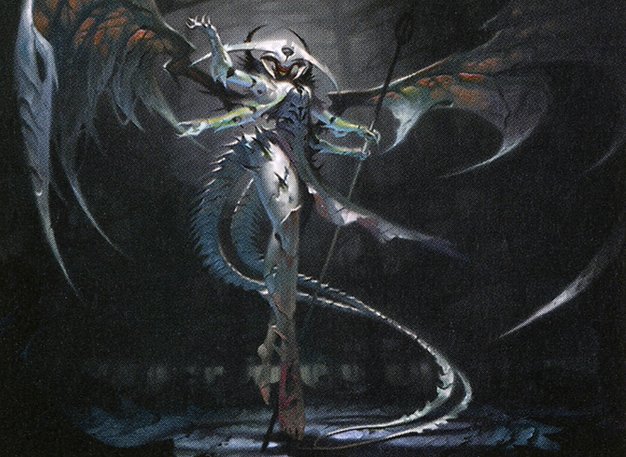
Comments
Join the conversation.